

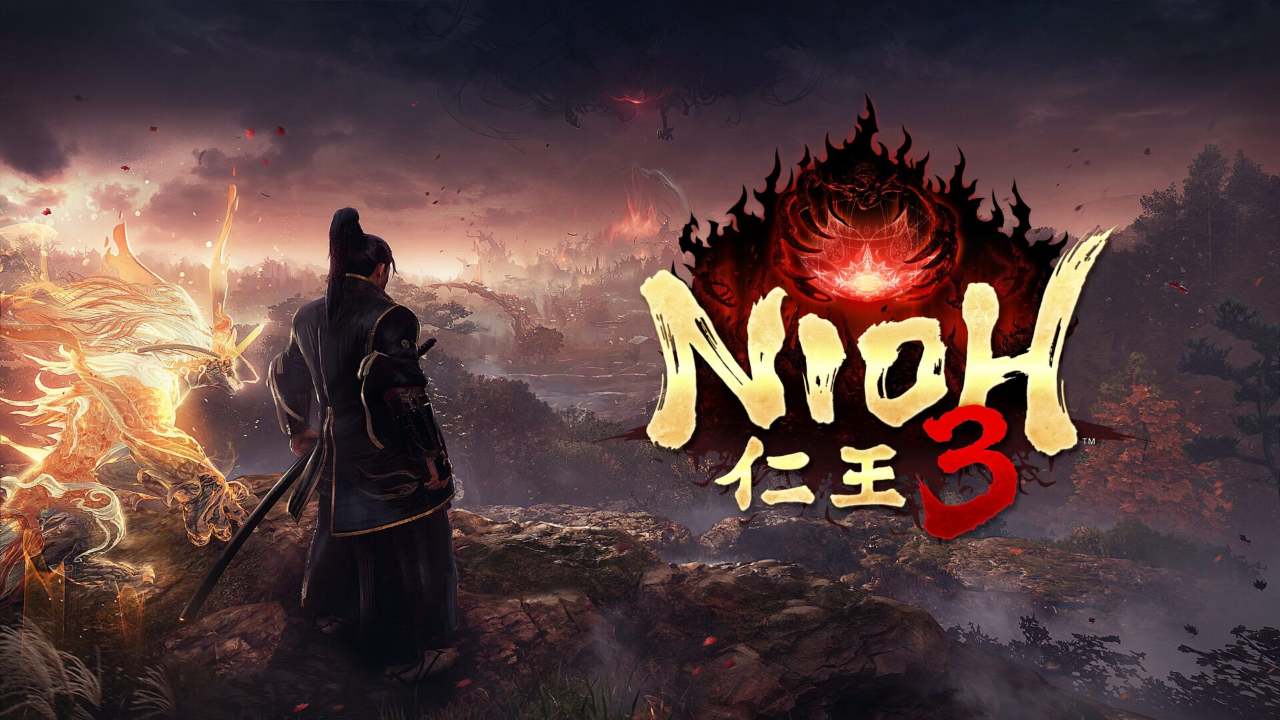
Nioh 3 Review
Table of Contents
When asked about the best soulslike titles out there, many would default to naming titles like Elden Ring and Bloodborne, among others. Seeing as FromSoftware almost singlehandedly popularized the subgenre with titles like Demon’s Souls and Dark Souls, we’ve reached a point where other developers are seeing success as well, resulting in titles like Lies of P.
Not forgotten, of course, is Nioh, which is arguably one of the best non-FromSoftware titles in the subgenre. While similar games focus on slow, deliberate pacing, titles like Nioh go fast and furious, with complex systems and their trademark difficulty. Nioh 3 is no exception, and it is quite possibly the best Nioh installment to date, thanks to its razor-sharp combat and improvements, but with some carryovers from previous entries.
A Whole Nioh World
In Nioh 3, players control Tokugawa Takechiyo, a customizable protagonist who is set to be appointed as the next shogun. Unfortunately, his brother has different plans, and unleashes an attack that brings chaos to the present, forcing the protagonist to intervene and stop the ongoing destruction by traveling through eras to save the land. For those looking for a game with a profound story, Nioh 3 won’t necessarily deliver; like similar titles, the plot is mostly forgettable and there to move things along, but not entirely throwaway, and some moments are quite nice.
Like a recently released title that also shifted to an open-world setup, Nioh 3 does the same, but with far better results. While the former had vast areas that felt a bit empty, the latter has tons of exploration points and challenges to overcome that reward players with useful trinkets. Previous titles followed progression through missions, but Nioh 3 bucks the trend with well-designed areas that utilize mobility well. Players won’t feel “stuck” as they can simply explore more and level up before coming back to that troublesome boss and exacting revenge.

Some of these areas might feel a bit too large, and at times may give a feeling like “when is this going to end” due to the immense amount of things to do and find, but the rewards for exploring, such as new abilities, a weapon upgrade, or just additional levels, are well worth it. You’ll also notice that enemy models are reused in areas, so that’s something to think about.
Top Class Combat
That said, where Nioh 3 shines is its supremely superior combat system, which draws on ideas from other Team Ninja titles and is fast, frenetic, and exceptionally satisfying. This is thanks to a significant addition of a dual-playstyle system. Previous entries had players use Samurai Mode, which consisted of three stances (High, mid, and low) and a Ki Pulse mechanic that restored stamina with a well-timed button press and enabled a continuous stream of attacks. This is a more balanced approach to combat, and one players of the previous entries are familiar with.
In Nioh 3, Team Ninja turns the dial to 11 with its namesake, Ninja mode. If you don’t like stances, this mode removes all of them and turns players into how you would imagine a ninja would be: fast, mobile, combo and aerial attack-centric, and rapid damage. Think about how dual blades/daggers work in other games compared to something like a long or great sword, and you can imagine the stark difference in speed and pace. Plus, you’ll have some tricks up your sleeve, such as ninja tools. What’s a ninja without a shuriken?

Nioh 3 goes about things in a way that both stances work well, depending on player preference. Whether your playstyle favors a more offensive or balanced approach, both Samurai and Ninja Modes are chock-full of potential to dish out damage, and it purely depends on the player how they will use their chosen mode to their advantage. It also helps that neither mode shares equipment, which fits well with their vastly different playstyles and can be switched between as needed with just a button tap. In fact, switching is incentivized because some bosses mix up attacks that are better dealt with by the other style. That said, both are perfectly usable.
Respec is free as well, giving players extreme depth and customization to match the plethora of equipment made available.
PC Performance
Before anything else, here’s the system we used to play Nioh 3:
- Ryzen 5 5600x, 16 GB DDR4 3600 RAM, NVIDIA 4070 Super, 1TB NVMe SSD
And here are the System Requirements for Nioh 3:
| Component | Minimum | Recommended |
| OS | Windows 11 | Windows 11 |
| Processor | Intel Core i5-10400 / AMD Ryzen 5 2600 (or better) | Intel Core i5-10600K / AMD Ryzen 5 5600X (or better) |
| Memory | 16 GB RAM | 16 GB RAM |
| Graphics | NVIDIA GTX 1060 (6GB) / AMD RX 5600 XT (6GB) | NVIDIA RTX 3060 Ti (8GB) / AMD RX 6700 XT (12GB) |
| DirectX | Version 12 | Version 12 |
| Storage | 125 GB available space (SSD Required) | 125 GB available space (SSD Required) |
Despite what looks to be some reasonable settings, mileage may vary when playing Nioh 3. Inconsistencies in frame rate are often noticeable, which can be annoying, especially since a game like this relies on steady frame rates. At times, combat can also be tough to read due to many factors, such as large enemy designs and effects, especially when they change forms.
Apart from technical issues, the game is so intimidatingly deep that it could turn off newcomers despite being a great point of entry to the series. There’s also a lot of reading to be done in terms of menus, especially when checking weapon stats, and some areas could get a bit repetitive and tedious, especially if you’re the type to check out everything that’s available.
Oh, and have we mentioned that Nioh 3 is still tough as nails? Not a soulslike without the trademark difficulty, and sometimes bosses can be a real head-scratcher, but the game does make it manageable thanks to the addition of the Ninja style.

Verdict: Buy it!

Nioh 3 feels like the culmination of lessons from past Nioh titles, resulting in a game that’s a significant step up and the best entry in the series. The addition of the Ninja Style is such a game-changer, offering a playstyle that feels distinct and really fun to use. There’s a lot to see and do in this game, with content maybe reaching close to 100 hours if you choose to exhaust all areas.
That said, there are performance inconsistencies, but nothing too significant to be a deal breaker. Some bosses can take a ton of tries and could end up being really frustrating, and there are some reused enemies along the way. Even then, these are nitpicks in the grand scheme of things, making Nioh 3 a must-play for soulslike fans out there.
*Nioh 3 was reviewed on a PC with a review code provided by the publisher.
