Ghost of Yōtei Review
Ghost of Yōtei Review
Table of Contents
Sucker Punch’s 2020 samurai epic Ghost of Tsushima achieved widespread acclaim for its stunning visuals, emotional narrative, dynamic combat system, richly immersive open world, and respectful portrayal of Japanese culture. The game garnered numerous accolades, earning praise from Japanese audiences and leading to Sucker Punch being named honorary ambassadors of the real-life island of Tsushima.
With all that under its belt, it begs the question: can Sucker Punch surpass its own masterpiece? In 2025, the studio offers its answer.
Set in a new era, in a different region of Japan, and featuring a new protagonist, Ghost of Yōtei seeks to honor and expand upon the legacy of Jin Sakai. While the original excels in certain areas, Ghost of Yōtei introduces meaningful improvements and stands as a compelling spiritual successor by looking back at its past while pushing forward to blaze its own trail.
A Tale of Revenge
Set three centuries after the Mongol invasion of Tsushima, Ghost of Yōtei follows Atsu, a mercenary returning to her homeland of Ezo in northern Japan. Driven by the traumatic loss of her family at the hands of the infamous Yōtei Six, Atsu sets out on a quest for vengeance, targeting the group and their leader, Lord Saito.
Upon her return, she finds Ezo under their iron grip, with their influence so widespread that even the mainland Shogunate has taken notice. As her legend grows, locals begin calling her “The Onryō,” a vengeful spirit from folklore. A Ghost.

At its heart, Ghost of Yōtei is a revenge-driven narrative inspired by classic wandering samurai tales. While it may not delve as deeply into philosophical themes as Ghost of Tsushima, which explored the tension between honor and necessity, it still delivers a gripping tale that stands confidently on its own. As a standalone story, it is accessible to newcomers, but longtime fans will appreciate its thematic continuity, despite some predictable narrative beats familiar to the revenge genre.
Atsu emerges as a compelling protagonist, distinct from Jin Sakai yet equally intriguing, because her pursuit of the Yōtei Six is both her mission and her burden. While her quest for vengeance is rooted in tragedy, the unfolding events challenge her convictions and force her to confront the cost of revenge. Beneath her exterior lies a character who is guided by personal motivations and, at times, emotionally driven, making her journey one that players will be intrigued to follow.

While Atsu struggles with her path of revenge, players could have also been given the same dilemma. With such a straightforward revenge story, player choice between revenge and doing what’s right in major story points could have led to different story paths and endings, adding to more replay value. However, that’s not the case, but it became interesting to see how her obsession affected those around her and how she dealt with it.
The Yōtei Six, though not all equally developed, are an interesting group, and they’re more than just names to be crossed out. Lord Saito, in particular, is a charismatic and calculating antagonist, hiding his ruthless nature behind a friendly demeanor. Saito’s duality makes him more than a simple villain, one whose presence looms large throughout the game.
Supporting characters in Ghost of Yōtei further enrich the experience. Atsu’s “Wolf Pack,” a group of allies she encounters across Ezo, serves a distinct role, from providing services to training her in specialized weaponry. And though not all, some of these supporting characters have fleshed out personalities and stories which are quite welcome and give them much-needed screen time.
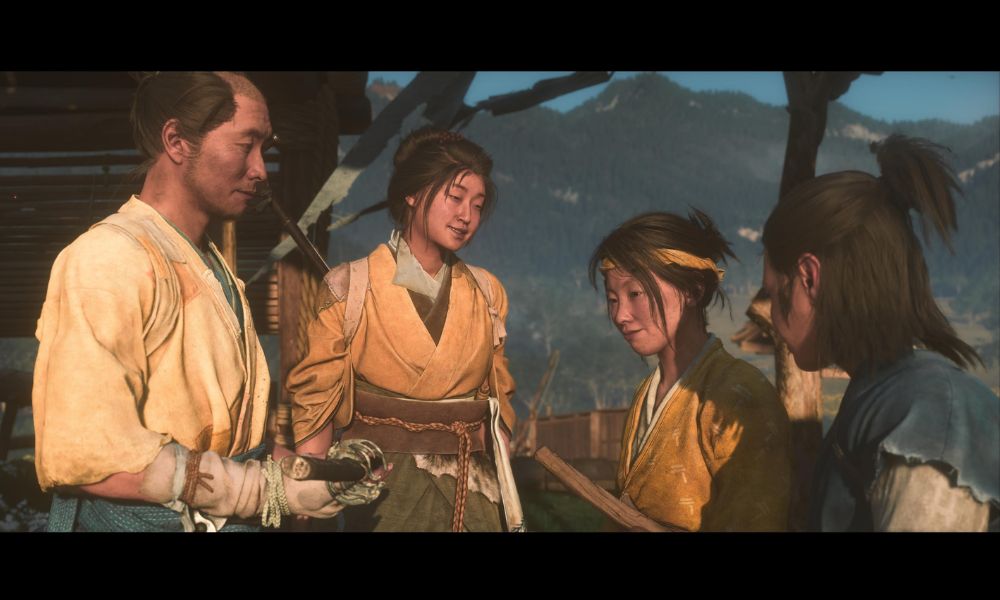
Outside of the Wolf Pack, Atsu’s deceased family also guides her journey through interactive flashbacks. Players can revisit Atsu’s childhood and engage with her family in scenes that blend nostalgia with narrative relevance, deepening her character but also offering clues that tie into the present-day storyline. It’s a great way to use flashbacks not only as a storytelling tool, but also in a way that’s meaningful and rewarding to the player.
The Way of the Ghost
Ghost of Yōtei introduces a refined combat system that builds on the foundation of Ghost of Tsushima and offers new layers of depth. Rather than relying on traditional katana stances, Atsu wields a diverse arsenal designed to counter specific enemy types across Ezo.
While the katana remains a reliable all-rounder, players can switch to specialized weapons like the massive odachi for overpowering brutes, the kusarigama for breaking through shields, the yari to counter kusarigama users, and dual katanas for swift strikes against yari-wielding foes. This variety encourages strategic thinking and adaptability in every encounter, as Atsu will need to think quickly to deal with threats effectively.
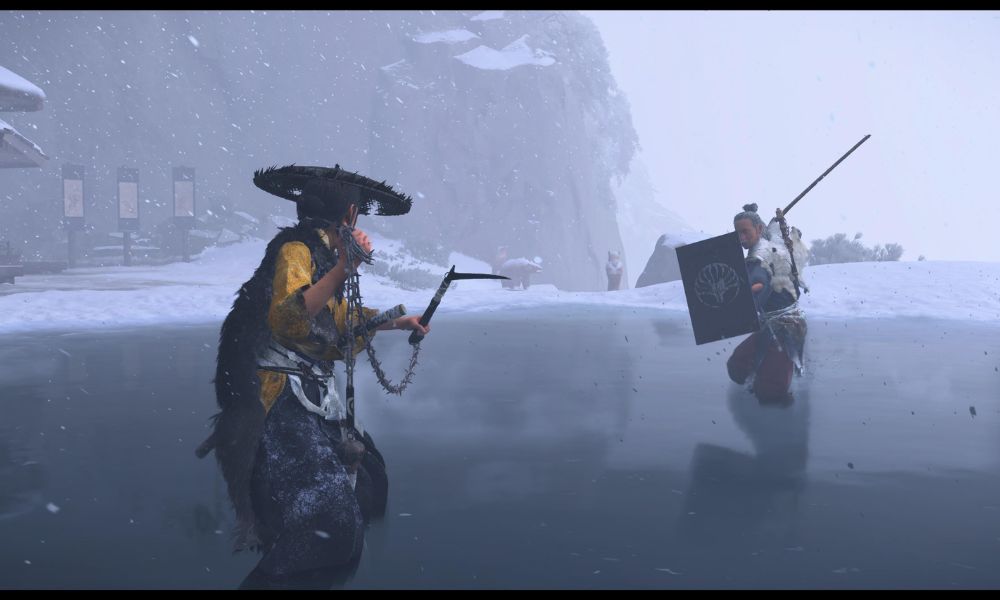
Combat in Ghost of Yōtei is dynamic and responsive, allowing players to dodge mid-animation, switch weapons fluidly, and deploy tools in real-time, resulting in extremely cinematic encounters. Enemies now employ disarming techniques, temporarily stripping Atsu of her weapon and forcing her to fight barehanded. In turn, Atsu can disarm foes using her Focus Attack, and even hurl weapons as projectiles for satisfying takedowns. Visual cues remain critical, with a new yellow glint signaling incoming disarm attempts, along with the parry and unblockable tells from before.
It’s a bit of a missed opportunity that Atsu can only throw weapons she picks up. In times when she’s disarmed and needs a weapon to fight, picking up a katana, kusarigama, or yari and simply throwing it feels like a waste. Atsu’s own weapons can land anywhere, and if a discarded enemy weapon is nearer, why not have an option to use it too?
Unlike Jin Sakai, Atsu embraces deception and survival over honor. Classic tools like kunai and smoke bombs return, joined by the metsubushi powder that blinds enemies. Ranged combat is expanded with bows, pistols, and tanegashima rifles that are fitting of the time period. Stealth remains a rewarding option in Ghost of Yōtei as players can silently eliminate enemies, hide in tall grass, and traverse ropes for vertical advantage. For those who prefer confrontation, the standoff mechanic returns, demanding precise timing for lethal strikes.
As players build kill streaks without taking damage, Atsu can unleash the Onryō’s Howl, terrifying enemies and causing some to flee. Saving up for Ghost Mode allows Atsu to dispatch foes with single strikes until the mode expires, delivering intense and cinematic combat moments.
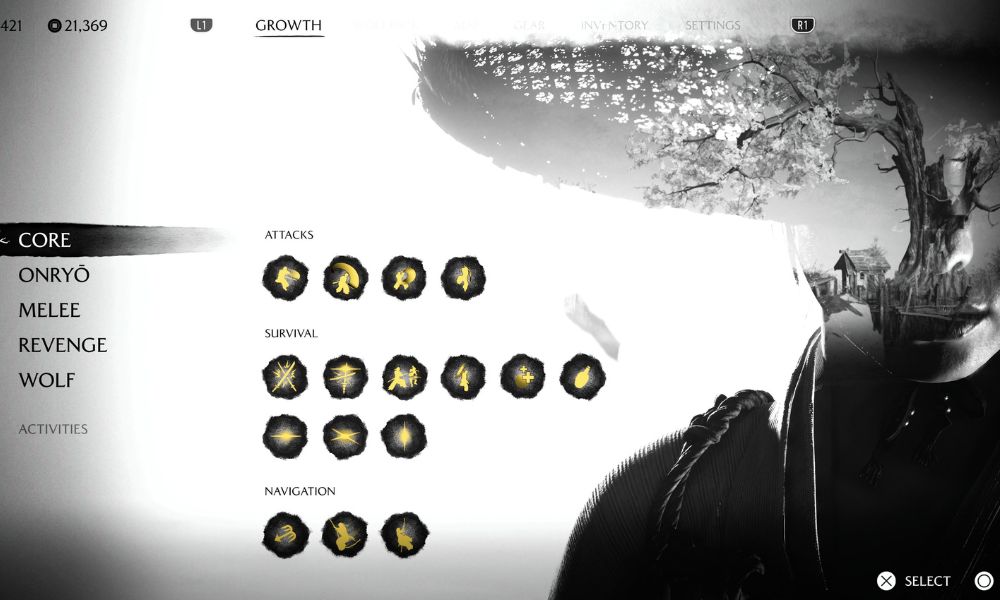
As Atsu’s legend grows, so too will her skills and capabilities on the battlefield. Throughout Ezo, players will discover Altars of Reflection, which are sacred sites where new combat techniques and weapon abilities can be unlocked.
Ghost of Yōtei also offers flexible progression, allowing players to tailor Atsu’s development to their preferred playstyle. Whether focusing on stealth tactics or enhancing melee prowess, the leveling system supports a personalized approach. However, given the diverse enemy types encountered across Ezo, it’s advisable to invest evenly across her five primary weapons to maintain combat versatility.
Crafting and upgrades are essential to survival in Ghost of Yōtei. Ezo is rich in resources, ranging from wood and metal to mushrooms, plants, and fish, encouraging players to explore and gather materials for gear enhancements. Atsu begins her journey in the iconic Onryō outfit, but can acquire a range of armor sets, each offering unique gameplay benefits like stealth boosts or firearm protection.
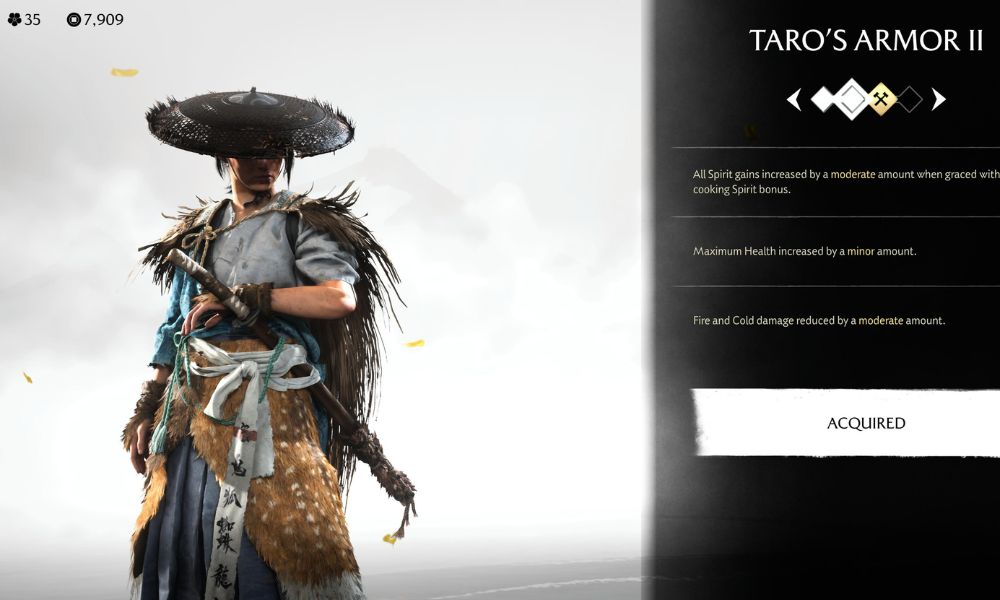
Customization in Ghost of Yōtei extends to accessories, with options such as oni masks and full-face coverings, allowing players to personalize Atsu’s look. Multiple loadout slots make switching between gear combinations seamless, which is a fantastic addition to the game.
Combat strategy is further deepened through major and minor charms that provide passive buffs, some of which evolve when specific conditions are met, adding another layer of strategy when building loadouts with particular objectives.
The World and its Sights
Ghost of Yōtei reimagines exploration with a more organic approach, moving away from traditional map markers in favor of environmental observation. Using a spyglass, Atsu can scan her surroundings for visually distinct points of interest, which are only added to the map upon investigation. Fast travel remains available for previously visited locations, enhanced with near-instant load times.
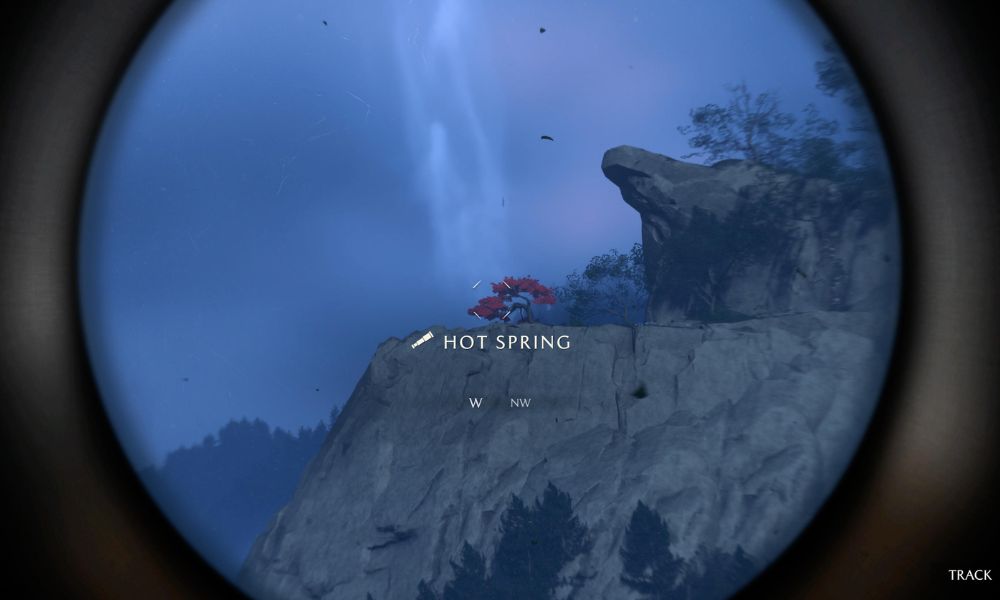
Clues about the Yōtei Six surface dynamically through encounters with Lord Saito’s forces or bounty-hunting ronin, offering opportunities for interrogation and intelligence gathering. Not all interactions are hostile, though, and friendly settlers may share cryptic hints about notable locations that could be worth exploring.
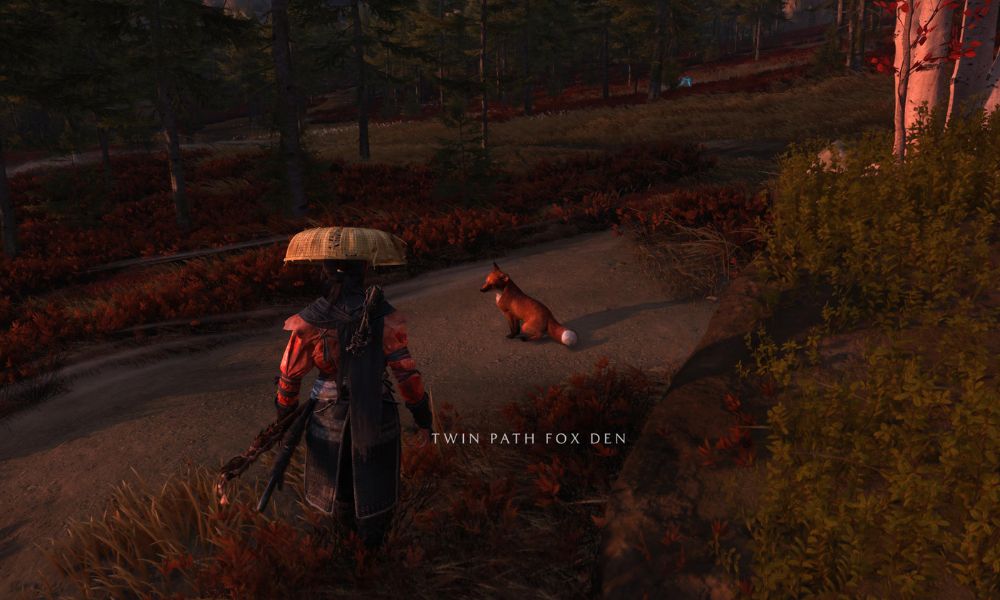
Returning activities from Ghost of Tsushima, like fox dens, bamboo strikes, and hot springs, have been thoughtfully reworked. Some hot springs now include pre-bath tasks, while new wolf dens involve Atsu’s animal companion. As players complete objectives with the wolf, their bond strengthens, unlocking combat support such as assistance in standoffs and emergency rescues. While engaging and slightly different from before, these activities are best spaced out to avoid repetition.
Shrines also make a comeback in Ghost of Yōtei, offering spiritual benefits and often requiring environmental puzzle-solving and platforming to reach. Atsu’s rope and hook allow for dynamic traversal across ledges and treetops, adding verticality to exploration.
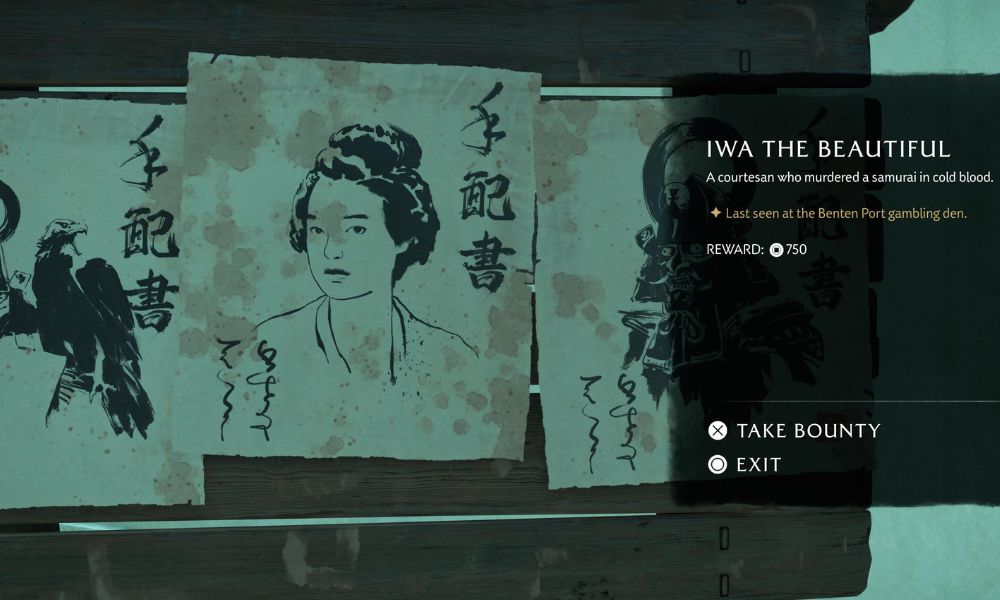
Ezo offers a wealth of side quests and activities for players willing to immerse themselves in the world. Players can pursue bounty missions, respond to civilian requests, and track down mythical armor through tales shared by storytellers. These quests yield currency, gear, and lore, all managed through a streamlined map interface that makes tracking objectives intuitive.
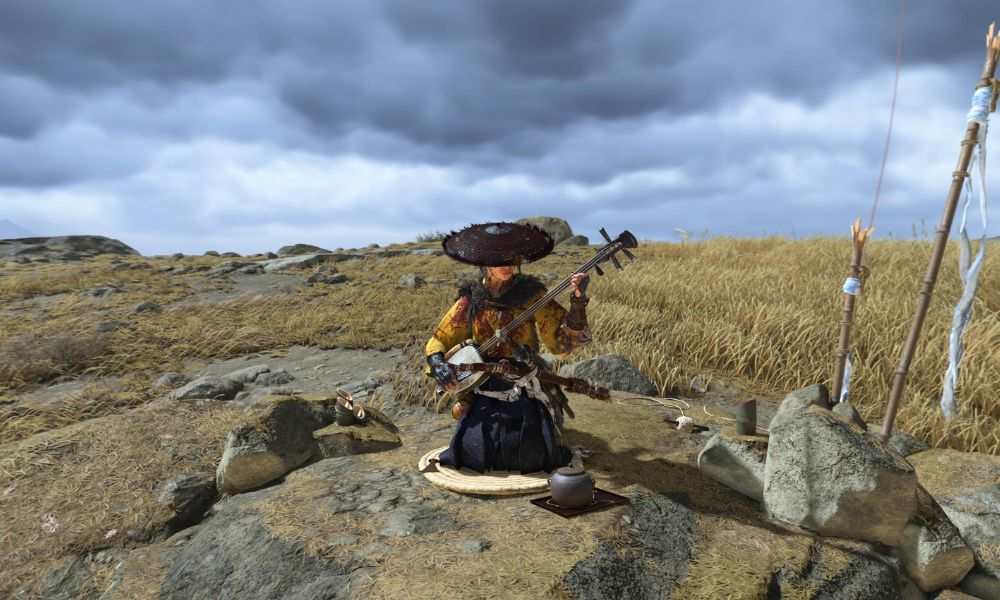
The acclaimed Guiding Winds system returns in Ghost of Yōtei, now customizable through music. Atsu, a skilled shamisen player, can perform melodies to direct the wind toward specific objectives like wolf dens or hot springs. Golden Birds also reappear, guiding players to nearby secrets and collectibles.
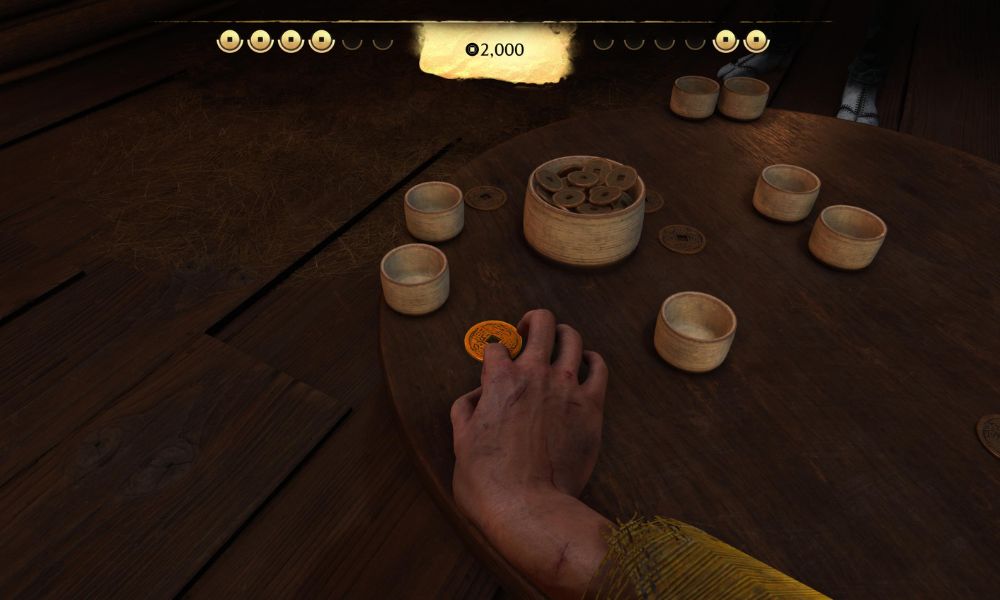
Inns and shops across Ezo provide essential services, including consumables and maps that reveal hidden locations. New to Yōtei are gambling dens, where players can enjoy Zeni Hajiki, a coin-flicking mini-game that offers both monetary rewards and unique charms. Simple to learn yet engaging, it serves as a refreshing break from combat and exploration.
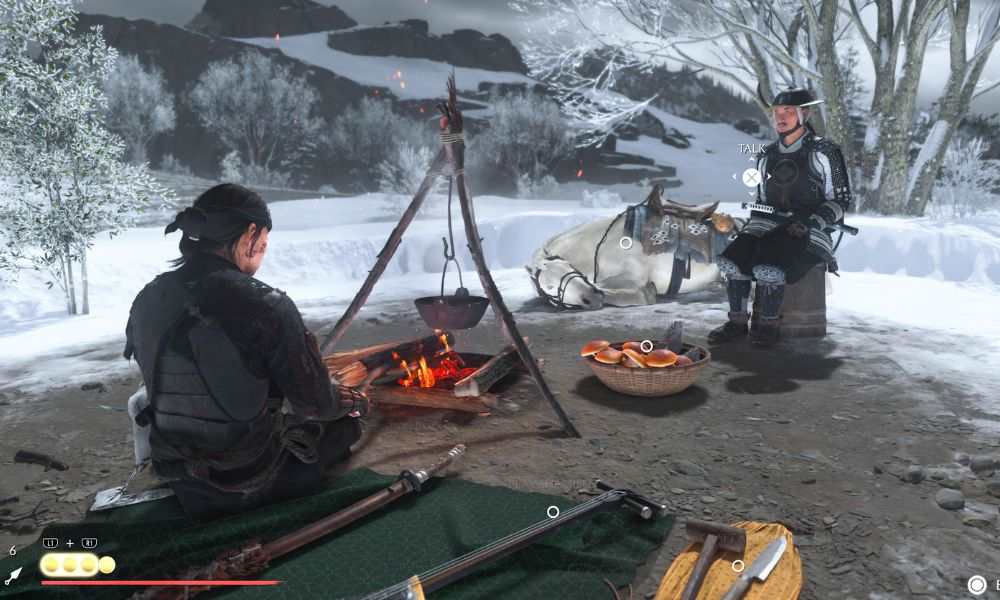
Campsites that Atsu can set up nearly anywhere in the open offer a moment of rest, allowing her to restore her Spirit, craft gear, cook meals, and interact with allies. These quiet segments, sometimes visited by members of the Wolf Pack or wandering NPCs, work to lessen the repetition, making exploration feel both purposeful and personal.
Though there are many side activities in Ghost of Yōtei, they feel relevant because they tie into the overarching narrative, or to Atsu herself, one way or the other. It feels like you never lose track of the main quest, even if you haven’t moved through the questline in a while due to side-quests.
Tools of the Trade
Ghost of Yōtei delivers a richly immersive experience, blending atmospheric design with full utilization of the PlayStation 5’s DualSense controller. Every feature is thoughtfully integrated, from ambient audio through the built-in speaker to tactile touchpad interactions like tracing Sumi-e strokes or handwritten notes.
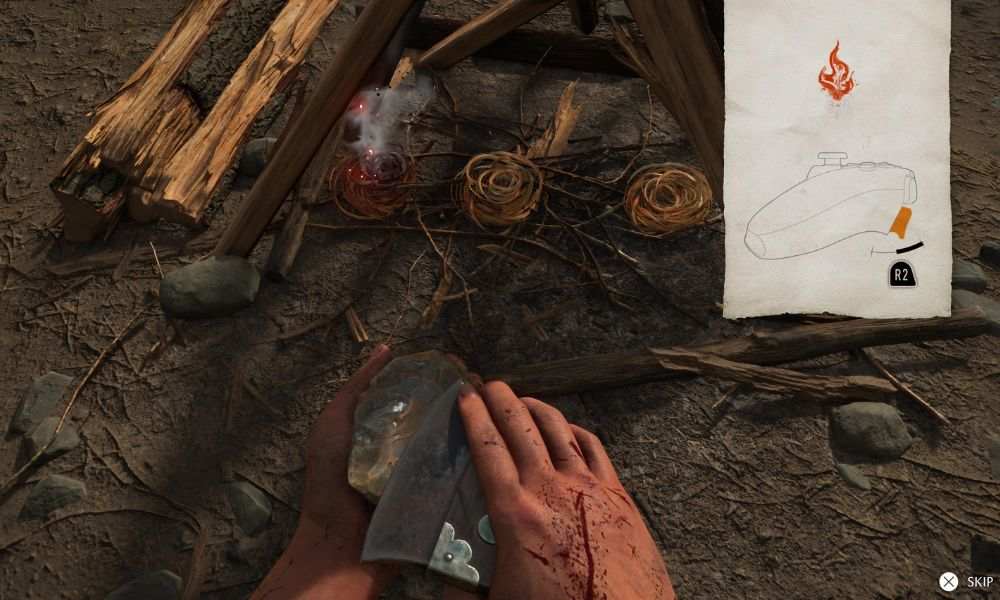
Haptic feedback varies subtly with terrain and actions, while adaptive triggers simulate tension when drawing a bow or flicking coins in the Zeni Hajiki mini-game, adding satisfying nuance to gameplay. Interactive sequences such as camping and cooking deepen immersion. Players manually start fires, simulate breath with the R2 trigger, and rotate ingredients for even preparation. They can get tiring over some time, but it’s good to know that these engagements are optional.
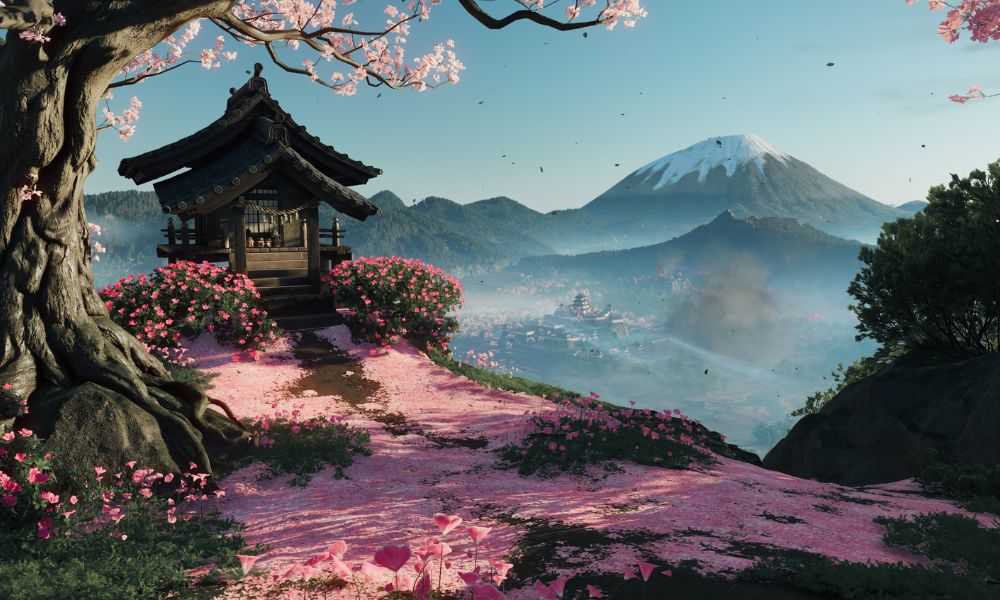
Much like its predecessor, Ghost of Yōtei excels in both visual and auditory presentation. The game’s environments are vibrant and richly detailed, showcasing Ezo’s diverse biomes, from the scorched landscapes ruled by the Oni to the frigid territories under the Kitsune’s domain. These regions are not only visually distinct but also reflect the elemental themes of their respective antagonists.
Lush grasslands, serene forests, and dynamic weather effects combine to create a breathtaking world that constantly changes, enhancing the lighting and mood. The return of Photo Mode is a welcome feature, offering a robust suite of filters and tools to capture the game’s artistry. Environmental details are meticulously crafted, as blood splatters stain the snow realistically, and flower petals scatter naturally as Atsu sprints through white fields, triggering a speed boost.
Complementing the visuals of Ghost of Yōtei is a standout soundtrack that blends traditional Japanese instrumentation with acoustic guitar riffs reminiscent of Spaghetti Westerns. This fusion feels thematically appropriate, reinforcing the game’s revenge-driven narrative. Several tracks are particularly memorable, enriching both quiet exploration and intense combat.
Voice performances in both English and Japanese are exceptional, bringing emotional depth and authenticity to the characters. Notably, lip-syncing adjusts according to the selected language, further enhancing immersion.
Ghost of Yōtei remains rooted in traditional Japanese culture. Shrines, architecture, and attire reflect historical artistry, while gestures like bowing are not only acknowledged by NPCs but can trigger unique responses in specific locations. The inclusion of Ainu settlers adds regional authenticity, with some side quests offering insight into their customs and way of life.
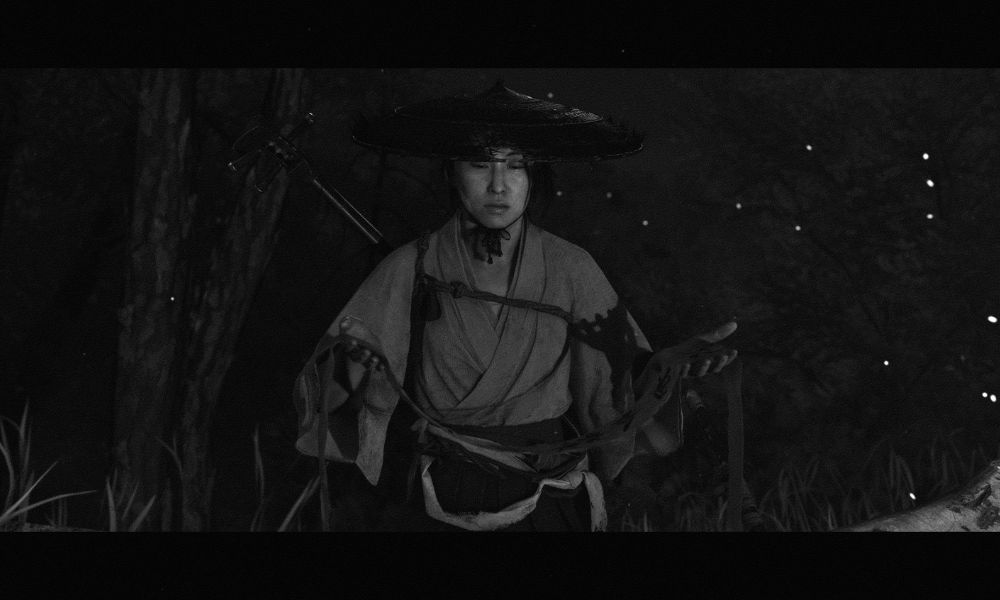
On the cinematic front, Kurosawa Mode returns, allowing players to experience the game in monochrome with heightened grain and contrast, a homage to the legendary filmmaker. While the game’s vibrant visuals are best appreciated in full color, this mode offers a stylistic alternative for those seeking a more classic samurai film aesthetic.
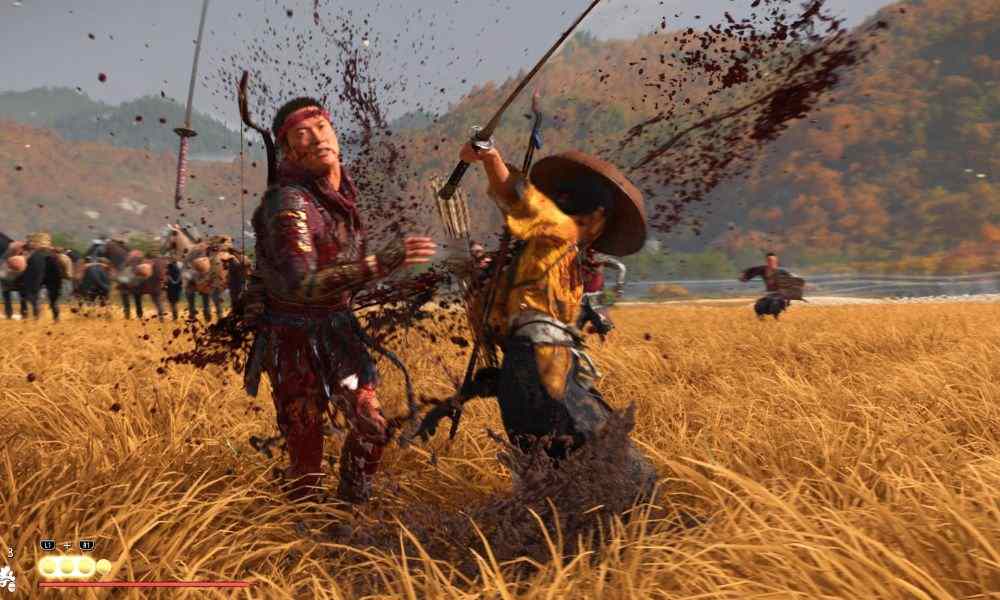
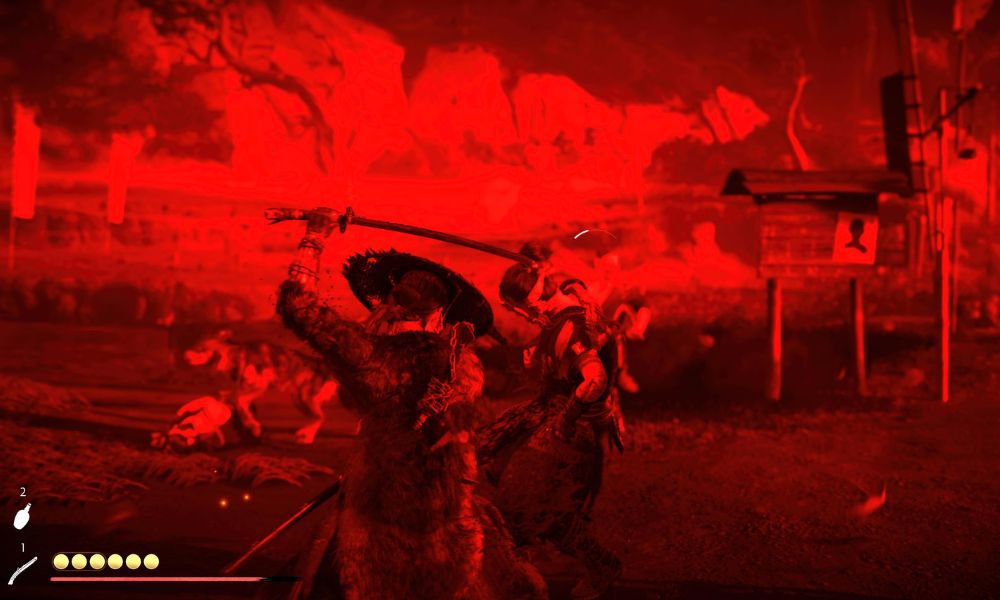
Expanding on this tribute to Japanese media, two new presentation modes have been introduced in Ghost of Yōtei. The Takashi Miike Mode intensifies combat visuals by bringing the camera closer and amplifying blood and mud effects, evoking the director’s signature gritty style. Meanwhile, the Shinichiro Watanabe Mode adds lo-fi beats inspired by Cowboy Bebop and Samurai Champloo. Though occasionally unconventional, these tracks provide a relaxed ambiance during exploration and dynamically shift to match the tone of stealth and combat sequences.
Verdict: Buy it!

Despite its more streamlined narrative, familiar genre beats, and sometimes repetitive nature, Ghost of Yōtei is an experience that’s worth the wait and more. It honors the spirit of Ghost of Tsushima while evolving its systems in meaningful ways, offering a refreshingly fresh and refined combat experience, deeper customization, and a richly realized world. Ghost of Yōtei is unmissable.
Exploring Ezo Island is a rewarding experience in Ghost of Yōtei, whether you’re admiring its breathtaking landscapes or engaging in dynamic combat that challenges your adaptability and mastery of diverse weaponry. Atsu’s personal quest for vengeance may occasionally take a backseat to the wealth of activities available, but the journey remains compelling throughout.
*Ghost of Yōtei was reviewed on a PS5 with a review code provided by the publisher.
Ghost of Yōtei Review
Despite its more streamlined narrative, familiar genre beats, and sometimes repetitive nature, Ghost of Yotei is an experience that's worth the wait and more.
PROS
- Superb Audiovisual Presentation
- Creatively Challenging Combat
- More Varied Side Activities
- Exploration That Rewards Curiosity
CONS
- Story not as Complex as Ghost of Tsushima
- Side Activities May Feel Repetitive