
Monster Hunter Stories 3: Twisted Reflection Preview
Monster Hunter Stories is a significant property for Capcom, not only because it bears the extremely famous Monster Hunter name, but also because it gives them the opportunity to tap into the turn-based RPG segment with a headstart due to its popularity. As it’s done just that, resulting in a sizable following over its first two installments.
Scheduled for a global release on March 13, 2026, Monster Hunter Stories 3 is positioned as the most ambitious entry in the series, taking advantage of the next-gen hardware as it launches on the PS5, Xbox Series, PC, and the Switch 2. We’ve been playing it for a fair bit of time, and so far, the game ticks all the boxes for an engaging, entertaining adventure that looks to take the series to new heights.
Monster Hunter Goes (Geo)Political
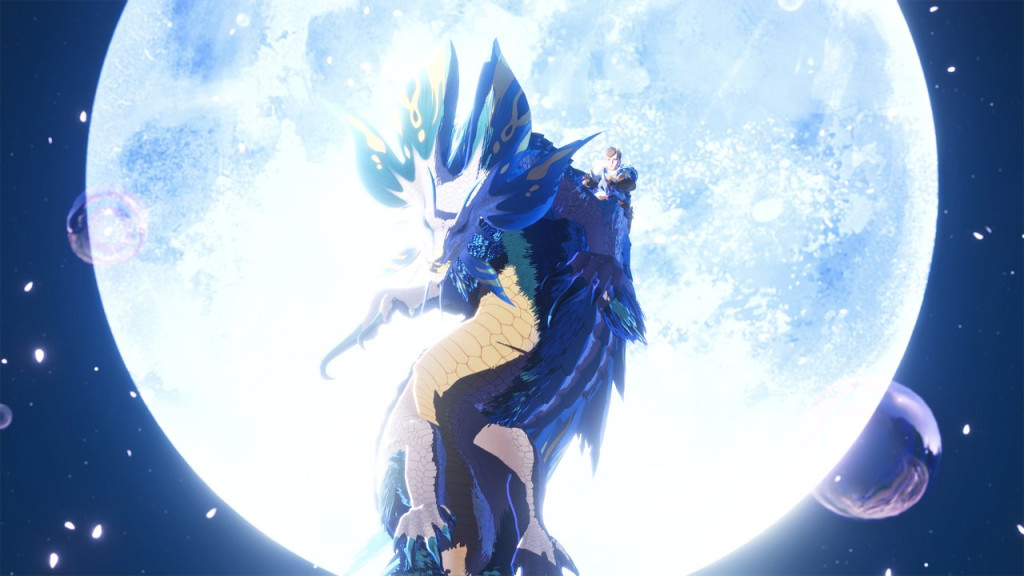
Monster Hunter Stories 3: Twisted Reflections takes place 200 years after the events of the first two titles, where two powerful nations, Azuria and Vermeil, are on the brink of ecological and social collapse due to a phenomenon known as Crystal Encroachment, which is driving countless monster species toward extinction. As revealed in previous trailers, we see a crystallized egg quartz that hatched into a Rathalos, a species long believed extinct in the region. This Rathalos was one of twin hatchlings, and the emergence of twin Rathalos bearing the rare “Skyscale” marking is regarded as a dire omen.

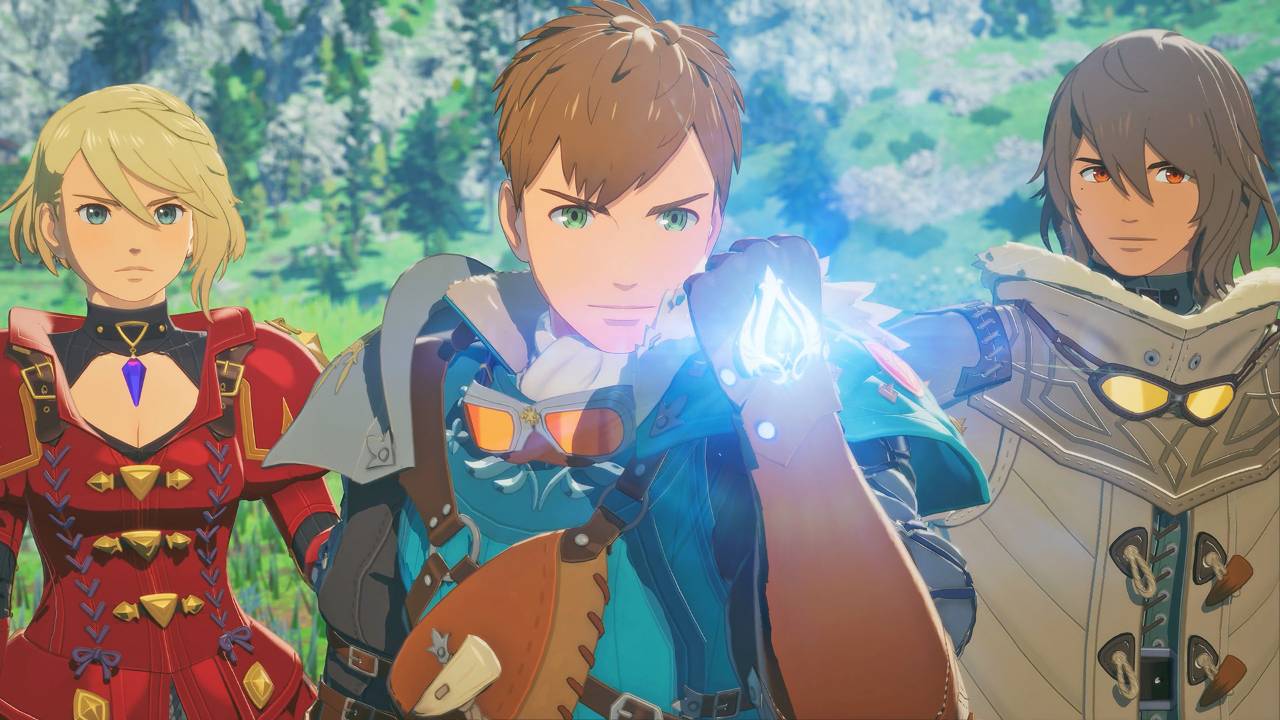
Monster Hunter Stories 3: Twisted Reflections breaks the series’ tradition by introducing a non-silent playable character: an ace rider of the Ranger Corps tasked with preserving the ecosystem. Additionally, series staple Navirou is absent from the game and is replaced by Rudy, acting as a companion and guide throughout the game.
The character interactions in the game are much more welcome and engaging this time around, with dialogue and banter that feel more natural due to the voiced protagonist. The rest of the cast is well-developed and, based on the early game, each character has the opportunity to shine through their unique side stories, which offer a deeper look at their personalities and motivations.

Strategic Combat Evolution
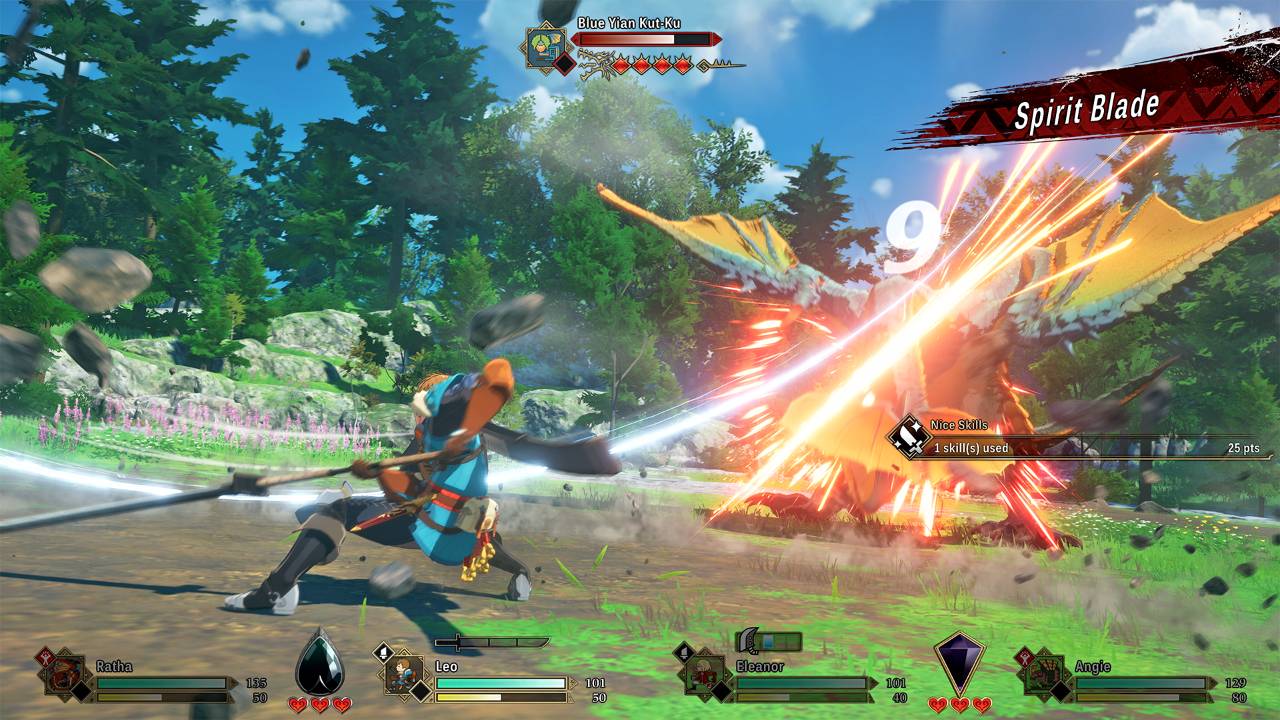
Much like the mainline Monster Hunter titles, combat systems are the crowning glory of Monster Hunter Stories 3: Twisted Reflection. The turn-based combat system is built on the Rock-Paper-Scissors (Power, Speed, Technical) formula but introduces several enhancements to address previous criticisms. Familiar elements like head-to-head attacks make a return, but one of the new additions is the Wyvernsoul Gauge, a meter that represents an enemy monster’s combat capabilities and is a critical learning point for players.
During combat, certain attacks will reduce this gauge, and when it hits zero, the monster gets staggered and enters a fatigued state, making them easier to evade and deal significantly less damage. Once their Wyvernsoul stock is completely depleted, they are now toppled, allowing the player to initiate a Synchro Rush, which is a high-damage attack where the entire party attacks the enemy simultaneously. This mechanic not only provides a satisfying payoff for tactical play but also rapidly fills the Kinship Gauge, which is basically a super meter that allows for flashy and powerful Kinship Skills.
Monster Hunter Stories 3: Twisted Reflection offers players a variety of familiar series weapons like the Hunting Horn, the Bow, the Longsword, and more, maintaining the need to switch weapons during battle to exploit monster weaknesses and target parts that are weak against certain weapon types. These weapons work as you expect them to, with attack types such as Slash/Blunt/Pierce depending on the weapon used, offering effects like breaking and severing parts.
Upgrading these weapons (and armors) will require various materials, and Monster Hunter Stories 3: Twisted Reflection has an interesting way of setting this up. Upgrading it the first time will require a certain amount of low-level materials (10 points worth, for example), and each low-level material has a point value (material A worth 1 point, B worth 2 points, and so on). Upgrading to the next level will require rarer materials, which is a nice way of somehow limiting progression and not cracking the game wide open in the early hours.
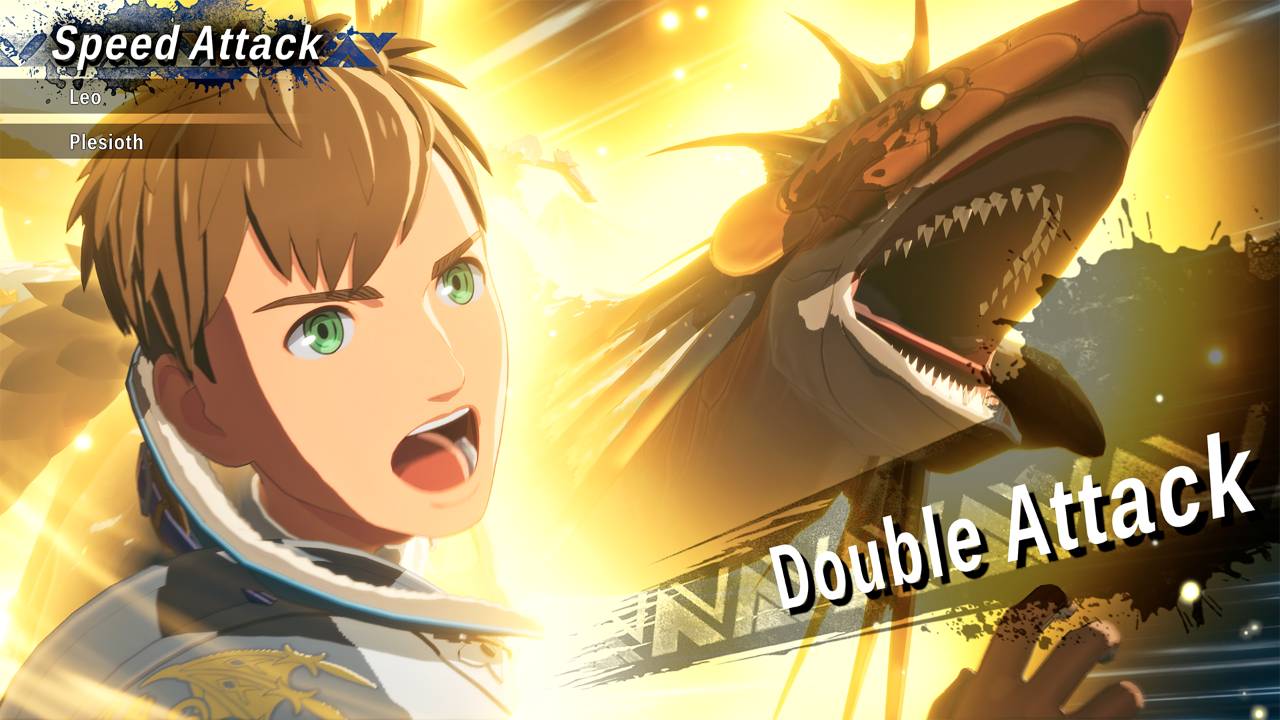
Signature monsters make their way to Monster Hunter Stories 3: Twisted Reflection, where veterans will recognize the likes of Rathian, Paolumu, Tobi-Kadachi, and more. Even the more recent monsters like Arkveld and Rey Dau are here, making it feel like a proper franchise title. Player characters aren’t the only ones with tricks up their sleeves; monsters in the game also have gimmicks, such as Feral variants that are souped-up versions equipped with crystallized parts, requiring players to adjust their offensive and defensive approach to the battle.
The Habitat Restoration System
Perhaps one of the most innovative features of Monster Hunter Stories 3: Twisted Reflection is the Habitat Restoration system. Think about it as the monster collecting system but with a twist, as Invasive Monsters encroach on other territories, requiring players to engage in special battles that aim to make the monster retreat back into their den and recover the eggs of endangered species.
One early example is the recovery of a Rathian Egg, and after hatching it, players can choose to restore the habitat of the area by releasing the monster back into the wild, effectively increasing the Ecosytem Rank of the zone and eventually allowing players to discover rare eggs (and rare monsters). One such example is the introduction of dual-element monsters, which can be influenced by the region’s element, infusing them with a new element on top of their usual one.
Simply put, you can hatch a Thunder-Fire Tobi-Kadachi, represented by a unique look, adding extreme depth to party composition to prepare for endgame challenges.
Visual Treat
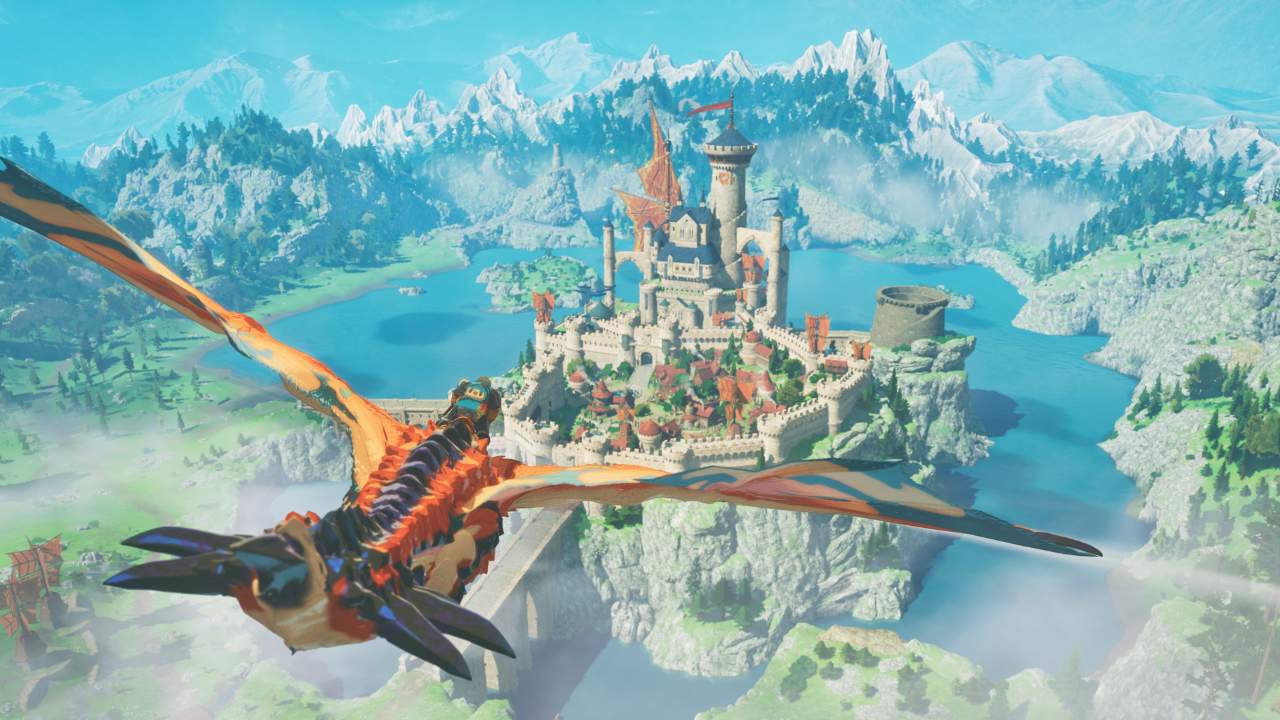
Most noticeable is the upgrade to its visuals, and the art direction of Monster Hunter Stories 3: Twisted Reflection is truly gorgeous. In the first area alone, the zone is vast and holds stunning vistas and places to explore. Towns look and feel lived in, and the character designs are top-notch, brimming with personality and expression that make them quite engaging. The cooking animation featuring Eleanor is utterly adorable.
The impressive visuals extend to combat as well, where attacks fill the screen with particle effects and light flashes that would probably make players feel bad about unleashing such cool-looking Kinship Skills on helpless Velocidromes and Yian Kut-Kus.
The world of Monster Hunter Stories 3: Twisted Reflection is vast as well, as players are highly encouraged to explore because various actions, like flying, are accessible from the start. Verticality is emphasized as well, with higher areas reachable through updrafts. Certain environments can be traversed depending on your equipped Monstie, such as Tobi-Kadachi’s tree-climbing.
The world of Monster Hunter Stories 3: Twisted Reflection is also littered with loot that players can pick up for crafting and cooking, and on the PS5, loading times are hardly noticeable, with the area looking gorgeous at all times.
Overall, it’s looking like Capcom has knocked it out of the park with Monster Hunter Stories 3: Twisted Reflection. Even in the early hours, the gameplay is fast and engaging, with combat as the shining star, and collecting Monsties has been expanded as well, allowing for extreme depth. With a little over a month until its launch, Monster Hunter fans will definitely want to watch out for this one.
Monster Hunter Stories 3: Twisted Reflection is coming to PS5, Xbox Series, Switch 2, and PC via Steam on March 13, 2026.


