

How ‘OutRun’ Influenced a Yakuza Kiwami 3 Mini-game and the Possibility of Future Antagonists Being ‘Hot Men’ Like Yoshitaka Mine

Few games carry the weight of legacy like Yakuza Kiwami 3, and Ryu Ga Gotoku Studio Chief Director Ryosuke Horii knows it. There was much criticism of the 2009 original, and during a recent hands-on session, he discussed the challenges of rebuilding a beloved title from the ground up, modernizing its systems while preserving the core of Kiryu’s journey.
The in-depth discussion of Yakuza Kiwami 3 covered darker narrative threads, the game’s rebuild, Mine as a “hot” antagonist, and how a classic SEGA racing game influenced one of the most fun mini-games in the series, inviting veterans and newcomers to rediscover Kamurocho in a whole new light.
Modern Engine, Fresh Battles
Ryosuke Horii set the tone early when asked how the transition to the modern Dragon Engine enabled upgrades to level design and environmental interactions for Yakuza Kiwami 3: the team treated this project as more than a visual update.
“We are using the latest version of our Dragon Engine,” says Horii as he positioned the remake as a fresh title rather than a literal recreation. “Compared to the original Yakuza 3, the structure of battle is fundamentally different. We don’t really have any remnants of the original game there, so it’s more like a continuation like our latest titles.”

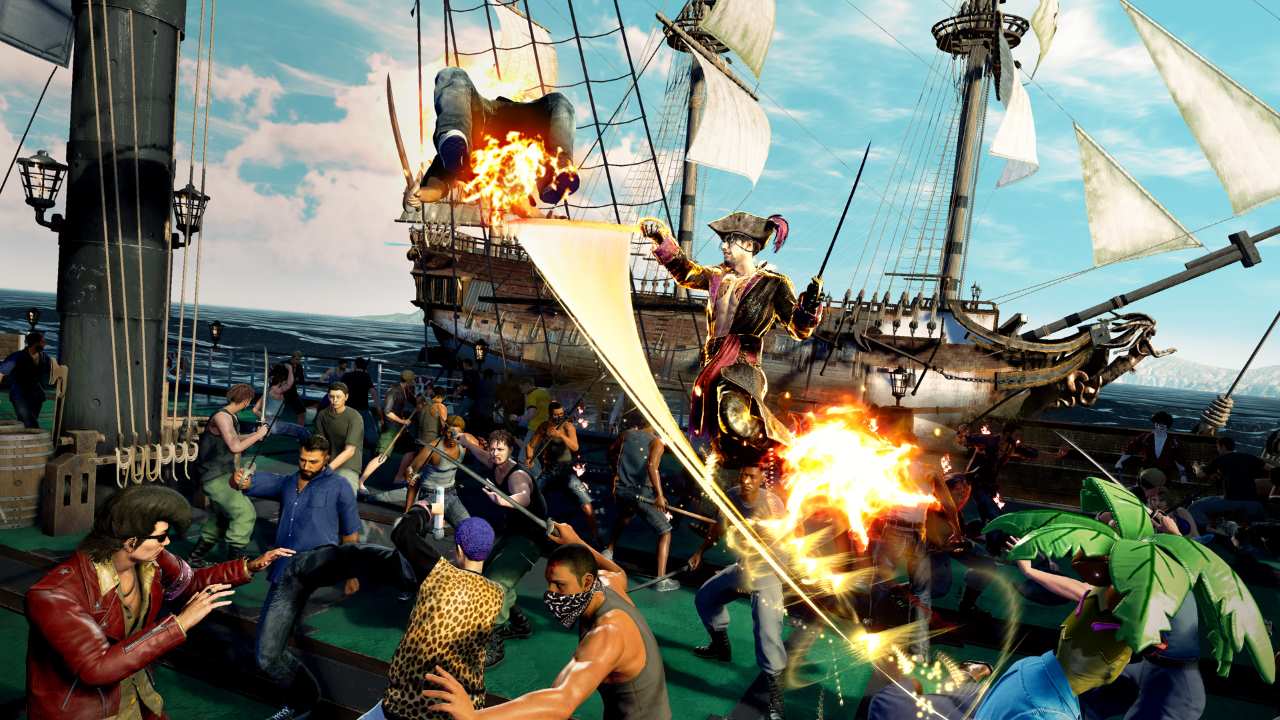
Horii referenced lessons learned from recent Pirate Yakuza, which emphasized speedy, high-flying combat, and how those elements were tuned to fit Kiryu’s younger persona in Yakuza Kiwami 3.
“So our latest action title was Pirate Yakuza, and for that, we had Majima doing very speedy battles with a lot of jumps and a lot of high-quality action elements. So we have taken from that, while also making it tuned to be very Kiryu-like because we do have a Kiryu as the main character for this one.”
A Deeper Look at Dark Ties and “Hot Man” Yoshitaka Mine
One topic was Dark Ties, the new story centered on Yoshitaka Mine. Instead of simply remaking Yakuza Kiwami 3, the risk of it being bland led them to add an entirely new story as well. His popularity was a factor, but the development team wanted to delve into him further since he only appears occasionally in the original.
“Looks are definitely a factor, especially with the young woman demographic. He’s definitely more popular than Kanda… He’s a character who has the looks and money, and seems to have everything, but on the inside, he always feels like there’s something missing. In his past, he used to be very poor, and he has no one that he can completely trust, so while he has everything, he is a very lonely character. I think that’s something that people look at and they can really empathize with.”
“While Mine is a very cool and composed character, he also hides a sort of insanity within him… so to show that part off, the cool and stylish shootboxing would not be enough, so we have Dark Awakening, where he completely breaks free of any reason and logic and shows his inner insanity. So those two parts come together to show off this character as a whole.”

Horii said that, despite Mine’s popularity, it doesn’t mean they will make all future antagonists “very hot” men.
“Just because Mine is very popular, we’re not going to make all future enemy characters very hot men, but if we see this new Dark Ties title selling like hotcakes, maybe we’ll be seeing RGG have just hot men on the lineup,” Horii jokes.
Horii also said, “This is the first time we have a Yakuza as the main character,” giving the team room to show the underworld and the inter-gang fights from a fresh perspective.
Horii emphasized the studio’s intent to explore Mine in Yakuza Kiwami 3, describing him as “not very heroic in nature… he doesn’t go out of his way to help out others,” unlike Kiryu and Ichiban, who have a kindness and sense of justice in their hearts.
“He has different ways of solving the problems that he faces. So that should be very interesting to see.”

For Yakuza Kiwami 3, the team wanted to reveal Mine’s inner life, his loneliness, charisma, and the contradictions that make him compelling. Despite other antagonists having recent portrayals in the previous Kiwami titles, the team didn’t do much to recontextualize Mine to better align with the others.
“Fundamentally, we don’t really try to change how our characters are depicted or their characteristics based on our audience… The original was around 15 years ago, and as time passes, the ages and demographics of our fans have changed a lot. We don’t try to change things in the game to try to make them a hit with our new audience. We keep our fundamentals the same, and we don’t really change characters based on what we think fans may like more or what the current market may like more.”
“We’re not sure yet if our fans are going to embrace the new look, but we sincerely hope they do.”
New Combat Options
Horii also explained the decision to introduce weapon-based styles in Yakuza Kiwami 3 alongside traditional hand-to-hand fighting. RGG titles traditionally have two combat styles players can switch between, and since fans enjoy that aspect, the team decided to include it from the start.
He explained that their research on traditional Okinawan martial arts inspired the new Ryukyu style. “When we were creating a new style for Yakuza Kiwami 3, the setting is in Okinawa, so we wanted some style that has something to do with that setting.”
“There were some Okinawan traditional martial art styles that were hand-to-hand combat up close, which we did consider, but that would end up being not too different from the Kiryu’s Agent Style in The Man Who Erased His Name. So we wanted something fresh, and we did feel maybe using weapons was a bit of a cheat to make it new, but it did end up being fun, so we did go with that.”

Horii also acknowledged balance concerns, citing that the weapon style in Yakuza Kiwami 3 can be powerful and might carry players through large portions of the game. However, encounters are designed so that switching styles remains strategically valuable.
“It is naturally very powerful… it is probably entirely possible to get through the game with just that style. As you go and play the game, there are enemies where the other style is a better fit, or it’s not, and you should use the other style. There will be a balance, and using both will end up being probably the most optimal way to play.”
Horii also acknowledged the criticisms of the original title, saying they had gone back and tried it themselves and found it difficult, noting, “Wow, this is hard, so we did have an understanding of the criticism and that the battle did need work.”
Since the original title was released 15 years ago, all systems, including the engine, have undergone changes and improvements. “We really don’t think about the original game when making Yakuza Kiwami 3, we just take a fresh start and make a good action game.”

Morning Glory Orphanage Side Content and OutRun
Horii spoke at length about Yakuza Kiwami 3‘s side content, particularly the Morning Glory orphanage. Rather than padding the game, side activities were chosen to deepen Kiryu’s relationships and the story’s emotional core.
“For volume, we think about it based on the structure of the main story… if the main story is really long, we try to make it a little bit on the lighter side so people don’t have to go on and on. On the other hand, for RPG titles, the amount players can keep on playing to completion is important, so we might try to make the side content volume a little higher.”

Horii said that the team’s philosophy is simple: “What the side content is, the effect of it on the main story, and the meaning of it. Why is it there?”
“For Yakuza Kiwami 3, The Morning Glory, Kiryu’s relationship with the children comes up in the main story, so for that side content, we put a lot of volume into that because it will be depicting Kiryu’s relationship with the children, and it will be making the story with them more moving and touching.”
That said, Yakuza Kiwami 3’s mini-games, such as cooking and sewing, were selected for Morning Glory because they reflect real parental struggles, and team members with children, such as himself, helped shape those choices.
“I have a kid too… based on my experience, I picked up the chores that are really difficult for me as a dad. I struggle with cooking and sewing, so if I struggle with this, Kiryu would probably struggle with this too.”

The sewing mini-game, Horii revealed with a laugh, evolved into a racing-like mechanic similar to the classic arcade game OutRun. It was also his “genius” idea to include that.
“The cloth is flowing towards you, and I look at that and say, wait, this is OutRun. It is sort of the opposite because the road is coming to you rather than you going toward the road. But yeah, I realized this is completely OutRun. It’s a racing game. So that’s how we ended up with that genius idea.”

Horii also added an interesting note about this mini-game, saying that “if you go way too off track, you injure your finger, and sometimes you can see drops of blood on there. So if you’re struggling with it, you might end up with a really bloody finger.”
Bad Boy Dragon and the Biker Gang
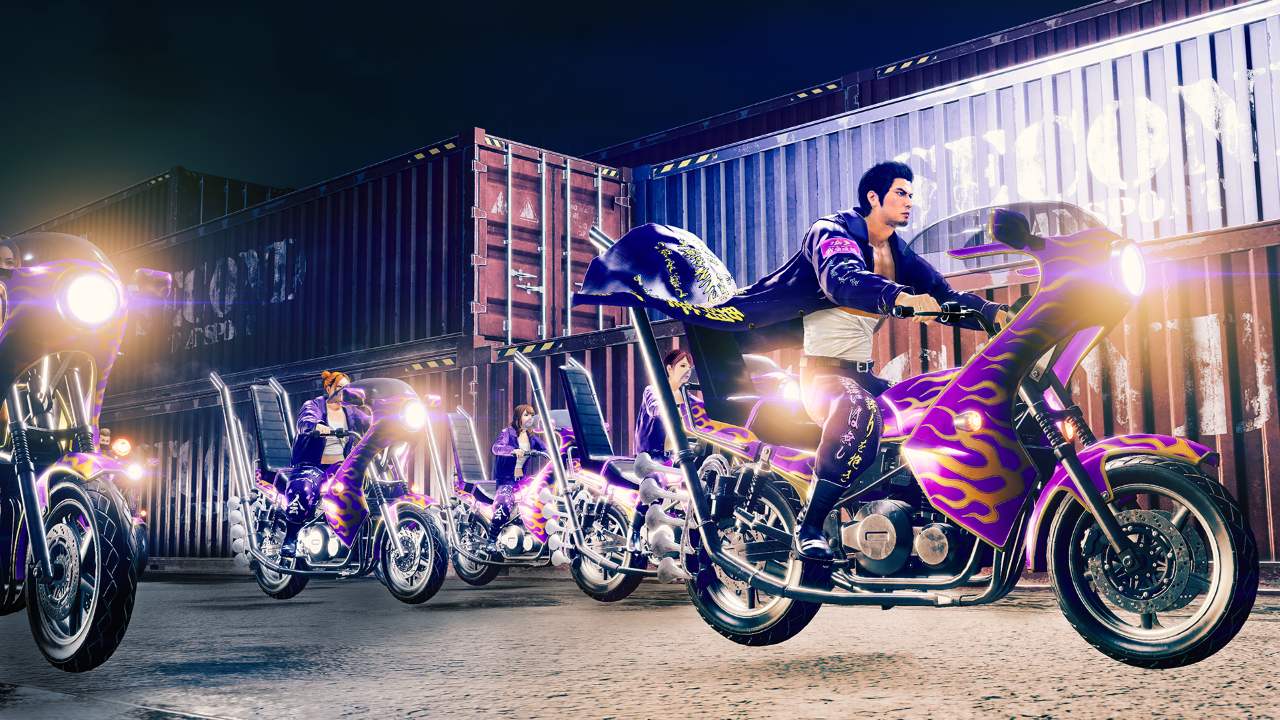
Moving on to the topic of Yakuza Kiwami 3‘s biker gang and the new Bad Boy Dragon mode, Horii said the idea came from his love of Japanese “Yankee” gang aesthetics and a desire to create group-based action that felt fresh yet familiar. He personally wanted to do it. The mode builds on concepts from previous titles but offers a fresh take on group battles and gang dynamics.
“We did have something similar in Pirate Yakuza already, but we did want to have somewhat of a fresh take on it. So for this one, we have the goal of just going around and destroying the enemy bases, so we did put in some changes so that people who have played our previous games could find new enjoyment.”
Balancing Nostalgia and Innovation
Horii was direct in noting that, as the franchise grows globally, there is an effort to balance nostalgia and accessibility, guided by the principle of “Cherish the original, but don’t lean on it and don’t be too dependent on it.”
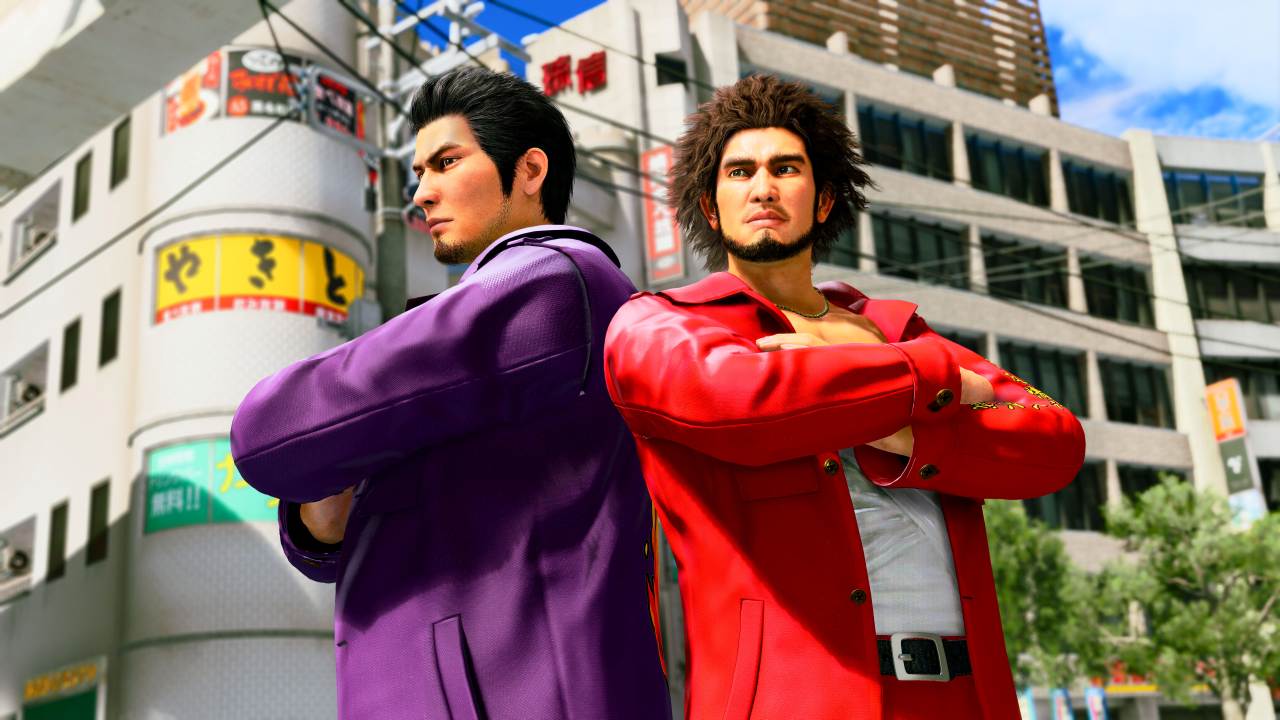
“This title is a remake of the original Yakuza 3, so what we kept from the original game and what we made new was a really sensitive matter to work out. The game has a lot of passionate old-school fans, so changing things has a chance of bringing up controversy, and we are well aware of that. The balance is something we worked hard on and put a lot of thought into.”
“We’re not trying to throw out the original, but at the same time, if we make the completely same game, there would be less of a point to that… While we do cherish the original game, all the new things we want to do, all the new technology we have, and everything the studio wants to do, we did have the stance of this being a new title that we’re creating, so all of our efforts are put in there, and this is a stance that we have for the future series as well.”
Closing Notes on Fans and Future Direction
Horii closed by acknowledging the franchise’s passionate fanbase and the studio’s careful relationship with community feedback. While player input matters, the team’s priority is to create experiences that surprise and move fans, not simply to mirror expectations.
“The feedback from fans and what they want definitely reaches our ears, and we are very thankful that we have such a large, loyal fan base. However, as a director, when making a game, we don’t think of it as providing a service that fans want, but rather, we’re making something that we think will be enjoyable and will be enjoyable to the fans as well.”
“Fan opinions are very important to us, but we don’t want to get pulled in or changed by them too hard to change the game we’re making. That would change our core philosophy as a development studio… we are hoping to make things that are beyond what fans are expecting.”
Yakuza Kiwami 3 & Dark Ties is set to launch on February 12, 2026, for PS4, PS5, Switch 2, Xbox Series, and PC via Steam.
