Thirty-five years after Sonic the Hedgehog first blazed across CRT screens, Takashi Iizuka still speaks about the franchise with the energy of someone who helped shape it yesterday.
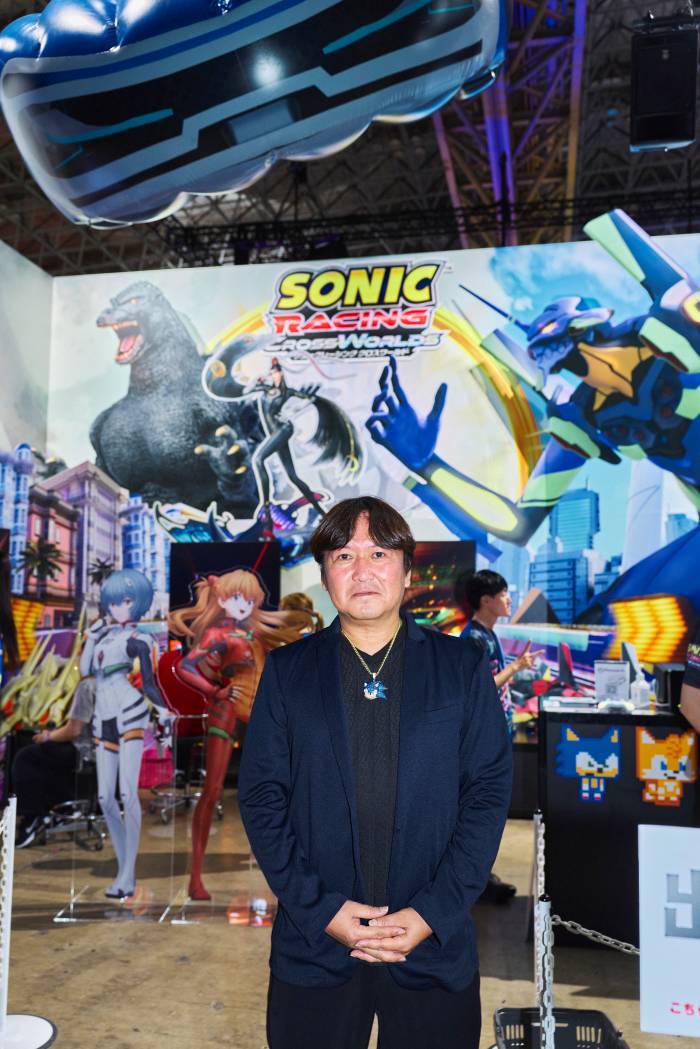
Sitting down with Southeast Asian Media during Tokyo Game Show for Sonic’s 35th anniversary, the Sonic Creative Officer oversees everything from games to movies to animation, and is the perfect person to talk to about the past, present, and future of the Blue Blur.
A Franchise That Survived Its Worst Moments
For Iizuka, Sonic’s 35-year journey has been deeply personal, as he even sees the franchise like his own child. “It has been 35 years, which means it has been longer than actually my children, so I look upon this franchise like sort of like my own son,” he said.
But raising Sonic hasn’t been easy, as the team faced many problems over the years that almost led to the cancellation. “There had been good times, and there had been bad times… during the worst times, I was told by the higher-ups that we should cancel the entire franchise. I had to fight within the organization to keep the franchise as long as possible.”
The turning point, he says, came in 2020, when the first movie launched. Initially, the movie received massive backlash due to Sonic’s design, but a redesign really turned it around for the better, and, as it seems, had a bigger impact than we could have ever thought because it introduced the character to an entirely new generation. “The biggest milestone for me was the first movie… that had been a great hit and definitely changed the course of this franchise.”
Sonic’s Future: More Stories, More Media, More Sonic
With Sonic now thriving across games, film, and animation, Iizuka sees the anniversary as a launchpad for even more expansion. “We’ve recently announced the children’s cartoon on Netflix, and in March of next year we are going to be releasing the fourth movie installment… We’ll be releasing some sort of media almost every year from here on out. Whether that be anime, video games, or movies. We’ll try to introduce as much media as possible in the coming year, so look forward to the official announcements.“
But even as Sonic branches out, Iizuka insists the franchise’s roots remain firmly planted in gaming. “The franchise itself is rooted in video games. We’re just going to base everything upon the video games. That’s our core principle.”
Interestingly, he also sees a shift in what fans want from Sonic games. While longtime players expect action-platforming, newer fans, especially those introduced through movies and animation, look for a more story-driven approach. “And for them, they put more emphasis on story. So in coming years, I really want to create some game that has more emphasis on story.”
Balancing Nostalgia and Modernity
One of Sonic’s greatest challenges is appealing to both old and new fans. Iizuka explains that the franchise now operates on two tracks: modern Sonic and classic Sonic.
“So we’ve been branching out in these two directions, and modern Sonic has more emphasis on the coolness of Sonic, and it has more appeal to the more recent fanbase. We want to put that more emphasis on modern Sonic as well as the classic Sonic, which has been in front of the franchise from the beginning in 1991.”
“And for the classic Sonic, we want to continue making things like the 2D platformers like Sonic Mania and Sonic Origins, which appeals to the fanbase that has been with us from the very beginning.”
This dual approach ensures that Sonic remains relevant across generations, something Iizuka says is essential. Fan preferences have changed dramatically over the decades, from wanting more characters in the 90s to wanting only Sonic in the 2000s, and now embracing the full cast again thanks to the films and animation.
“Now with the movies… Sonic, Tails, and Knuckles and also the new Amy/Emi character have been very welcomed by fans.”
To maintain consistency, Sonic Team follows a strict internal rule: the core relationships between Sonic, Tails, Knuckles, and Amy must remain the same across all media. “We, as a corporate principle, ensure that the characters’ relationships between Sonic, Knuckles, Tails, and Amy will remain the same throughout.
Celebrating 35 Years With Fans
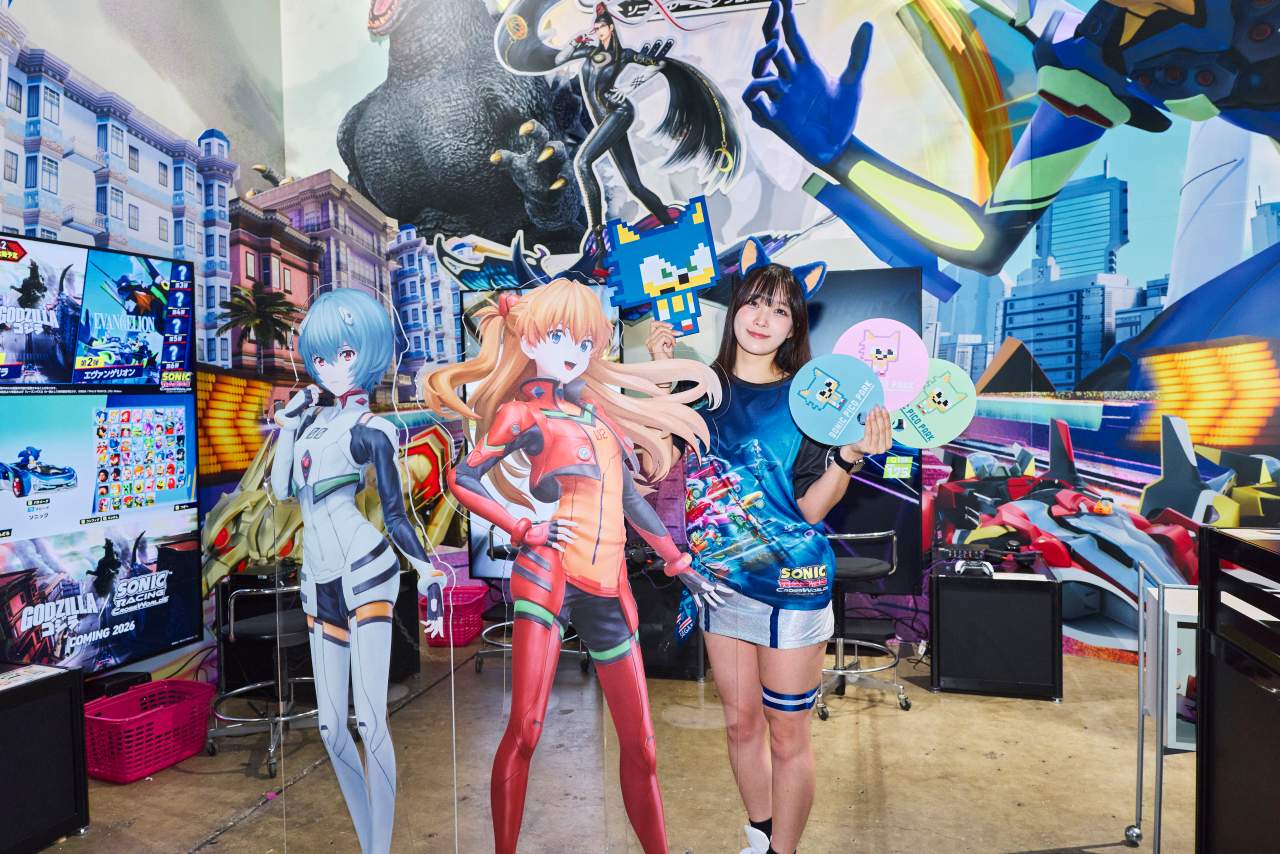
For Iizuka, the anniversary is not just a milestone but also really a celebration with the community. “I wanted to celebrate it with the fans,” he said. That celebration includes Sonic Racing CrossWorlds’ World Championship, Season 2 updates, Sonic Pico Park, and even real-world events like Chaos Hunt and a 35th anniversary party in New York.
“We have announced the Chaos Hunt event, which is a real-world event where players gather Chaos Emeralds, and we’re also going to be having a 35th anniversary party in New York next month. So it’s a celebration with the fans.”
The Characters Who Shaped Sonic and the Ones Fans Saved
When asked which character deserved more attention during the anniversary, Iizuka didn’t hesitate to say Shadow.
“Now, the third movie is out, and the popularity of Shadow has been on the rise. Before that, the most popular characters were Sonic, Tails, and Knuckles, and it has always been that way. But now, Shadow has been rising up to the same popularity as Sonic. And me, personally… that’s my favorite character (Shadow). I want to have more places where Shadow can appeal more. I want to focus on him a little bit more.”
Shadow’s popularity has always surprised Sonic Team. In fact, he was originally meant to die permanently in Sonic Adventure 2. “If you have played Sonic Adventure 2, people may know that Shadow basically sort of died at the end of that game. We were originally intending to just kind of “die the character out” (kill him off), but the character Shadow was just so very popular that we decided to revive him in Sonic Heroes.“

Sonic Adventure: The Game That Changed Everything
When reflecting on the franchise’s evolution, Iizuka points to one title above all others: Sonic Adventure.
“Objectively speaking, as well, I believe the Sonic franchise now wouldn’t have been the same if it wasn’t for Sonic Adventure. Sonic Adventure changed Sonic, that was an originally 2D pixel character into 3D computer graphics. And also, there was the introduction of Sonic’s voice. He was able to speak. From there on, that had been pretty much the foundation of the new modern Sonic. So I believe that Sonic Adventure series is the most important throughout the franchise.”
And after 35 years, Iizuka believes the answer to Sonic’s enduring appeal is simple: constant reinvention.
Sonic games rarely use numbered titles, he explains, because they want each entry to feel fresh and distinct. Curiosity, not repetition, keeps fans invested.
“I don’t know if you have noticed, but with Sonic, there isn’t a numbered installment. We don’t have a 1, 2, and 3. So when you have numbered titles, the fans might get sort of bored or disinterested along the way. And so, we try to include as many new sort of ideas into these installments within the games in order to sort of appeal to the fans so the fans can become more curious about the whole series.”
But above all, Sonic survives because of the fans.
“We made it to 35 years now because the fans wanted to buy our games. So basically, we have to sell games that appeal to fans, and they have to buy the games in order for the franchise to continue surviving. And so, the most important thing is just for the fans to see the game as very appealing.”
A Moment That Changed Iizuka Forever
Of all the fan encounters Iizuka has experienced, one stands above the rest. At a Japan Expo event in France, a blind fan approached him for an autograph and explained how he played Sonic.
“He told me that the Sonic games, you just go in one direction to the right… you hear the rings when you get the rings… and when you hit the goal, you hear the fanfare. And so that’s how he had played the games.”
The simplicity of Sonic’s design combined with the audio feedback from collecting rings made the game accessible in a way Iizuka had never imagined.
“At the time, I never really had that perspective. I never really thought about that before, but I was very moved by that experience because I got to know that we’ve been creating ways for various different people to enjoy.”

Sonic’s Global Future
As Sonic continues to grow worldwide, Iizuka emphasizes the importance of localization and community-building. Sonic Racing CrossWorlds now supports Arabic for the first time, despite technical challenges.
“In Sonic Racing CrossWorlds, we localized it into Arabic, which is our very first time in this series. And we wanted to do that, but it was really difficult because the writing is in the opposite direction. System-wise, it was very difficult, but we managed to do it. Because it’s an online game, we wanted the people from Middle East to play online as well.”
Sonic Team is also expanding across Asia with new Chinese voiceovers and fan events throughout Southeast Asia. “We’re trying our best to create a broader Sonic fanbase within these places.”