

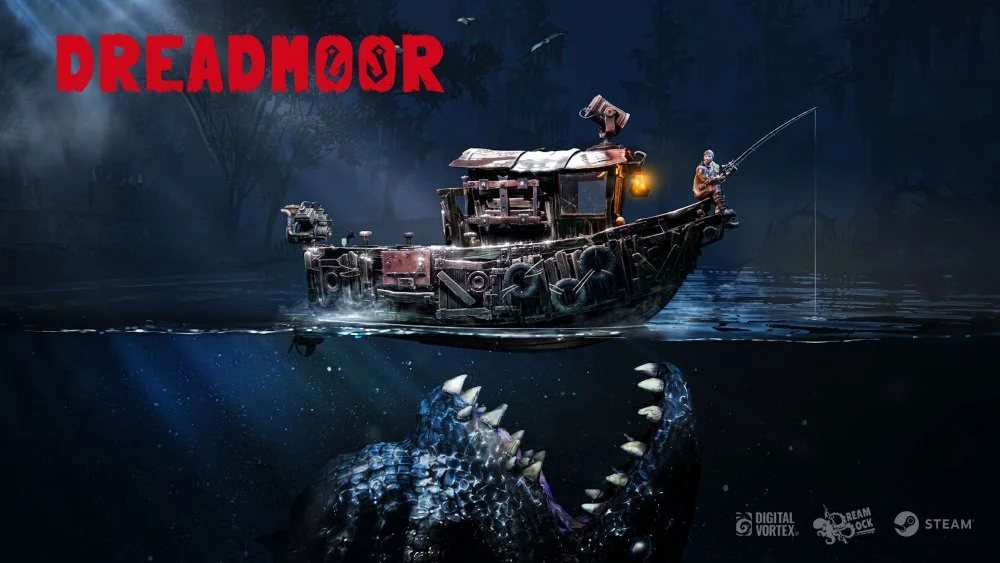
Dreadmoor is a survival fishing game from Dream Dock and Digital Vortex Entertainment, which is now available on Steam’s Early Access!
Featured during the Day of Devs showcase during Summer Game Fest this year, Dreadmoor is reminiscent of another dark cozy game Dredge. Yet while superficially it appears quite similar, they differ in so many ways. While Dredge starts out highly atmospheric and as you explore more of the game, its dark, supernatural themes become more prominent. Dreadmoor is in-your-face post-apocalyptic horror in full force.
We were able to experience Dreadmoor‘s early access for ourselves. So hop on our fishing boat, and we’re gonna catch some, well… fish.
Dreadmoor Early Access Impressions
You step into the role of the protagonist after arriving at an eerie, abandoned church. Stranded without a proper vessel and with your supply of medicine exhausted, you find yourself trapped in a situation that feels both sinister and life-threatening. Surrounded by ominous, writhing tentacles, it quickly becomes clear that escaping this place is your top priority.
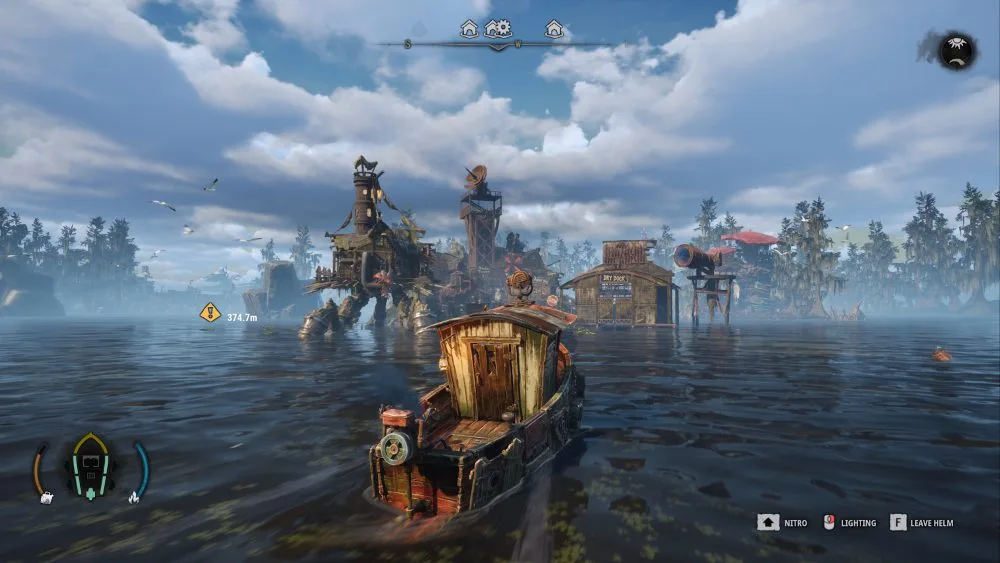
After gathering essential resources, including a hookshot, a basic axe, and eventually a heavily damaged fishing boat, you finally make your escape from the crumbling church and its unsettling surroundings. Your journey soon brings you to The Mire, where you begin searching for a mysterious Giant Turtle that the protagonist believes is responsible for the disappearance of his family. After locating the nearest Dry Dock and dealing with a group of opportunistic merchants, your adventure through Dreadmoor truly begins.
In its Early Access state, Dreadmoor allows players to explore several interconnected biomes, beginning with the treacherous waters of The Mire. Once you’ve found a safe haven, the opening missions serve as an introduction to the game’s core survival mechanics. Players will learn essential skills such as fishing, salvaging resources, crafting equipment, and, when things don’t go according to plan, engaging in tense hand-to-hand combat.
Teaching A Man To Fish
Dreadmoor blends the cozy appeal of fishing games with tense survival-horror elements, feeling like a cross between Dredge and The Forest. Armed with only a basic fishing rod at the start, players must catch fish not only for resources but also to fuel their vessel. Fuel comes from a peculiar larva companion that converts fish into energy, a bizarre but memorable mechanic that keeps your boat running.
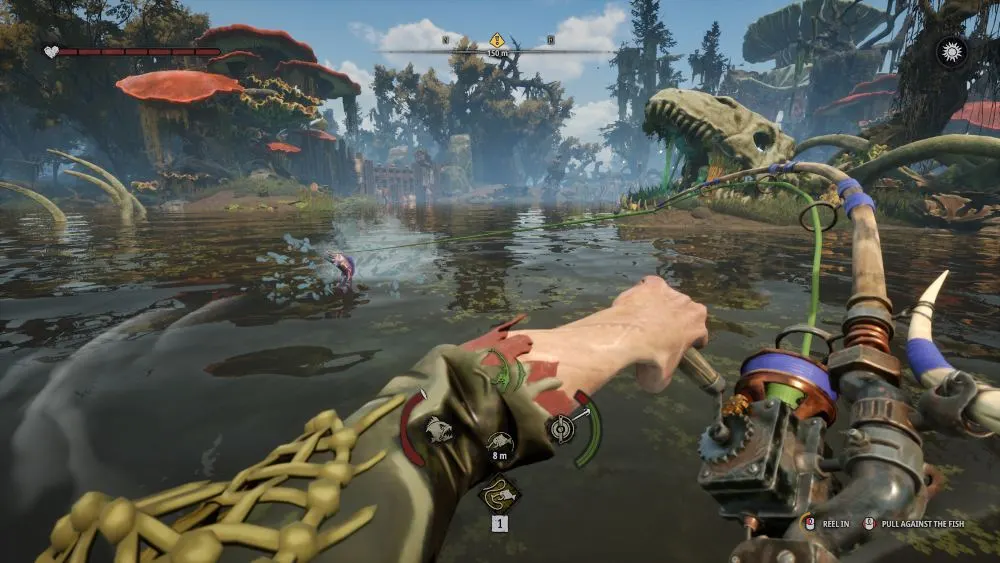
Fishing is simple and intuitive. Players equip the appropriate lure and cast their line either from their boat or while docked on one of the many islands scattered throughout the world. Once a fish is hooked, the challenge is to wear it down by pulling against its movements while carefully managing line tension before reeling it in. Catches can then be processed in a grinder, producing meat and other materials used for crafting and survival.
As the adventure progresses, players gain access to more valuable fish species. Some can be sold for profit, while others yield medicinal resources that help slow the spread of the Blight, a mysterious affliction that gradually mutates the protagonist. While fishing serves as the backbone of progression, salvaging is equally important for long-term survival.
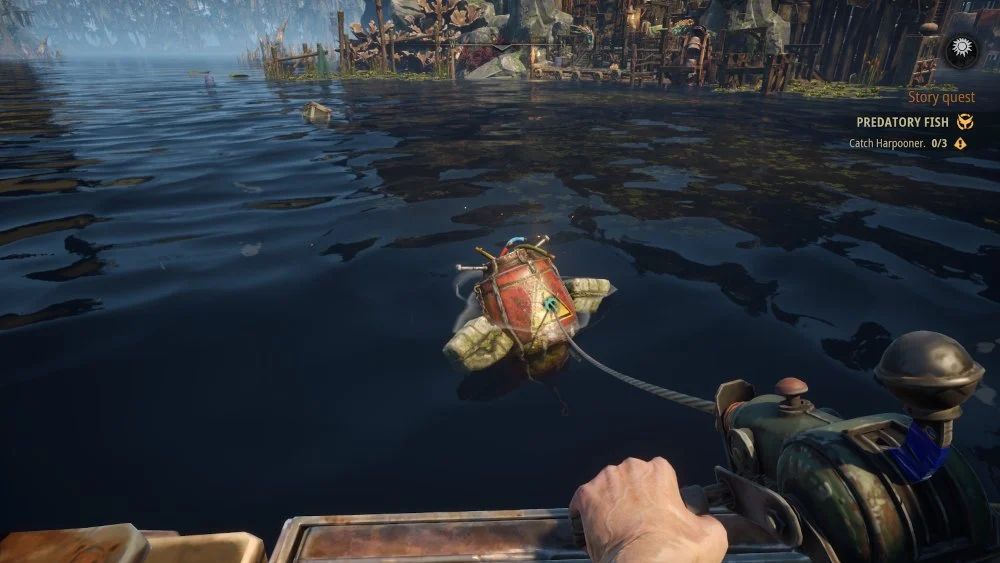
Exploration in Dreadmoor is heavily tied to the condition of your vessel. The battered boat you begin with is vulnerable to the horrors that emerge after dark, making daytime travel the safest option early on. During these excursions, players can gather salvage materials such as metal plates and rubber, which are essential for crafting upgrades and reinforcing the hull. Stronger defenses improve the boat’s durability and help it withstand increasingly dangerous threats lurking across the game’s waters.
Progression is further expanded through a skill tree powered by scraps of knowledge discovered during exploration. These unlock new upgrades for your engine, hull, and other vital systems, allowing your vessel to travel farther, survive longer, and better tackle the dangers that await in the depths of Dreadmoor.
Tied To The Water
Dreadmoor‘s opening hours showcase a compelling survival adventure with plenty of potential. Apart from completing story objectives, players must constantly manage their boat’s condition, fuel reserves, resources, and the steady progression of their mutation. Neglecting any one of these systems can quickly make survival more difficult, creating a constant sense of pressure as you venture deeper into the game’s mysterious world.
The day-and-night cycle plays a significant role in this balancing act. Rare and valuable catches are more likely to appear after dark, but so do the dangers lurking beneath the surface. Establishing an efficient routine, gathering resources during the day and taking calculated risks at night, becomes essential for staying ahead of the game’s escalating challenges. The rewards can be substantial, providing materials needed to upgrade your equipment, strengthen your vessel, and expand your arsenal.

Combat also becomes an important part of the experience. Players will encounter mutated fish-like ghouls that have long since abandoned their humanity, acting more like feral predators than rational survivors. Armed initially with a simple axe and later a variety of improvised ranged weapons, you’ll need to defend yourself against these threats both on land and at sea. Your boat can be equipped with defensive tools such as a harpoon, giving you additional options when dealing with the tentacled horrors that roam the waters.
The world of Dreadmoor is equally intriguing, gradually revealing its secrets through codex entries, environmental storytelling, and recorded messages scattered throughout the environment. These discoveries help paint a picture of the region’s cursed history, encouraging exploration while adding depth to the game’s unsettling atmosphere.
Dreadmoor is now available on Early Access on Steam.
