


Dragon Quest VII Reimagined Review
Table of Contents
Originally released on the PlayStation in 2000, Dragon Quest VII could be considered memorable not just for its depth but also for its staggering length. It became quite infamous for its ridiculous introduction that didn’t include combat until several hours in, and while a 3DS remake in 2016 smoothed some of those edges, its reputation lived on for years to come.
Fast-forward to Dragon Quest VII Reimagined, a ground-up reconstruction that seeks to preserve the spirit of the original while making it accessible and visually breathtaking, while maintaining the unique storytelling that made it a cult classic. With “nostalgic yet innovative” as its core objective, it succeeds for the most part, and makes for a fantastic RPG experience to kick off 2026 (well, apart from Final Fantasy VII Remake Intergrade).
Island Hopping
The game begins on Estard, a small, peaceful island where we find the protagonist, the son of a well-known fisherman, who spends his days with his best friend, Prince Kiefer. Joined by their childhood friend, Maribel, their misadventure leads them to an ancient shrine where they discover mysterious stone tablets that lead them to places beyond their imagination.
What sets Dragon Quest VII Reimagined apart from other titles in the series is its narrative loop, which involves transporting the party to various destinations, completing the task at each, and so on. It doesn’t feel quite like the typical RPG story, where you follow a connected narrative from start to finish, but jump from one island to the next (literally) and experience many pocket stories along the way.
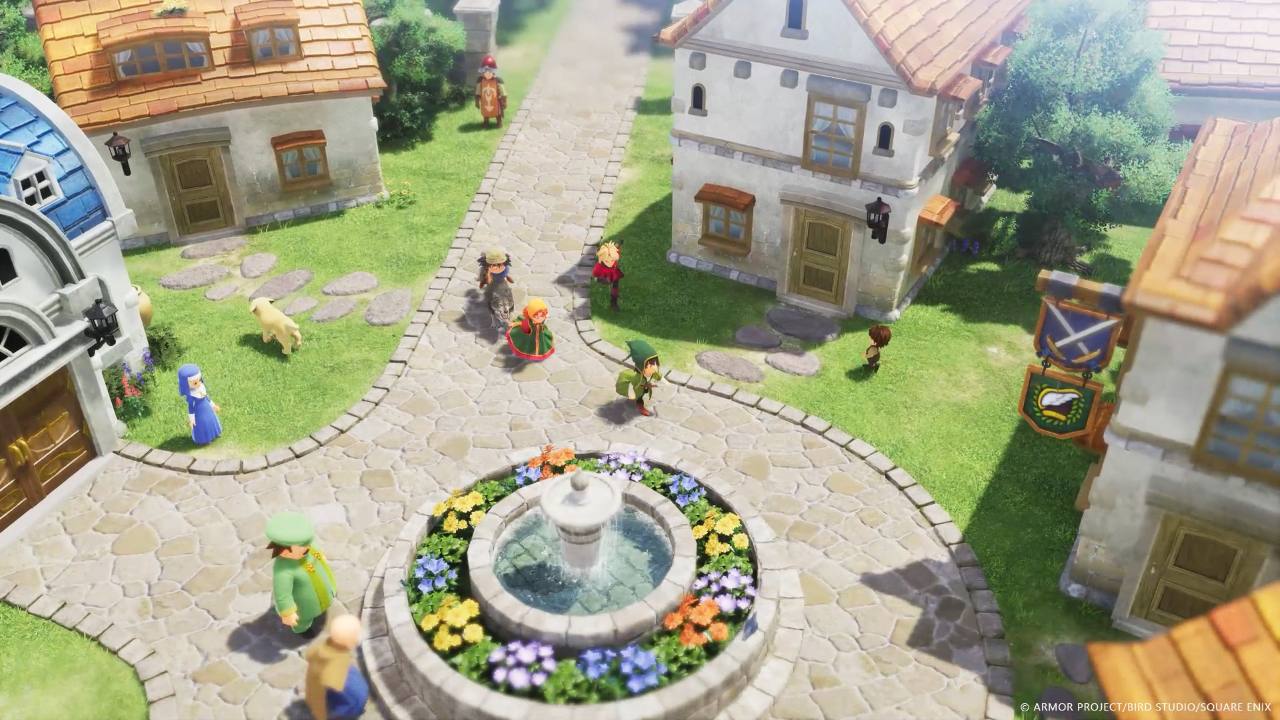
If you’ve played the original, then jumping into Dragon Quest VII Reimagined will immediately feel like home, but with changes made for the better. The overall pacing is much faster, not just because it has been trimmed and structured better, but also because the added voice acting, cutscenes, and storytelling now create a more immersive and “complete” playthrough, similar to what we got with Final Fantasy Tactics: The Ivalice Chronicles. While the European accents may feel weird at first, especially when taken in the context of the setting, they are well done and offer a new auditory experience than the usual.
These island stories are not ones that you’ll want to skip, because each holds various themes and weight, and despite its colorful and diorama-like exterior, the game does deal with quite serious and heavy themes. At its heart, Dragon Quest VII Reimagined tells the story of discovery and restoration, and it is well told because it smartly removes parts that didn’t improve the story or flow of the game.
Combat and Exploration
If you’ve played a Dragon Quest game before, chances are, its battle system is one you will be very familiar with. Dragon Quest VII Reimagined takes on the classic turn-based formula, but with some modern upgrades that make it even more fun to go about. Gone are the days of random encounters as monsters now roam the field, allowing players to engage or avoid them at will. Weaker enemies can be defeated instantly with a strike, while same-level enemies will go through the usual encounter.
Not only that, but turning on auto-battle at the press of a button is also a godsend, allowing players to cruise through leveling sessions without having to issue commands every time an encounter turns up. Paired with adjustable combat speeds for breezier battles and difficulty settings, it feels like players can take control of their time and how they play the game. You can even heal completely just by interacting with save points this time around, making dungeon runs tolerable.

One of the standout features of Dragon Quest VII Reimagined is its vocation system, which is essentially a flexible job mechanic that lets each character take on specialized roles with unique abilities. These vocations can complement one another, creating powerful synergies depending on your party setup. Options like Fledgling Fisherman, Sailor, and Troubadour return, while a brand-new class, the Monster Master, makes its debut.
What makes this system even more exciting is the introduction of Moonlighting, which lets characters train in two vocations at once. As battles unfold, proficiency in these vocations increases, unlocking new skills and strategies. With enough patience, players can master these vocations, ensuring their benefits remain even after switching to a new vocation, encouraging experimentation and party composition. It is great in terms of party composition and leaves the creative decision-making to the players.
Players can also activate powerful abilities called Vocational Perks when their characters get “worked up” during battles, changing the tide of battle in their favor. These skills vary depending on the role, with Sailors boosting attack power and agility, Thieves gaining an extra action when inflicting status effects, and Priestesses restoring HP and even reviving fallen allies. These are powerful abilities, and their use cannot be understated.

Exploring the world in Dragon Quest VII Reimagined is made fun by its diorama-like art direction, which, admittedly, did not pull me in at first. It’s a style I don’t usually resonate with, but it grew on me as the journey of the protagonist and the crew unfolded. While it might be off-putting at first, owing to a somewhat “stop-motion” quality paired with characters with chibi-like features, the charm will eventually win you over, portraying the world like something that’s been handcrafted with heart.
The development team has made the decision to remove and reposition some content from the original game to better suit the pace and feel of Dragon Quest VII Reimagined, for better or for worse. This directly results in a tighter main narrative, and if players feel the need to engage in other parts of the game, they can do so, as those parts are optional side content meant to add more hours.
Verdict: Buy it!

Dragon Quest VII Reimagined is an example of a remake that understands exactly what made the original special, reinforcing those elements and addressing friction points to create an engaging experience. By streamlining the narrative, modernizing the job and combat systems, and adopting a gorgeous diorama art style, the once-maligned title has been turned around for the better.
Purists might not like the changes that Dragon Quest VII Reimagined brings, but it’s easy to see that this is the definitive way to experience the classic.
*Dragon Quest VII Reimagined was reviewed on a PS5 with a review code provided by the publisher.
