

RGG Studio Talks Ado’s Acting Debut in Stranger Than Heaven, The New Combat System, and Much More

During Gamescom Asia x Thailand Game Show 2026, we sat down with key members of the Stranger Than Heaven development team to discuss one of RGG Studio‘s most ambitious projects to date.
The team shared how Stranger Than Heaven represents a significant departure from everything they’ve created before, covering various aspects such as casting global artists like Ado and Snoop Dogg to building a story that spans five cities, five eras, and fifty years of a man’s life.
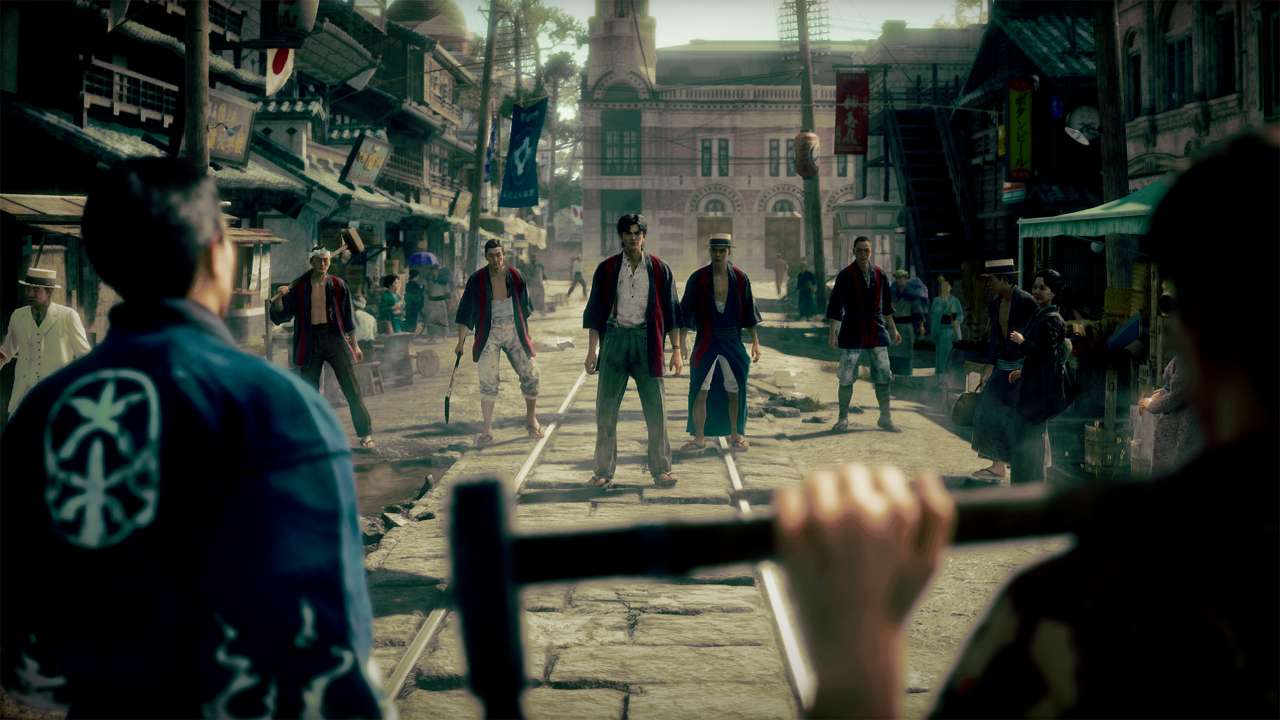
Bringing Ado Into the World of Stranger Than Heaven
One of Stranger Than Heaven’s most talked-about announcements is the involvement of Ado, who makes her voice acting debut as Keiko. According to the developers, securing her participation was only the first challenge. Once she joined the project, the team invested considerable effort into helping her fully understand the character and deliver the performance they envisioned.
The recording process proved especially demanding because the game’s characters speak in both Japanese and English, while also incorporating a variety of accents to support the narrative. As a result, scenes were repeatedly re-recorded to maintain quality and authenticity. The team described the recording process as one of the most challenging they have undertaken for any game.
First, negotiating with Ado to perform as a voice actor was the initial hurdle to get her to appear in this work. After that, team members like the scenario and voice recording teams carefully conveyed the character to Ado while taking an approach of continuously re-recording to maintain high quality.
Those concerns quickly disappeared once recording began.
“Ado turned out to be someone with incredible acting range. She came out right off the bat with a performance that far exceeded our expectations, which made us extremely happy.”
The developers explained that casting decisions always stemmed from the narrative first. Since Keiko needed to convincingly perform both as a singer and as a character within the story, finding someone capable of delivering both aspects authentically was essential. For the team, Ado ultimately felt like the perfect choice for Stranger Than Heaven.
For instance, Fujiwara was cast as Takashi and Ado as Keiko because being able to both sing and act was our primary condition. We felt it wouldn’t work well to separate the acting and singing performances, which naturally narrowed down the candidates. We felt Ado would be fantastic as Keiko. Even though it was her first time acting, we gave her a proper pitch presentation for the game. Getting her approval fulfilled our greatest wish, and it was the result of building everything up step by step.
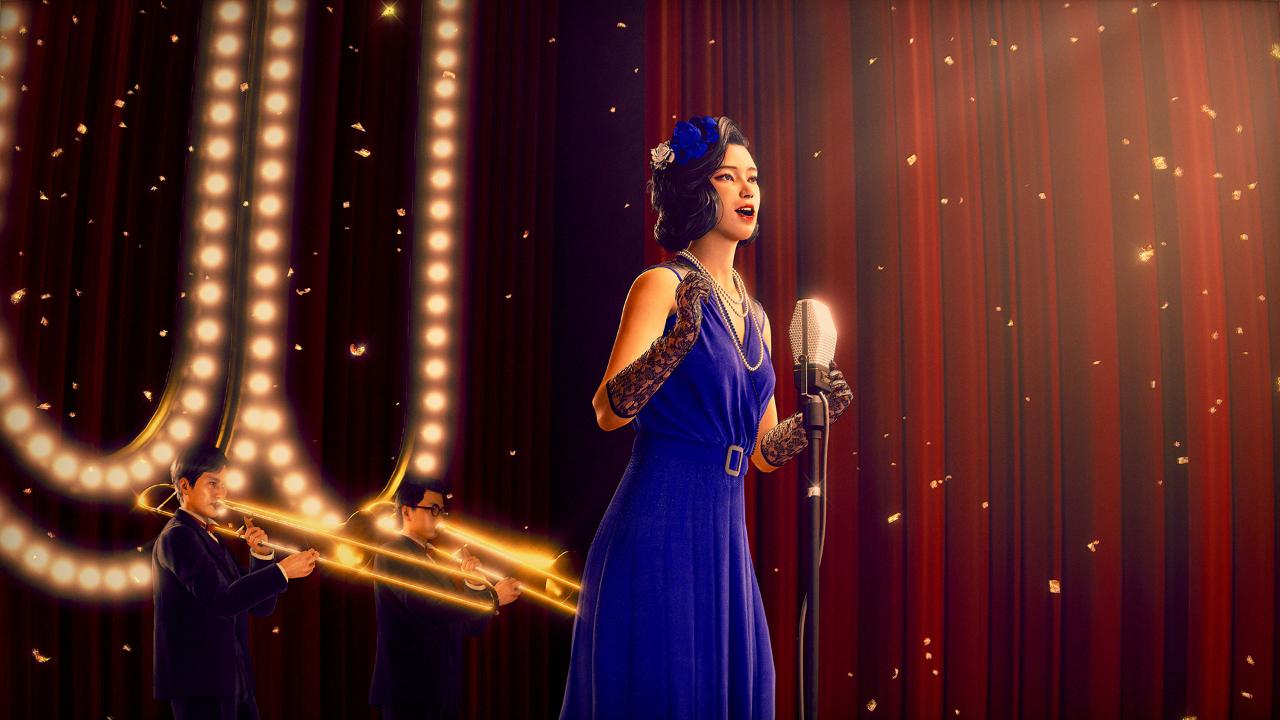
Why Snoop Dogg Was the Perfect Fit
Stranger Than Heaven’s music-centric narrative also led to the casting of Snoop Dogg, who portrays Orpheus, a major figure in protagonist Daito’s journey through the music industry.
Rather than forcing the performer into a rigid interpretation, the team sought a balance between historical authenticity and Snoop Dogg’s recognizable personality.
According to the developers, the challenge wasn’t whether his personality would fit the character, but how to leverage those strengths without making the dialogue feel overly modern for the period setting. The final performance emerged from carefully balancing those two factors.
For example, with the character Orpheus played by Snoop Dogg, we wanted to leverage Snoop Dogg’s own personality to some
extent. So, Snoop Dogg himself read the script thoroughly and recorded his lines after gaining a proper understanding of what kind of tone and energy to deliver.Finding the right balance between Snoop Dogg’s unique personality and ensuring the dialogue didn’t sound too modern is how we landed on the final performance.
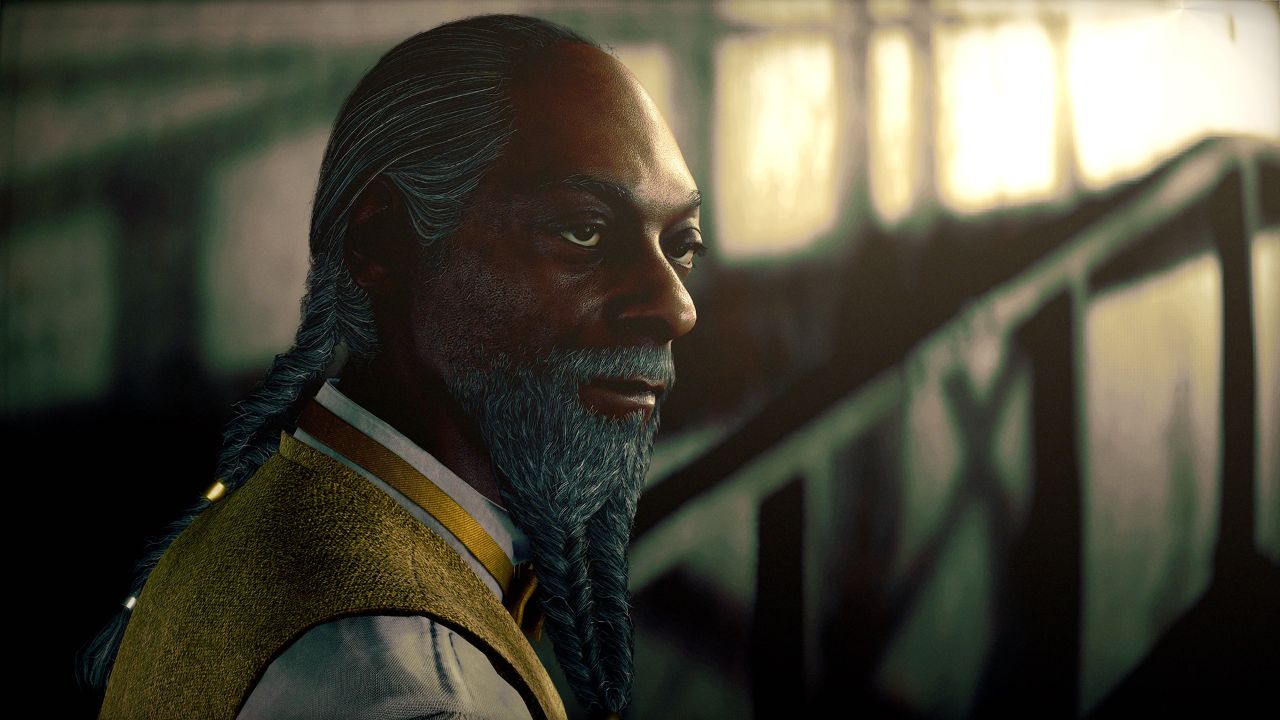
Stranger Than Heaven – A Story That Spans 50 Years of One Man’s Life
Perhaps the most defining feature of Stranger Than Heaven is its unprecedented scope.
Unlike previous RGG Studio stories, which often unfold over days or weeks, this narrative follows protagonist Daito Makoto across fifty years of his life. The team repeatedly emphasized that the passage of time fundamentally changes not only the story but also the character himself.
“The young Daito Makoto and the Daito Makoto we see fifty years later are, quite frankly, completely different people.”
Throughout those decades, Daito endures hardships, navigates personal struggles, and forms relationships that can have lasting consequences across multiple eras. Some characters players encounter early in the story may disappear entirely from future chapters depending on the choices made along the way.
The team described life as “a continuous, single stroke,” a philosophy that directly influenced the game’s structure. Rather than offering simple branching paths, the narrative tracks the long-term ripple effects of decisions and relationships throughout Daito’s lifetime.
Likewise, it is also possible to experience Stranger Than Heaven fully in one go instead of doing another playthrough “if you try hard enough.”
You can if you try hard enough. We’ve designed it so that if you do something like a completionist playthrough, you’ll be able to experience a wide variety of things.

Exploring Themes of Identity and Belonging
At the heart of Stranger Than Heaven’s story lies a search for belonging.
Daito, a man of mixed Japanese and American heritage, faces discrimination in both the United States and Japan. While these experiences play an important role in the narrative, the team stressed that the story was never created simply to focus on discrimination itself.
Instead, those experiences serve a larger theme.
The story is about a group of men who have lost their place in the world and set out to create a place where they belong. When we considered what might drive people into that situation, we felt that experiences such as various forms of discrimination would be part of the equation.
We also thought about the origins of organized yakuza groups. To us, one of the most compelling explanations is that people who had nowhere to belong created their own place in society, and that eventually evolved into yakuza organizations. Within our narrative, that felt like a very convincing foundation.
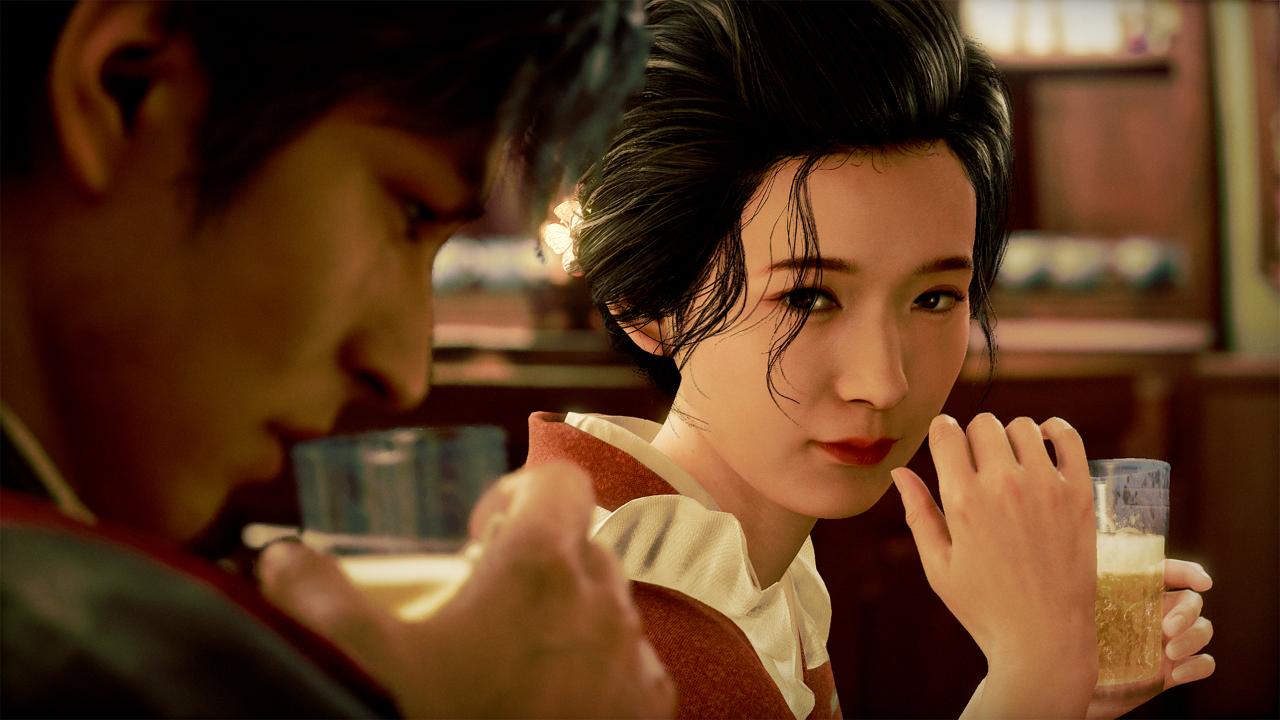
The developers were fascinated by how individuals excluded from society might form communities of their own and viewed that concept as one of the foundations behind the narrative. Setting the story in 1915 Japan, a period when foreigners were far less common, provided a compelling backdrop for exploring those themes.
At the time, we felt that a person of mixed heritage was among the closest examples of someone who might be seen as belonging fully to neither side and, in a sense, lacking a place they could truly call their own. Because of that, we felt the concept fit particularly well with the theme of “creating a place to belong,” and that became one of the starting points for the scenario.
The story is set in 1915, a period when Japan was still relatively closed off, and it was uncommon to see foreigners wondering the streets. We felt that placing a character like Daito Makoto in that environment would naturally create dramatic storytelling opportunities.
We were especially interested in exploring how he would go about creating a place for himself in such a world, and we felt that question would become one of the central pillars of the story.
That’s the process through which the narrative was developed. So, to be clear, our approach was never to portray discrimination for its own sake and was not the starting point of creating the narrative.
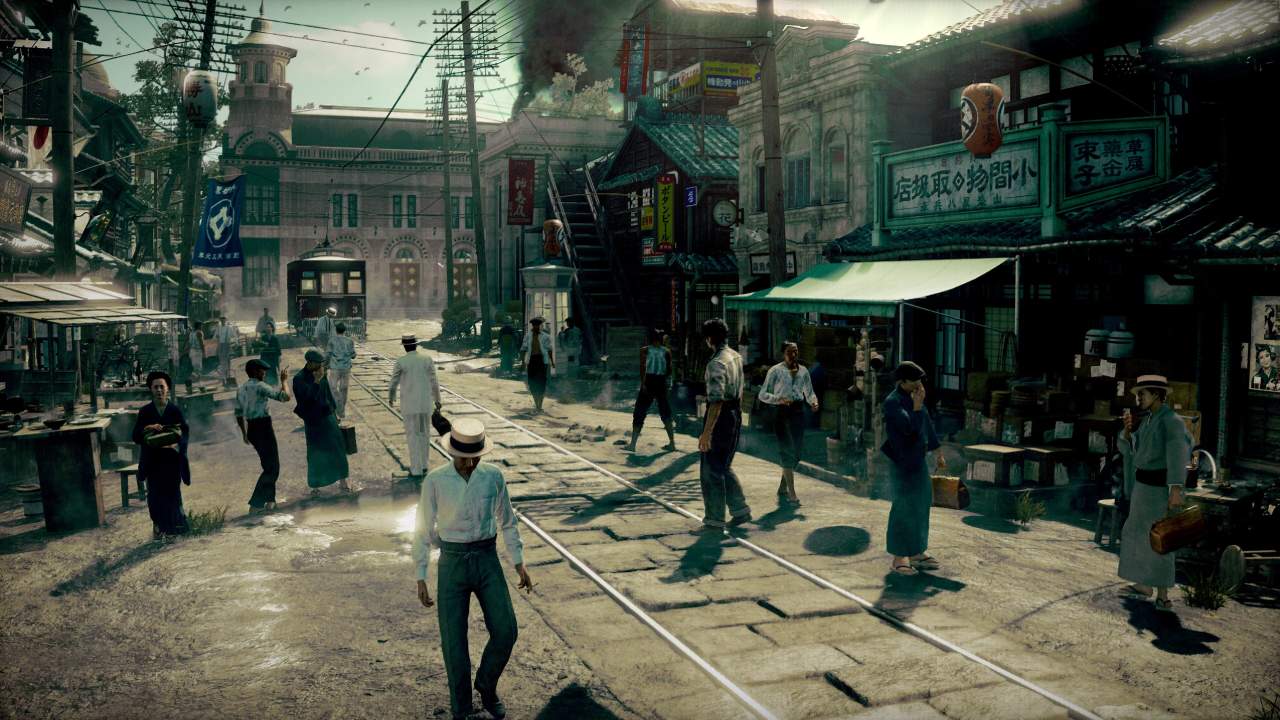
The devs also mentioned that there are no vehicles that players can ride in Stranger Than Heaven, but other means of transportation are available.
There are no vehicles that players can ride. However, you can jump onto trains running through the city and use them for transportation. There is also a fast travel system, allowing players to move around conveniently.
That said, there are no rideable vehicles like the Segway-like vehicle seen in the Like a Dragon series. The train system and fast travel are separate mechanics. Players can open the map and select a destination to fast travel directly there. The reason for this approach is that the game is set in an earlier era, when cars were not commonly seen driving around city streets. As a result, travelling on foot is intended to be the primary means of getting around.
Whether or not to make use of fast travel is entirely up to the player, but we’ve included a system that allows players to instantly travel to various locations on the map whenever they choose.
Building a New Action Combat Experience
Stranger Than Heaven’s combat represents another major departure for RGG Studio.
The developers openly acknowledged that previous entries in the Like a Dragon franchise often allowed players to succeed through simple button-mashing. With Stranger Than Heaven, however, the goal was to create a more skill-based action experience that rewards mastery and player growth.
Parrying, defensive techniques, and combat timing have all become more important components of battle. At the same time, the team recognizes that not every player enjoys highly demanding action gameplay. To address that concern, extensive tutorials, assist systems, difficulty settings, and special equipment have been included to help newcomers.
Some support items in Stranger Than Heaven even function as “handicap” equipment by automatically restoring health and providing bonuses for less experienced players. According to the developers, these systems allow players of varying skill levels to enjoy the story without sacrificing the intended challenge for more advanced users.
We knew mechanics like parrying would be challenging, but based on feedback from players who tried the hands-on demos at various game shows, we’ve fine-tuned details like difficulty balance and control responsiveness. It might feel like a bit of a hurdle at first, but the game is set to have a thorough tutorial, so even players who aren’t great at action games will be able to enjoy it once they get the hang of it.
We’ve also included difficulty settings and provided plenty of support features, such as “cheat-like” items that increase health regeneration. We believe that if we offer enough support for action-game beginners, it will give them the chance to play through to the very end.
Equipping those “cheat items” makes you much harder to defeat by automatically restoring health and providing other perks. For beginners who still struggle with blocking, we’ve prepared assistance items that let you clear encounters using basic left and right punches alone. You can obtain them right from the start of the game, but because they function as “handicap” items and you wear it as a cloth/garment, anyone watching your gameplay screen will immediately notice you’re wearing them.
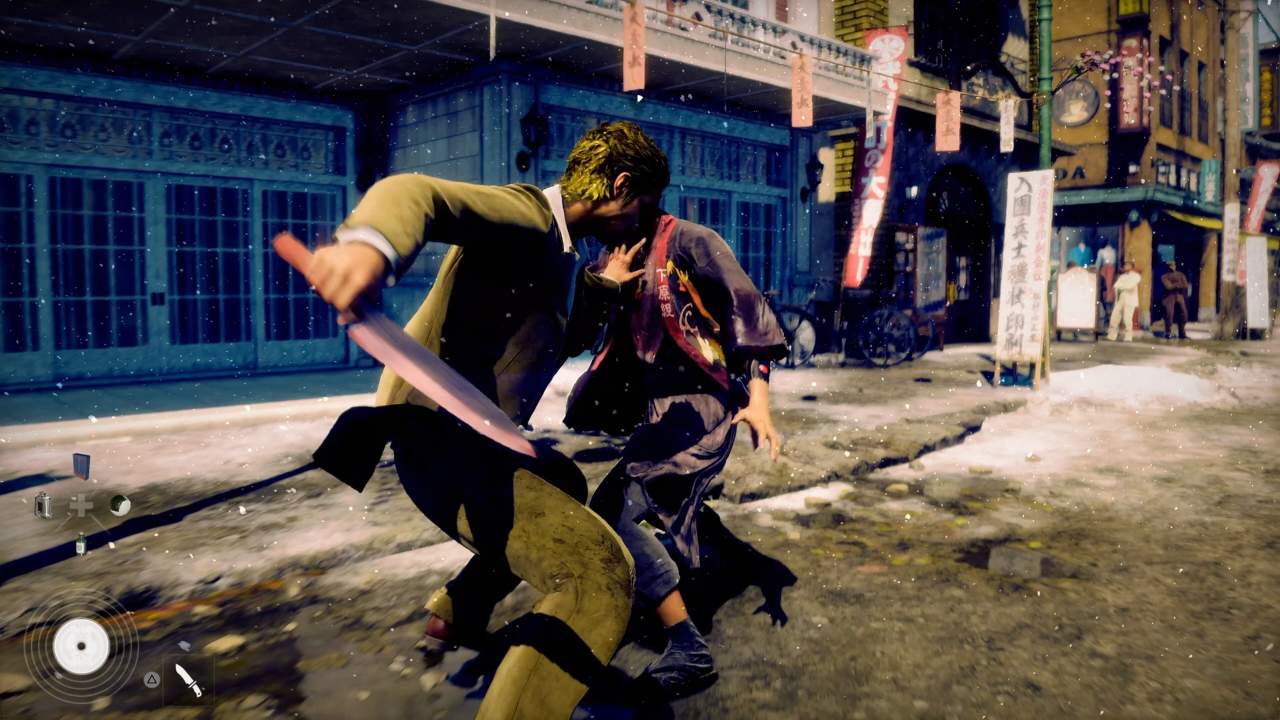
Additionally, the devs talked about the evolution of the combat system in terms of weapon wielding, and how they ultimately decided to remove dual-wielding weapons in Stranger Than Heaven.
In the initial trailer, there was a scene showing Daito wielding two weapons at once. However, as development progressed, we refined the system so that users can either equip one one-handed weapons like knives and hammers, or holding larger equipment such as sledgehammers with two hands.
In the final design, a player can switch between different weapons within the battle style they currently have equipped. We felt that allowing players to freely carry and switch between any weapons would make the system overly complicated, so we shifted the
direction of the design. Instead, weapons are now tied to specific combat styles, with each style determining the types of weapons that can be used.As a result, we ultimately removed the mechanic that allowed players to dual-wield weapons.
How Daito’s Fighting Style Evolves Over Time
The passage of decades also directly affects combat progression.
The team revealed that battle styles accumulate throughout Daito’s fifty-year journey, creating a sense of growth that mirrors his life story. As players learn new techniques and develop their preferred combat approaches, those decisions contribute to Daito’s long-term evolution.
An especially unique mechanic allows players to capture sounds produced during battle and incorporate them into Stranger Than Heaven’s “Showbiz” systems, further tying together the project’s themes of music and performance.
Next-Generation Hardware Unlocks RGG Studio’s Vision
The move away from PlayStation 4 and Xbox One also enabled the team to realize creative ambitions for Stranger Than Heaven that were previously out of reach.
The developers explained that older hardware often forced compromises, particularly regarding crowd density and overall visual fidelity. By targeting current-generation platforms such as the PlayStation 5, the team was able to place significantly more characters on screen while simultaneously improving character quality and presentation.
They believe those improvements have resulted in richer visuals and a stronger artistic identity than anything the studio has produced previously.
We decided to drop previous-gen platforms like the PS4 and focus on creating an experience best enjoyed natively on current-gen consoles like the PS5. In the past, hardware constraints meant limiting the number of characters we could display on screen at once, among other things we had to give up on. With Stranger Than Heaven, by fully leveraging the PS5’s capabilities, we were able to showcase more characters on screen simultaneously than ever before and raise character quality to the next level.
As you can tell by looking at the game footage, I think we succeeded in achieving our goal of creating a richer visual experience with a stronger artistic identity than anything we’ve done prior.

Rethinking Progression, Shops, and Item Management
Apart from the headline features, the team has reworked many core systems for Stranger Than Heaven that longtime RGG Studio fans may take for granted.
Shops now function more naturally, requiring players to browse actual restaurant menus instead of navigating traditional item lists. Inventory management has also been redesigned, with restrictions on how many items can be carried and situations where healing must occur in real time rather than through menu pauses.
Meanwhile, almost every action contributes to character growth.
Even simple activities such as walking around town contribute experience points and progression, reflecting the team’s desire to make players feel as though they are actively shaping Daito’s life over five decades.
The Future of Stranger Than Heaven’s Music
If there’s one request the developers continue to hear from fans, it’s the desire to stream the Stranger Than Heaven’s music.
The team confirmed that discussions are already underway regarding soundtrack releases, although coordinating multiple performers and record labels presents several logistical challenges. Nevertheless, they made it clear that they share the community’s excitement and hope to release the music at a time that best complements the game’s launch.
“We are extremely eager to release it ourselves, but we hope to deliver it in the absolute best way possible, timing it closely with the game’s release when excitement is at its peak.”

Stranger Than Heaven is shaping up to be one of the most distinctive projects in RGG Studio’s history. If the developers’ vision comes together as planned, players will be helping shape it every step of the way.
