Pragmata Review
Pragmata Review
Table of Contents
Capcom’s most recent release lineup has relied on its big franchises, such as Monster Hunter and Resident Evil. It’s been quite a while since we’ve seen an actual new IP due to remakes and remasters left and right, and from an established developer no less. Kunitsu-Gami was surprisingly great, and now we finally have Pragmata, whose release date has shifted so many times over the years.
Thankfully, Pragmata received enough care and polish from Director Cho Yonghee and the team, resulting in an innovative third-person shooter that’s fun, fresh, and definitely worth your time and money. If the demo hasn’t convinced you just yet, this is me telling you that Pragmata is absolutely fantastic and you should get on it right now… or in a few days, when it launches.
Hackathon
Pragmata is set in a near‑future in which humanity has established The Cradle, a massive lunar research station once focused on mining Lunum Ore and creating Lunafilament, a material that can 3D‑print almost anything. When communications are suddenly cut off, a team that includes the protagonist, Hugh Williams, is sent to investigate.
A devastating lunar quake leaves Hugh stranded and hunted by a rogue AI called IDUS. His only chance of survival comes from Diana, a “Pragmata” android designed to look like a young girl. It is easy to draw a comparison to titles like The Last of Us or similar games, where a father figure is paired with a young girl, and their bond becomes the emotional core of the game as they both teach and learn from each other throughout their journey.
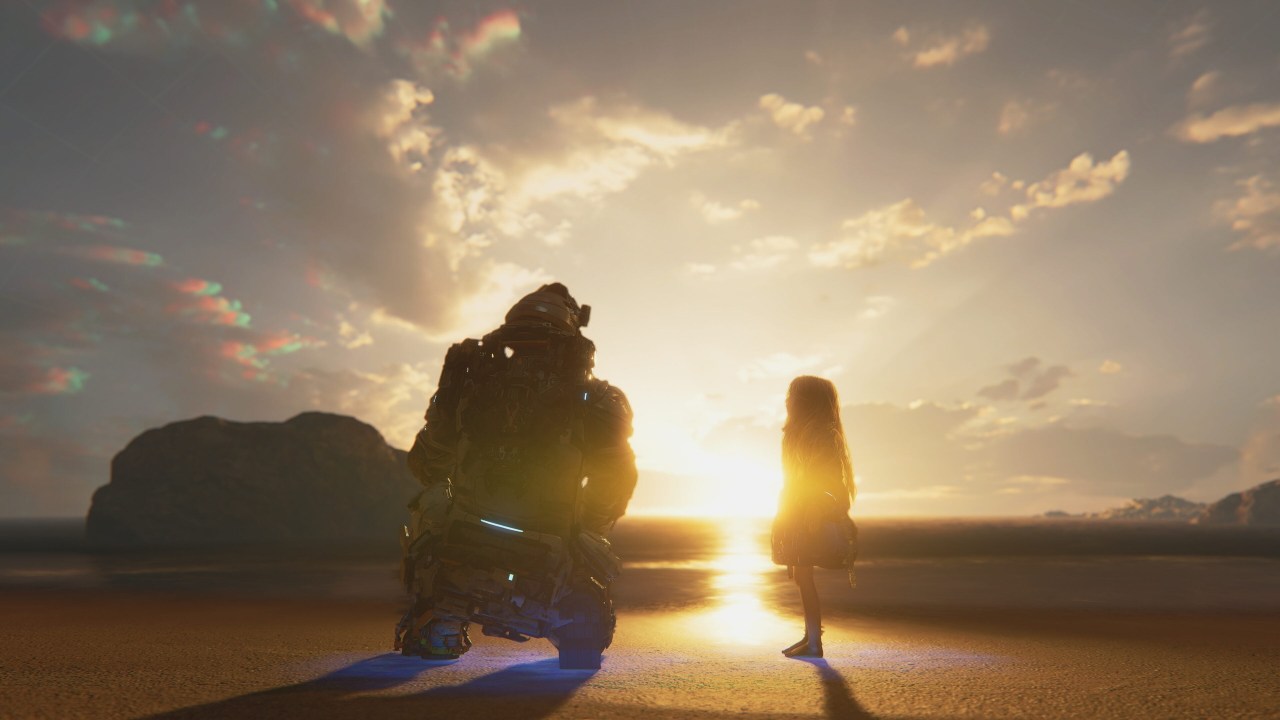
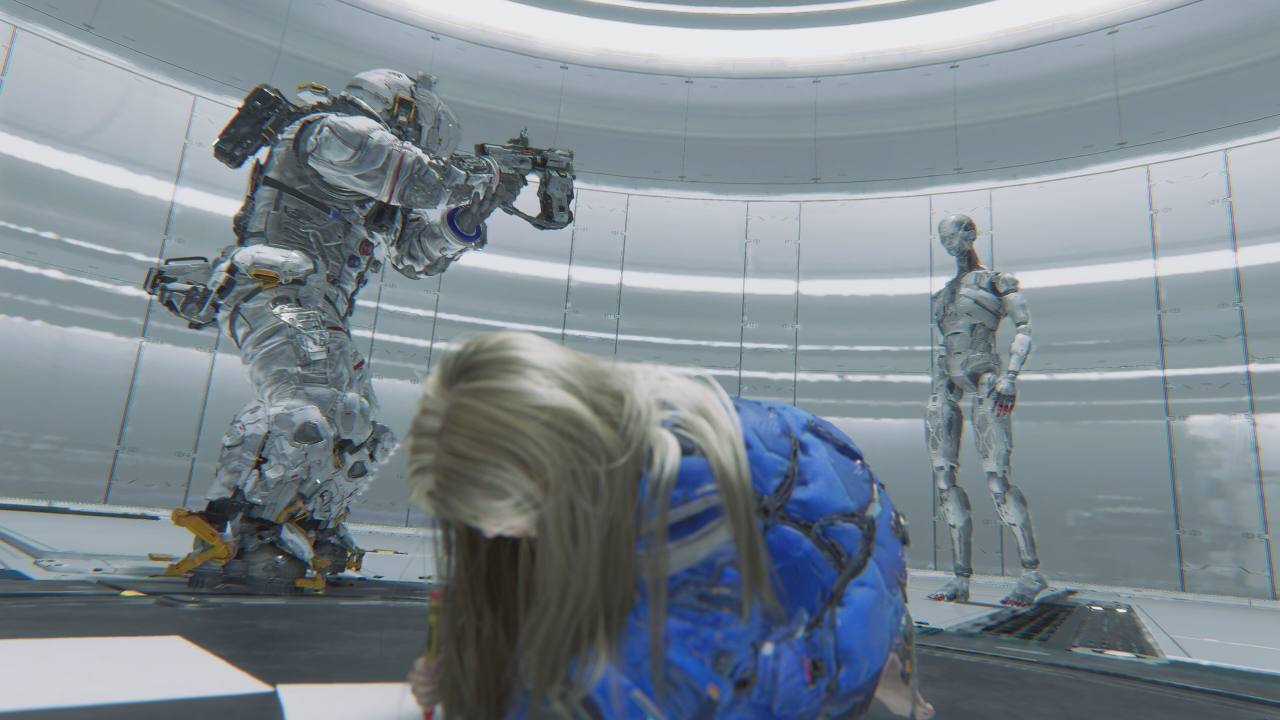
Their partnership is reflected in what could be considered the defining point of Pragmata’s gameplay: players effectively control both characters, with Hugh as your “shooter” and boots on the ground, while Diana assists with hacking by navigating a hacking grid controlled by the controller’s face buttons. Shooting the androids normally isn’t effective and only deals minor damage, so hacking “opens” their weak points for easier targeting. This hack-and-shoot gameplay cycle combines high-speed action with tactical puzzle-solving against a wide range of enemies, from simple walking androids to flying machines and even deadlier variants later in the game, and adds a level of strategic depth rarely seen in the genre.
As players progress in Pragmata, hacking challenges grow more complex, introducing tougher bots with shields, jammers, and larger, randomized grids that require greater awareness. To counter this, Diana can hack through yellow power-up nodes, adding status effects upon successful hacking, such as overheat and confuse, while other power-ups can trigger a hack across multiple androids simultaneously. When the situation gets hairy, Hugh can depend on Diana to perform Overdrive Protocol, a powerful ultimate ability that stuns enemies in a wide area, dealing massive damage and giving the pair time to breathe.
Players essentially turn every encounter into a multitasking challenge, offering substantial amounts of tension as they try to deal damage and dodge incoming attacks at the same time. It gets even more confusing once various enemy types are introduced, with some able to deal status effects as well, so prioritizing certain targets over others becomes necessary. It all sounds complicated, but it really isn’t, as Capcom has made the controls and the whole mechanic responsive and intuitive enough that it doesn’t require insane levels of dexterity.
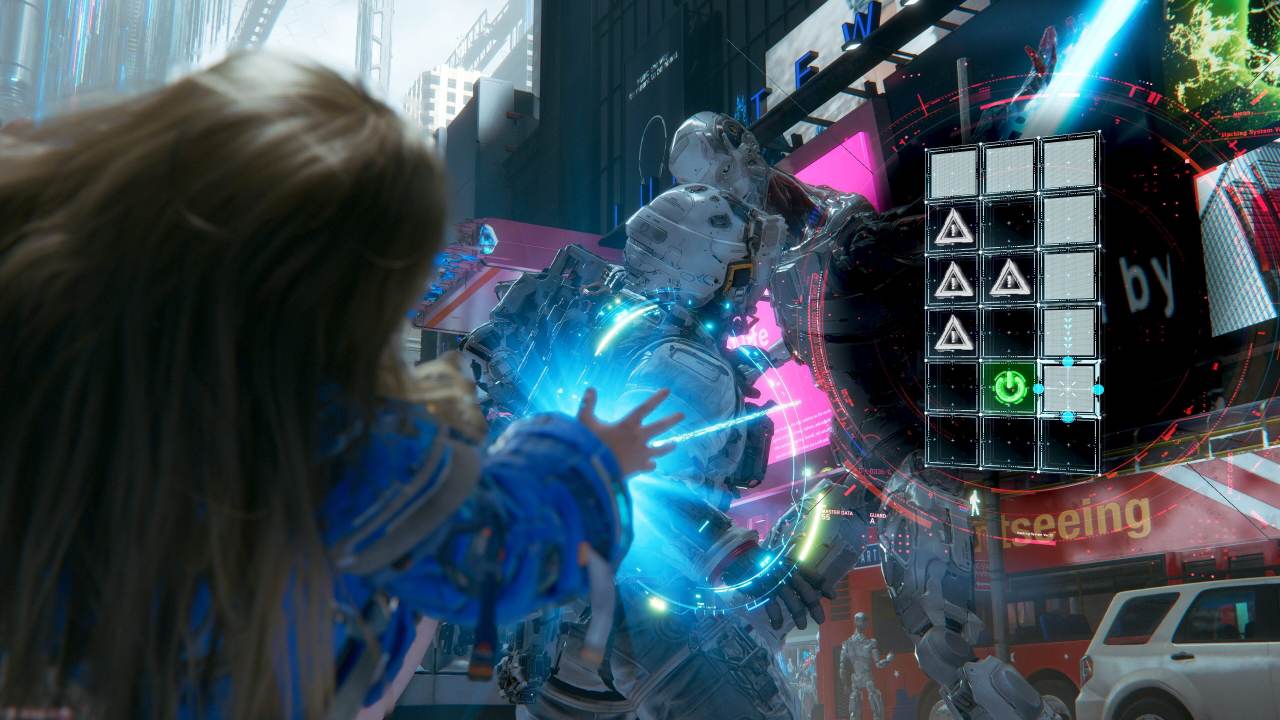
It’s easy to conclude that Pragmata’s hacking mechanic could get repetitive and old as you progress further in the game, and while it is true to a certain extent and it was my major concern prior to this review, all of the variations and evolutions of the hacking grid that are introduced, paired with the variety of enemies, are enough to keep this mechanic fresh until the final battle. In fact, the only time I really felt negative towards it was when I was faced with the basic walker androids, as I constantly looked forward to tougher enemies that required me to move around and beat like a puzzle.
Diana isn’t the only one who can bring the heat, as Hugh can also equip various weapons along the way. Apart from the usual shotgun, Hugh can pick up weapons like a charged laser rifle, a pointed laser that deals more damage the longer it is aimed, a melee-type weapon that deals massive damage up close, and many more. The variety and use cases of each weapon are quite impressive, and while you don’t really need to specifically use each one, it does make life easier.
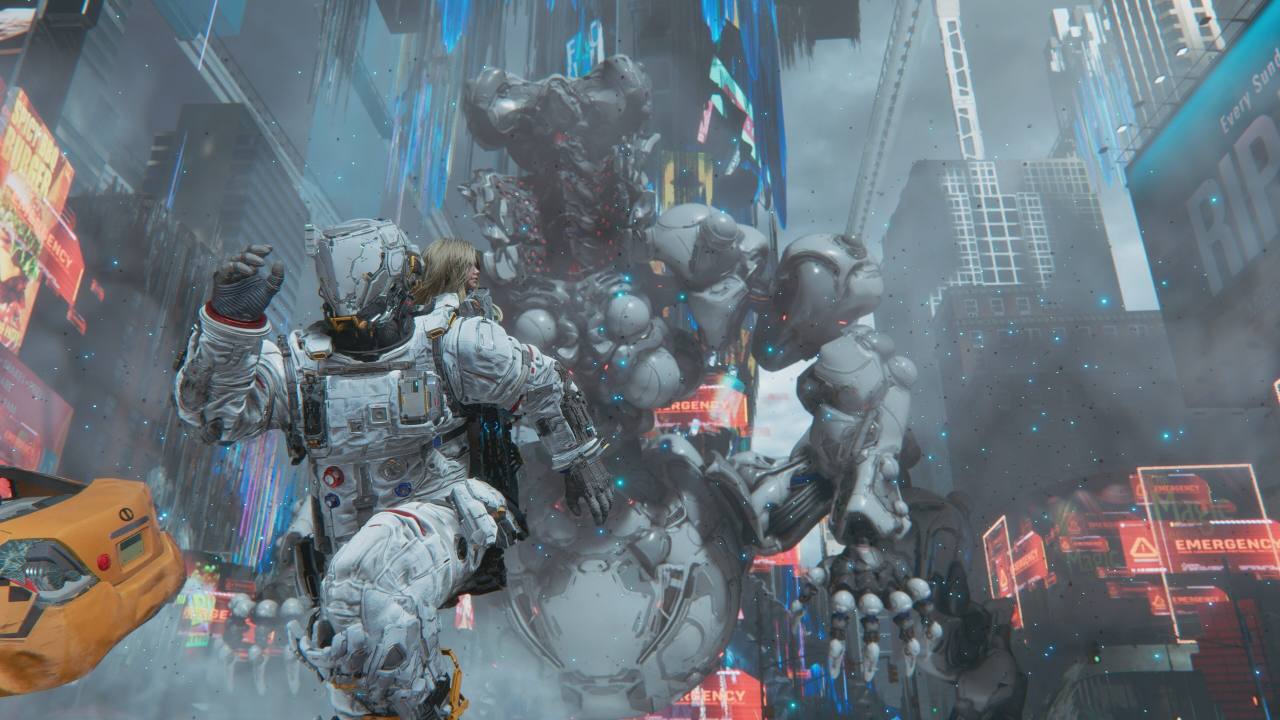
Additionally, Hugh will also come into contact with weapons that are more tactical and defensive in nature, such as the Stasis Net for crowd control and the Decoy Generator to distract enemies while you pop a heal or reload your equipment. Pragmata offers players a wide range of tools, and while using them isn’t required, engaging with its full offerings allows players to express themselves in a variety of ways.
The Moon and Its Secrets
Pragmata’s levels follow a sort of Metroidvania-style structure, where backtracking after obtaining certain tools is deemed rewarding. As Hugh and Diana unlock new upgrades, like stronger thrusters and the ability to destroy obstacles, players can revisit earlier areas to break through barriers or uncover hidden treasures. While there are forks in the road, the main path is usually pretty straightforward, and it is really hard to get lost.
Backtracking in Pragmata is not a pain, thanks to Hugh and Diana’s occasional yet natural banter, paired with stunningly detailed environments. One level, in particular, was essentially a 3D-printed, distorted version of Times Square, which had already been shown previously. Despite that, it didn’t make it any less impressive, as it looked and felt like something out of Inception, with its folding cityscapes and out-of-place objects depicting a world overtaken by digital glitches.
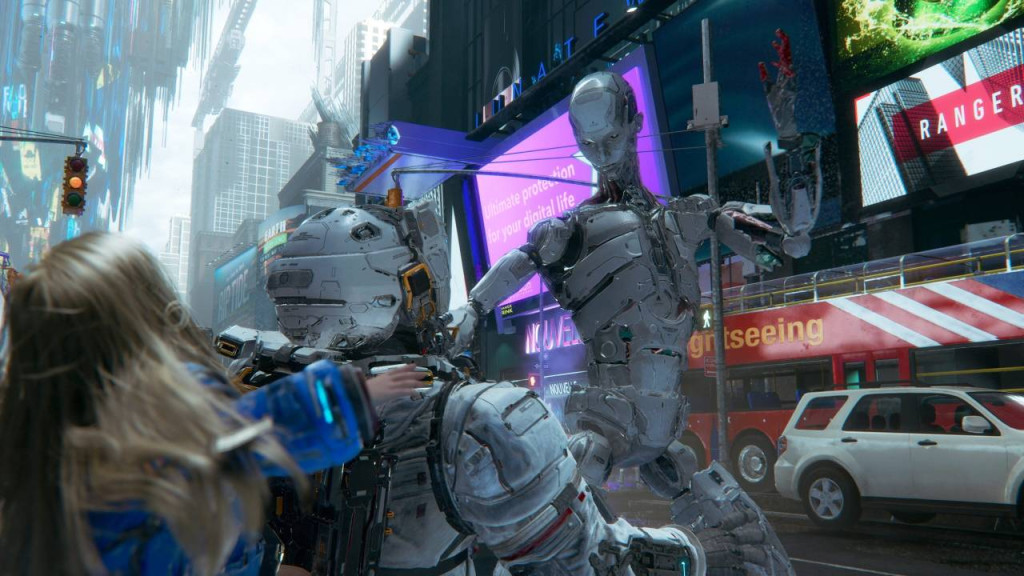
Exploration is further incentivized through multiple progression systems. Players collect Cabin Coins, which can be spent on stamp boards at the hub to unlock cosmetics, upgrades, and Mods. Escape Hatches act as fast‑travel points and respawn anchors, making it easier to return to The Shelter, the game’s central hub, to upgrade gear before diving back into combat. Hidden rewards often require light platforming, using Hugh’s thrusters to reach out-of-place platforms that contain rare Lunum ore for high‑tier upgrades.
When things get hectic, players can find respite in the Shelter, as players get ready for the challenges ahead. All of your collected resources come into play here, spending them on things like the Firmware Updater (boosting health, weapons, and hacking speed), the Unit Printer (crafting new gear), and Mod slots that can provide an extra boost to hacking. You can also find bits and pieces of Earth memories to offer Diana a taste of what Earth looks and feels like, further humanizing their connection.
It’s quite possible for Hugh to lean into a specific playstyle because he can carry several weapons categorized as Primary, Defensive, Tactical, and Offensive. Choosing a loadout is important, though not exactly a make-or-break affair, as Hugh can choose to carry either a shotgun if the level design calls for it, or maybe a rail cannon for more long-range spaces. When faced with multiple flying enemies, the choice to carry Homing missiles might be key; if overheating enemies is your jam, carrying overheat hacking nodes and the Carbine would do wonders.
Further customization is enabled by mods, allowing players to boost certain aspects of Hugh, such as increased hacking damage, extended enemy vulnerability after hacks, or higher HP. Pragmata gives players space for significant player expression, and this loop of exploring, collecting, upgrading, and returning stronger forms the core of Pragmata’s gameplay experience.
High Performance with Minor Stumbles
As much of a dream Pragmata is to play, its performance is nothing to scoff at either. On a base PS5, the game offers both Performance and Resolution modes. While it might be a no-brainer to slide the toggle to Performance mode to get a rock-solid 60 FPS without ray tracing, we played the full game from start to finish in Quality mode and found it more enjoyable.
Playing in Quality mode does lower the frames a bit, but the decrease is honestly very negligible, as it felt like we were playing on 40-45fps with much upgraded visuals. Even during busy combat sequences against towering bosses, frame rates held steady, offering a fantastic experience with absolutely zero complaints whatsoever.
The English voice performances in Pragmata are quite solid, although I can imagine that some might feel irked about Diana’s high-pitched voice. It didn’t bother me too much, and I found it endearing as her character depicts a child learning new things for the first time, full of wide-eyed wonder. Her conversations with Hugh are rather touching, and players can easily relate and emotionally invest in the duo despite their differences.
A couple of other minor nitpicks can be attributed to a lack of effort to make the DualSense features matter, as there’s hardly any use for them aside from some level of adaptive trigger for some weapons. Also, Pragmata relies too heavily on a level structure that requires players to open a series of doors and locks before proceeding, and this is certainly present from start to finish. In fact, at one point in the game, even Hugh makes some playful remarks about opening a series of locks again and again.
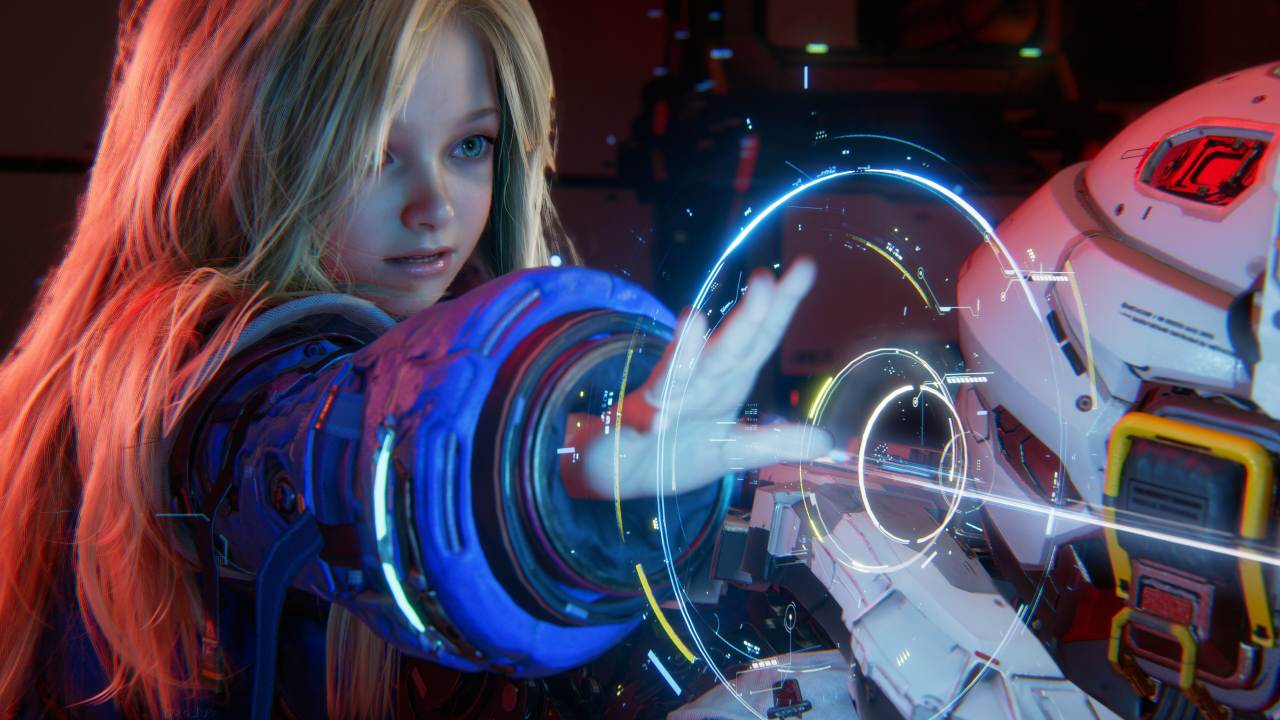
As mentioned earlier, one major concern was how the hacking mechanic would turn out across the full game experience. It took us around 9-10 hours to finish the full game, including a good amount of time spent searching for the hidden rewards in each level. Continuing to 100% all levels took our total timer to around 11-12 hours, and it certainly helped that there were virtually zero bugs encountered. The hacking mechanic, across all my hours of play, did not feel tedious at all, and it really added a whole new layer of tactical gameplay to the experience.
After finishing Pragmata, players will be treated to a New Game+ mode, a new Lunatic difficulty setting, and a new mode that offers several challenges with more rewards. There’s a bit of replayability here, and it’s well worth the full price for the overall package.
Verdict: Buy it!

Pragmata aims for the moon and definitely sticks the landing, blending emotional storytelling with intuitive and technical gameplay, proving that the industry is still very much open to original ideas that can excel when executed to perfection. The bond between Hugh and Diana is the heart of the experience, turning what could have been a cold sci‑fi shooter into a touching story about humanity. Amazing is an understatement with Pragmata, and it is a definite must-play.
While the “hack‑and‑shoot” loop and repetitive puzzle design may test some players’ patience, along with some minor nitpicks here and there, Pragmata succeeds in its main goal of delivering something different with AAA quality and polish, making it feel like it is laying the foundation for what the future of third-person shooters can expand into.
*Pragmata was reviewed on a PS5 and PC with a review code provided by the publisher.
Pragmata Review
Pragmata aims for the moon and definitely sticks the landing, blending emotional storytelling with intuitive and technical gameplay.
PROS
- Relatively short runtime ensures hacking mechanic does not get stale or overstay its welcome
- Levels incentivize exploration with useful rewards
- Surprisingly touching and charming story
- Combat tension feels great from start to finish
- Good amount of content after finishing the main story
CONS
- Repetitive level structure (Find X switches to unlock door)
- Primary weapon replenishing bullets over time is certainly a choice
- DualSense features a tad bit lacking
- Taking you back to the Shelter when you die, making walkbacks a bit frustrating