

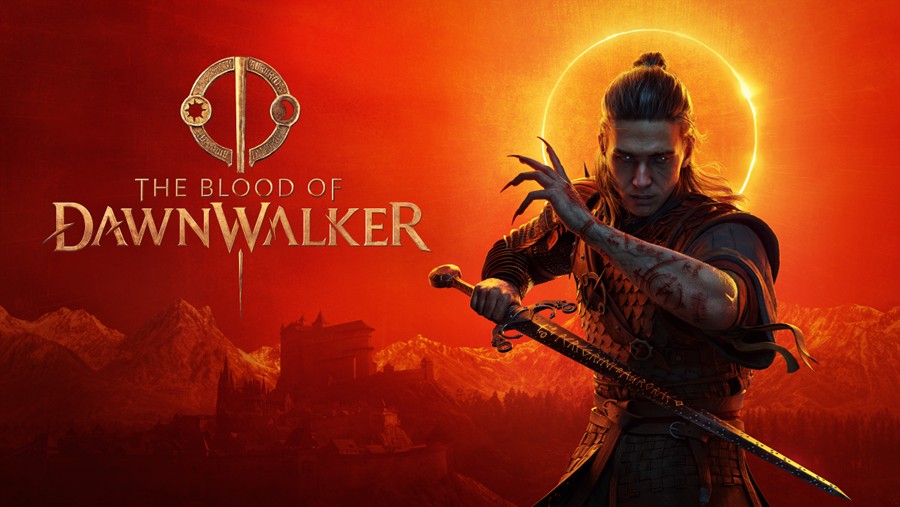
The Blood of Dawnwalker Review
Table of Contents
The Blood of Dawnwalker is a dark fantasy role‑playing game developed by Rebel Wolves and published by Bandai Namco Entertainment. Drawing inspiration from the grounded realism of Kingdom Come: Deliverance and the dynamic systems popularized by The Witcher 3, it blends immersive storytelling with versatile RPG mechanics that many are touting as a must-play game of 2026.
In The Blood of Dawnwalker, players step into the role of Coen, a young man whose homeland of Vale Sangoria has fallen under the rule of the elder vampires known as Vrakhiris, who promise freedom from plague, war, and taxation, but at a terrible cost: every new moon, each villager must surrender a pint of blood. After a failed rebellion, Coen’s family is captured by the vampire lord Brencis, destined to be sacrificed, while Coen himself is left for dead.
What the Vrakhiris did not anticipate is Coen’s unique curse that allows him to be human by day and vampire by night. This dual nature grants him both vulnerability and power, forcing players to navigate a desperate quest for survival and vengeance. By harnessing his humanity and embracing his savage thirst, Coen must decide whether he can save his family and confront Brencis, or succumb to the darkness that defines him.
30 Days and 30 Nights
The Blood of Dawnwalker makes a strong impression from the outset, delivering a captivating narrative and a unique use of its day‑and‑night mechanic. The prologue doubles as an extended tutorial, introducing players to the system while setting the stage for the events that drive the main quest.
Like most sandbox RPGs, progression comes through leveling, skill acquisition, and quest completion. However, The Blood of Dawnwalker elevates this formula by making time itself the ultimate resource. Advancing quests, learning skills at shrines, and completing objectives all advance time, which is a design choice that directly impacts events and interactions throughout your playthrough.
Unlike traditional RPGs where players can hoard quests and grind levels at leisure, every decision carries weight in The Blood of Dawnwalker. Planning your day wisely determines not only Coen’s fate but also the survival of those he cares about, as taking on quests will directly affect how much time will pass.
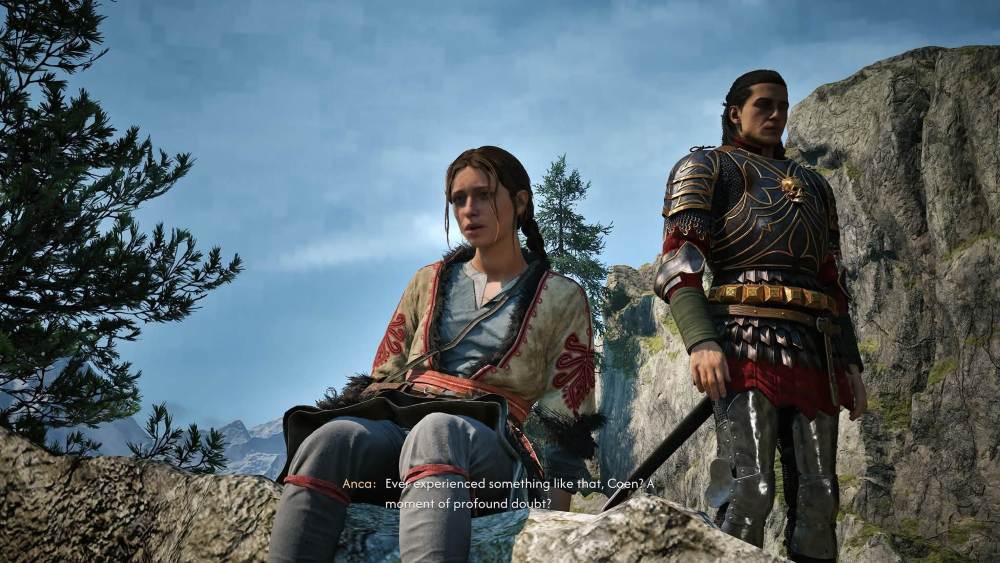
The challenge intensifies with his dual nature because, in Human Form, Coen is bound by mortality and reliant on equipment, food, salves, and conventional healing. Humans blend seamlessly into towns, attracting less suspicion and allowing for unhindered exploration. However, in Vampire Form, Coen gains supernatural strength and abilities, but strips away human advantages as a consequence. Feeding becomes essential, and exposure risks immediate hostility.
Mastering both forms requires strategic foresight. Certain quests benefit from Coen’s humanity, while others demand the raw power of his vampiric side. Much like Kingdom Come: Deliverance, there are no absolute right or wrong choices, only actions and consequences. Players may cling to humanity or embrace the darker temptations of the night.
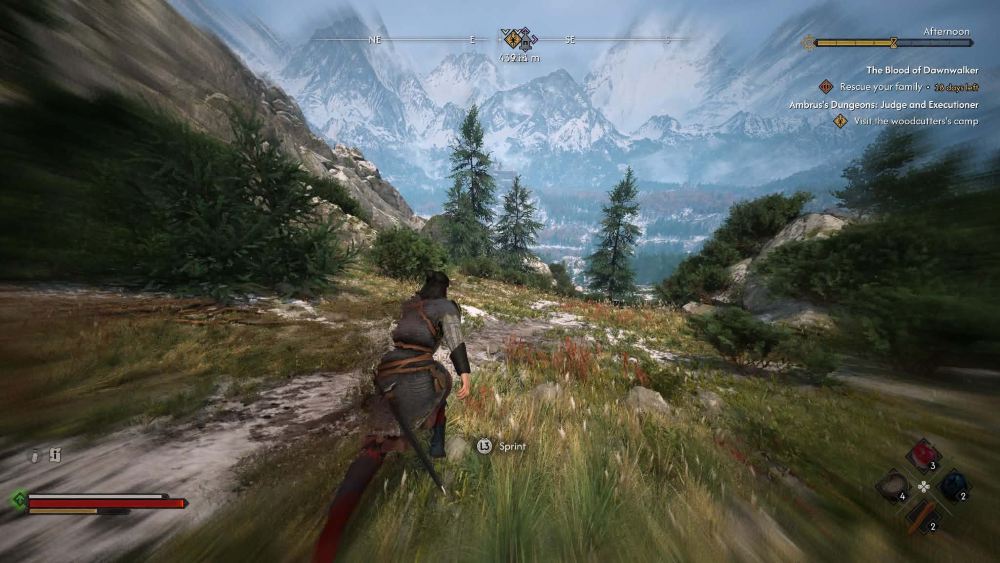
The day‑night cycle of The Blood of Dawnwalker stands out as one of the genre’s strongest implementations since Vampyr. Each transition keeps players on edge, ensuring that every decision feels critical to the unfolding story. Adding urgency is the 30‑day deadline to complete the main campaign. While daunting, mechanics such as fast travel and non‑time‑consuming tasks balance the pacing, reinforcing time as a resource without overwhelming the player.
Despite its ambitious systems, The Blood of Dawnwalker retains the accessibility of an open‑world RPG. Its unique mechanics cut through genre fatigue, stripping away busywork and bloat in favor of meaningful progression. The result is a fresh, choice‑driven experience that respects player agency while maintaining narrative tension.
Obey Your Thirst
In The Blood of Dawnwalker, players must constantly balance between human and vampire forms, each offering distinct advantages and limitations. Without thinking too deeply, the vampire form is undeniably more powerful, capable of dealing and absorbing greater damage with its claws. By contrast, the human form feels weaker, but compensates with access to equipment, conventional healing, and eventually, magic.
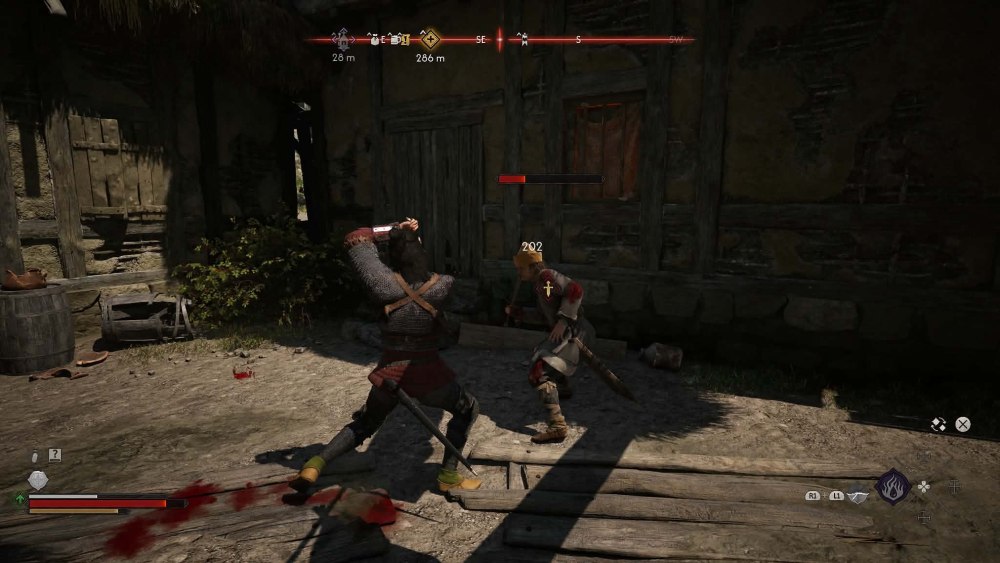
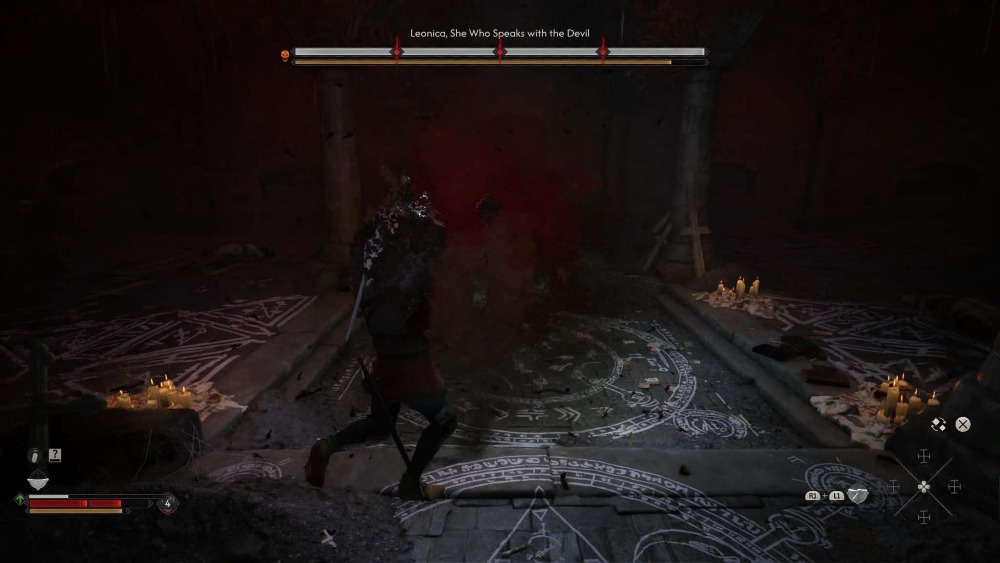
Combat remains consistent across both forms, built around melee weapons and claws, with the ability to block, dodge, and parry. Weapon choice influences pacing because heavier arms deliver slower but stronger strikes, while lighter weapons favor speed and precision. The parry system is particularly intuitive, echoing The Witcher’s combat design but mixed with the directional system of the Kingdom Come series. A well‑timed block reduces stamina consumption, while a perfect parry opens enemies to counterattacks. Dodging into the direction of an attack can yield a damage advantage, though blocking remains safer. Players can also use an omniblock, which is basically just blocking normally without a direction, though at the cost of higher stamina.
In The Blood of Dawnwalker, progression is tied to Swordsmanship, Witchcraft, and Vampire Skills, learned through skill books or by spending perk points at shrines. What sets this system apart is its integration with time, as certain skills require time to learn, forcing players to prioritize carefully rather than indiscriminately filling out a skill tree. Magic is bound to the human form and must be discovered through books scattered across the world, while vampire skills are instinctual, unlocked by consuming the blood of special foes and enhanced by raising corruption levels, done by consuming more blood. But beware, because vampire skills can only be used at night!
Both skill trees offer active and passive abilities. Passive perks trigger under specific conditions, such as Scarlet Blood on the Vampire tree, which heals on a successful parry, while active skills require activation points or blood consumption, with cooldowns dictating their reuse.
Despite this, I find that many of the learned perks from the skill tree are not as reliable as the time consumed to learn said perks. There are a handful of skills that give you an advantage, but you can simply get by with a lot of the basic skills. There are also weapon skills that can be activated when wearing a unique bracer or wielding a unique weapon, and by pressing both bumper buttons, you can unleash a combo that can turn the tide.
Overworld-based skills benefit from both forms as well. Humans can tap into souls for knowledge or open astral gates, while vampires gain supernatural mobility through shadowstep, wall‑walking, and planeshifting. With no horses available, you can use magic to grant you superhuman speed or shapeshift into a wolf as a vampire. These abilities become essential for navigating the overworld efficiently.
Ultimately, the dual‑form system of The Blood of Dawnwalker ensures that every encounter and decision feels layered. Players must weigh the risks and rewards of each form, whether blending into towns as a human or unleashing vampiric power under the moonlight, and it is a great design choice that keeps combat and progression engaging throughout the journey.
All Roads Lead To Revenge
The Blood of Dawnwalker introduces fresh ideas within a familiar open‑world framework, delivering an engaging narrative that carries momentum from its opening cinematic through to the closing credits. The writing team deserves credit for weaving strong worldbuilding into the story, creating a setting that feels alive and immersive.
Coen’s quest for revenge unfolds gradually, with progress tied to investigation and clue‑gathering rather than a straightforward path to Brencis. His lieutenants and henchmen respond only after a series of smaller actions has accumulated, eventually opening opportunities to strike. The system resembles a streamlined Assassin’s Creed target list, but with tighter pacing that avoids unnecessary bloat.
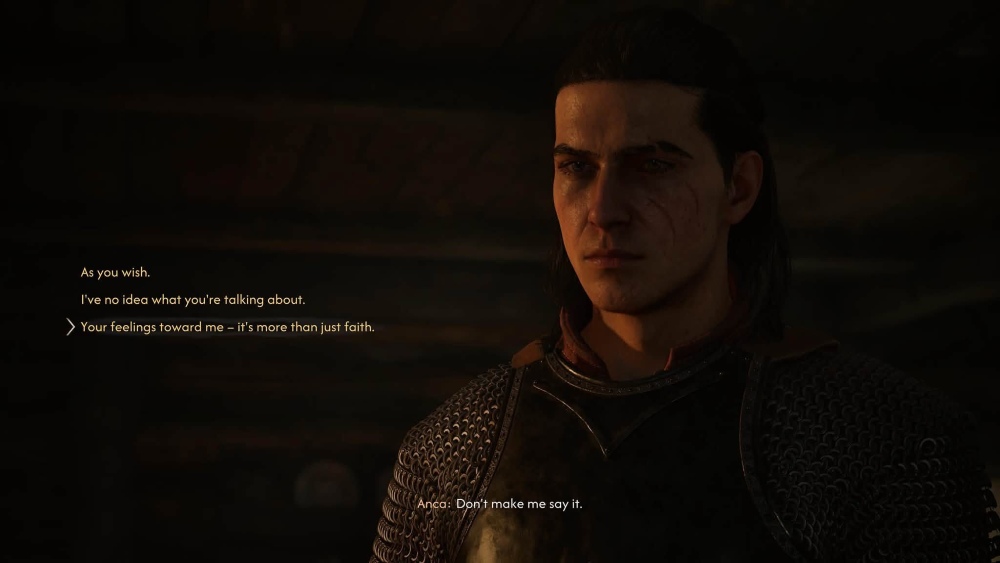
Even routine quests contribute meaningfully to the narrative, often revealing micro‑stories that highlight the plight of NPCs. These encounters test Coen’s morality, and while he may miss out on treasure or access to areas that can make his quest easier or harder, these consequences speak to the player, showing how many of Coen’s choices affect his overall humanity, which he desperately clings to, reinforcing the game’s central theme of choice and consequence. These moments of vulnerability are what make The Blood of Dawnwalker stand out from many open world titles.
Quality‑of‑life improvements in The Blood of Dawnwalker help streamline exploration. Temples serve multiple functions, such as skill learning, fast travel, and storage, while crafting is straightforward, requiring only recipes and ingredients. Menus and maps are cleanly organized, minimizing friction, though loot management remains a minor drawback common to the genre.
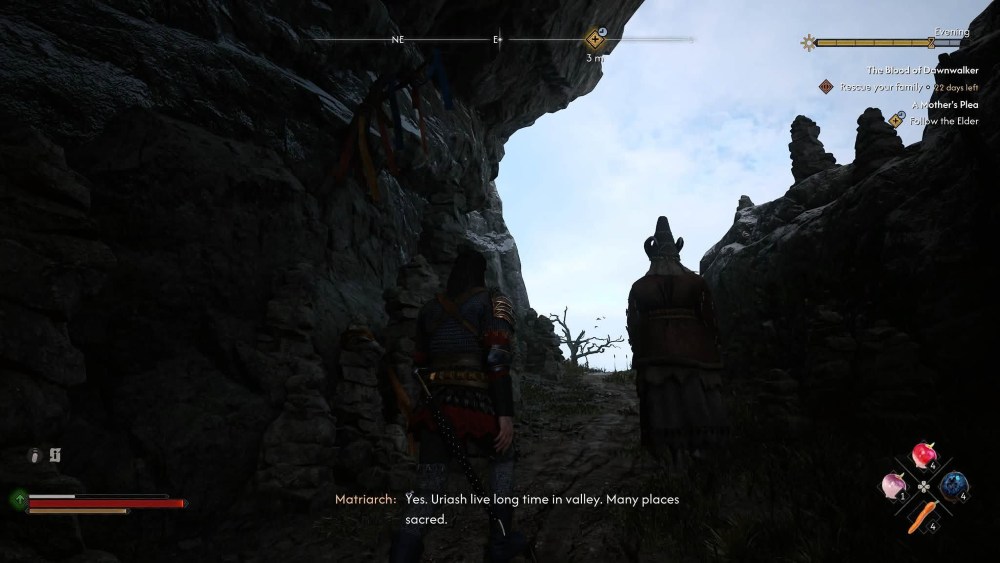
The Blood of Dawnwalker‘s setting, the Vale of Sangora, is atmospheric but limited. Forests, swamps, and mountains share similar aesthetics, and long stretches of empty terrain emphasize the valley’s oppressive mood. While thematically effective, the uniformity can feel claustrophobic over extended play. Certain teased elements, such as horrors beyond the pale or deeper consequences of Coen’s vampiric thirst, could have been explored further to enrich the narrative.
The main campaign of The Blood of Dawnwalker runs approximately 25–30 hours, depending on how you play. You can squeeze more out of the game, adding around 15 or so hours if you want to complete everything. Once finished, however, replayability is limited, as there is no New Game Plus or post‑campaign continuation, which is a big hit.
Our playthrough on PS5 revealed minor glitches, none of which were game‑breaking, though we did encounter a few bugs that required us to reboot the game to fix them. A 60 FPS patch was delivered during testing, significantly improving performance, and further fixes are expected at launch to ensure that the experience is much more stable and immersive, so we’re definitely looking forward to that.
Verdict: Buy It!

What we liked:
- Best use of the day and night mechanic for any open world game.
- Gripping narrative with morally complex characters.
What we didn't like:
- There's really no escape from open world bloat.
- Lack of new game plus.
The Blood of Dawnwalker is an amazing first effort from Rebel Wolves, proving that open‑world RPGs can still surprise us. By stripping away genre bloat and focusing on meaningful mechanics such as the use of the day and night cycle, a gripping narrative, and morally complex characters, the developers have delivered a dark fantasy experience that feels both familiar and refreshingly new, making it a must-play for fans of the genre.
The Blood of Dawnwalker respects your time, challenges your choices and morality, and keeps you invested from the first cinematic to the final credits. More than just another entry in the genre, it’s a statement of what open‑world RPGs can aspire to be. If this is only the beginning, then the future of Rebel Wolves’ saga looks brighter, or perhaps darker, than ever.
*The Blood of Dawnwalker was reviewed on the PS5 with a review code provided by the publisher.
