
The “holy grail” of PC gaming is often defined by raw horsepower, translating to the fastest GPU, the most cores in a CPU, or the highest possible frame rates. Having a beefy PC isn’t the whole conversation, though, because high frame rates and ray tracing mean little if your monitor can’t keep up.
Having an OLED monitor is a luxury once reserved for expensive setups, but it has now matured enough that we can reasonably integrate it into our setups. With the recent arrival of the ROG Strix OLED XG27AQWMG and the ROG Strix OLED XG32UCWG, the technology has finally overcome common hurdles, like brightness and longevity, to offer a visual experience that is quite literally in a league of its own.
What is OLED?
Non-OLED monitors, whether IPS or TN, use a backlight that shines to make an image. That said, the backlight is never “turned off” for specific parts of the screen, which is why it these monitors cannot really achieve perfect blacks. So when you’re playing a game with dark scenes, like Resident Evil Requiem or Cyberpunk 2077, the “black” areas often look more like washed‑out gray.

OLED monitors, on the other hand, makes it so that each pixel is its own light source rather than relying on one big backlight, allowing the screen to show pure colors, which will be extremely evident with titles like the recently released Marathon where you navigate areas with contrasting colors and a lot of deep blacks.
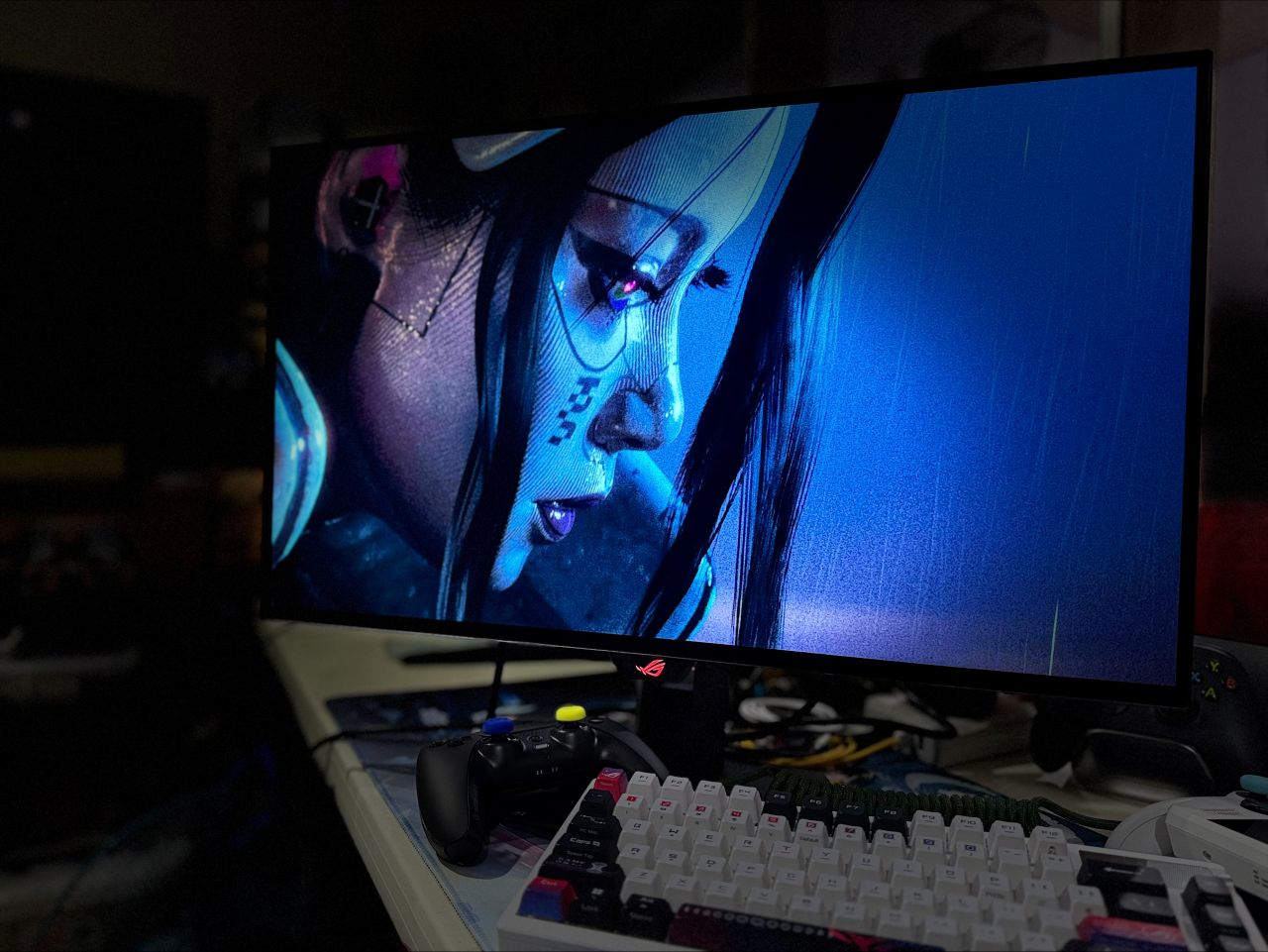
New OLED Technology is Here
One of the main concerns of the earlier generation of OLED monitors is that they weren’t “bright enough” for well-lit rooms, because they had to limit their peak brightness to protect the materials from heat and degradation.
The ROG Strix OLED XG27AQWMG solves this through its new Tandem OLED technology, where, instead of a single layer, Tandem OLED stacks two layers of OLED pixels on top of each other. This approach allows the monitor to achieve much higher peak brightness of up to 15% without overworking individual pixels.
The result is a display that hits 1500 nits of peak brightness, allowing for vibrant HDR images. And because the load is shared across two layers, the panel is significantly more efficient, leading to a 60% longer lifespan compared to previous-generation WOLED panels.

True Black Glossy Screens are a Godsend
When gaming, one thing that can ruin the experience is playing in well-lit rooms or across light sources that would cause reflections. Traditional glossy screens often turn into mirrors, while matte screens can make the image look “grainy.”
Accompanying the Tandem OLED technology is what ROG calls True Black Glossy coating, which is basically a zero-haze optical layer is featured on the ROG Strix OLED XG32UCWG. What this does is maintain the vibrance of the display by using advanced anti-reflective technology to reduce ambient reflections by nearly 40%.

Refresh Like Your K/D Depends on it
These OLED monitors are also built for competitive gamers, answering the call of reduced ghosting. While 1ms is a usual response time for colors to transition between each other, OLED transitions almost instantaneously. The XG27AQWMG boasts a 0.03ms Gray-to-Gray (GtG) response time. Combined with a 280Hz refresh rate, so whether you’re flicking a sniper rifle in Counterstrike or tracking a speeding car in Forza Horizon 5, the image remains as sharp in motion as it is when standing still.
The XG32UCWG takes this a step further with its Dual-Mode functionality, allowing users to switch between a cinematic 4K resolution at 165Hz for immersive RPGs like Clair Obscur: Expedition 33, and a hyper-fast FHD (1080p) at 330Hz for competitive gaming, making it quite literally two monitors in one.

Worry Less, Play More
One of the biggest concerns about OLED displays is the dreaded burn in, which is basically the result of showing the same image for too long, resulting in faint but permanent “ghost” markings that ultimately ruin the experience. Much has evolved since then, and modern technology has progressed by leaps and bounds, resulting in what ROG calls with OLED Care Pro, a suite of AI-driven features designed to keep the panel healthy.
Both monitors are equipped with a Neo Proximity Sensor which detects when you step away from your desk, automatically dimming the display to save power and reduce pixel stress. You can think of it as a smarter way to put your display on sleep, keeping the panel as healthy as possible when able.
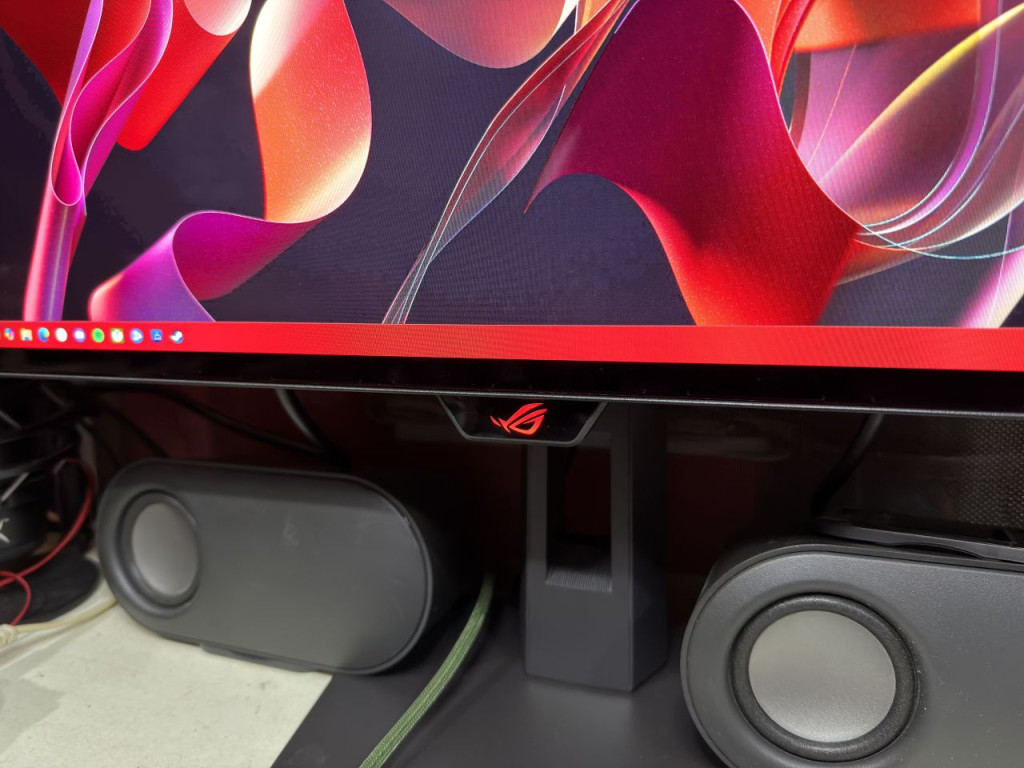
To prevent static elements like a Windows taskbar or a game’s HUD from leaving marks, the panel uses Pixel Cleaning and Screen Move, which subtly shifts pixels in ways you won’t notice but keeps the image fresh.
On top of that, both the XG27AQWMG and XG32UCWG are equipped with custom heatsinks that keep the panel cool, minimizing heat‑related wear and helping to prevent burn‑in before it even starts. These monitors are also backed by a 3-year warranty that includes coverage for panel burn-in, giving users the peace of mind they need.
Worth The Try
Taking the leap to an OLED monitor might be one of the best experiences you may have if you’ve previously skimped on displays. Whether you’re still on an RTX 20 or 30 series, or you already have the latest 50 series, maximizing visual fidelity isn’t complete without a proper display to match.
The ROG Strix OLED XG27AQWMG is a great entry-level choice for those looking to jump in due to its Tandem OLED technology. Meanwhile, the ROG Strix OLED XG32UCWG acts as the “everything” monitor, offering 4K brilliance for movies and AAA titles alongside a 330Hz mode for when it’s time to get serious with gaming.
The ROG Strix OLED XG27AQWMG is now available for PHP 45,000 at ROG stores and other ROG authorized retailers.