Demon Slayer The Hinokami Chronicles 2 Review
Demon Slayer The Hinokami Chronicles 2 Review
Table of Contents
Demon Slayer: Kimetsu no Yaiba needs no introduction. The franchise’s first film, Mugen Train, was released in 2020, followed by the release of its debut video game, The Hinokami Chronicles, in 2021. While the original game delivered enjoyable combat and a faithful adaptation, it fell short in terms of content and gameplay.
Now in 2025, Demon Slayer The Hinokami Chronicles 2 arrives with promises of improvement across the board, launching in line with the latest movie, Infinity Castle. Does this second outing answer the call, or does it still fall short of the expectations of fans?
From the Swordsmith Village Arc to the Hashira Training Arc
One of the most notable upgrades in Demon Slayer: The Hinokami Chronicles 2 is its expanded scope. The Story Mode now spans three major arcs from the anime: the Entertainment District, the Swordsmith Village, and the Hashira Training Arc. These chapters offer more narrative depth than ever before, and give more characters, especially the elite Hashira of the Demon Slayer Corps, enough opportunity to shine and make their grand introduction.

Where the first game concluded with the Mugen Train arc, only a few Hashira, such as Kyojuro Rengoku, Shinobu Kocho, and Giyu Tomioka, had meaningful screen time. In contrast, Demon Slayer The Hinokami Chronicles 2 pushes the timeline forward to include the latest arcs, incorporating a broader cast and more diverse settings into its arena-style battles. The game culminates just before the climactic Infinity Castle arc, setting the stage for the final confrontation with Muzan Kibutsuji and his remaining Upper Rank demons.
What’s New?
Much like its predecessor, Demon Slayer The Hinokami Chronicles 2 remains an anime-based arena fighter offering both single-player and multiplayer modes. Most modes include Story, Versus, and Online battles, while “The Path of a Demon Slayer” revisits key moments from earlier arcs through select fights. A standout addition in this sequel is the “Training Paths” mode, which introduces a survival-style challenge under the guidance of a specific Hashira.

In Training Paths, players navigate a grid-based gauntlet on a single health bar, choosing routes based on desired rewards that range from consumable buffs and unlockable content to HP restoration. Each path presents unique challenges and rewards, and since there’s no option to backtrack, players are encouraged to plot their path well.
With nine Hashira available, each offering three difficulty tiers, unlocking all content will make replaying this mode something to look forward to, and luckily, earned rewards carry over across attempts, allowing for experimentation without losing progress.

Another new feature is the Gear system, which lets players equip up to three gear items that provide advantages in battle. These include effects like temporary boosts to heavy attack damage or reduced skill consumption, and players can create up to three gear loadouts for different scenarios.
Progressing through the game is further supported by Kimetsu Points, a currency earned through playing across various modes. These points can be spent in the in-game shop to unlock new characters, gear, music tracks, alternate costumes, and customization items for your online Slayer ID.
While some items, particularly characters, can be quite expensive, there are other ways to unlock them, and most content remains accessible through regular play. There’s also an Archives section that helps track all acquired items and progress.

Every character in the roster levels up through use, unlocking additional content and encouraging players to experiment with the whole cast. Even characters you may initially overlook could surprise you with their capabilities, making each try a surprise in itself.
What’s The Same?
The core arena-style combat in Demon Slayer The Hinokami Chronicles 2 remains essentially unchanged from the first outing. While it may not match the technical depth of other fighting games, it still delivers fast-paced fun that’s accessible to most, if not all, players.
This time, the expanded roster featuring all nine Hashira and several Upper Rank demons adds much-needed variety. Fan favorites like Rengoku remain playable despite his fate in a previous story arc, and the Kimetsu Academy characters also return.

Controls are intuitive and consistent across the roster, making it easy for players to jump in without too much hassle. Skills and Ultimate Arts are executed with simple button inputs, with slight variations depending on directional input or while guarding.
It’s really easy to pick up and play, but while the game is certainly approachable, there’s some semblance of depth in the form of Parries and Pushes that require precise timing, as well as aerial combos that allow for creative juggling.
Despite the universal control scheme, each character still has their unique traits. For example, Gyomei Himejima, the Stone Hashira, is a slow but powerful bruiser, while Gyokko, an Upper Rank demon, slithers across the battlefield because of his snake-like design. Interestingly enough, demons are restricted from fighting in daytime arenas due to their vulnerability to sunlight, adding a layer of authenticity for fans of Demon Slayer.

At its core, the game remains a team-based fighter, allowing players to form pairs for battle. Fans will appreciate the new inclusion of unique Dual Ultimate Arts for specific character combinations like Tanjiro and Nezuko, Inosuke and Zenitsu, and even less expected duos like Murata and Shinobu or Muichiro and Kanroji.
However, the pairing system has limitations. Demon Slayers cannot be teamed with demons, and some demons are restricted to solo play. While this aligns with the narrative, it does limit creative team compositions that would have been great to watch. Don’t expect matchups like Rengoku and Akaza or Daki and Nezuko.
Combat pacing can also be affected by brief recovery windows after knockdowns, which may feel a tad bit too slow for players who prefer high-speed action. Nonetheless, the game’s character diversity and fan service offer plenty of appeal for all types of players.
Breathing Never Looked So Amazing
Demon Slayer The Hinokami Chronicles 2 continues to impress visually, boasting graphics that look fantastic. Skill and Ultimate Art animations burst with colorful effects, while cinematic cutscenes in Story Mode remain worth watching despite their condensed nature.
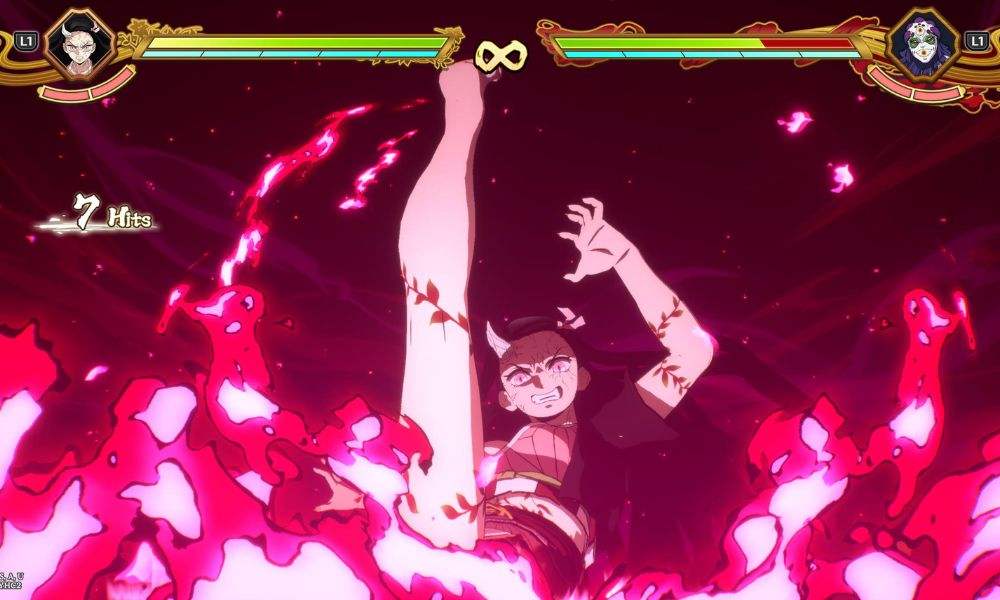
The sound design also deserves praise, with tracks that elevate action-packed moments, such as the battle between Tengen Uzui and Gyutaro. Both English and Japanese voice casts deliver standout performances, adding depth to the experience.
Beyond its expanded roster, the sequel makes significant improvements in Story Mode. Players must still complete it to unlock a huge portion of the cast, but the experience is now more rewarding. There are also new playable segments that fill gaps in the story, such as exploring the Butterfly Mansion during the Swordsmith Village arc, where players can collect Kimetsu Points and take on sidequests.
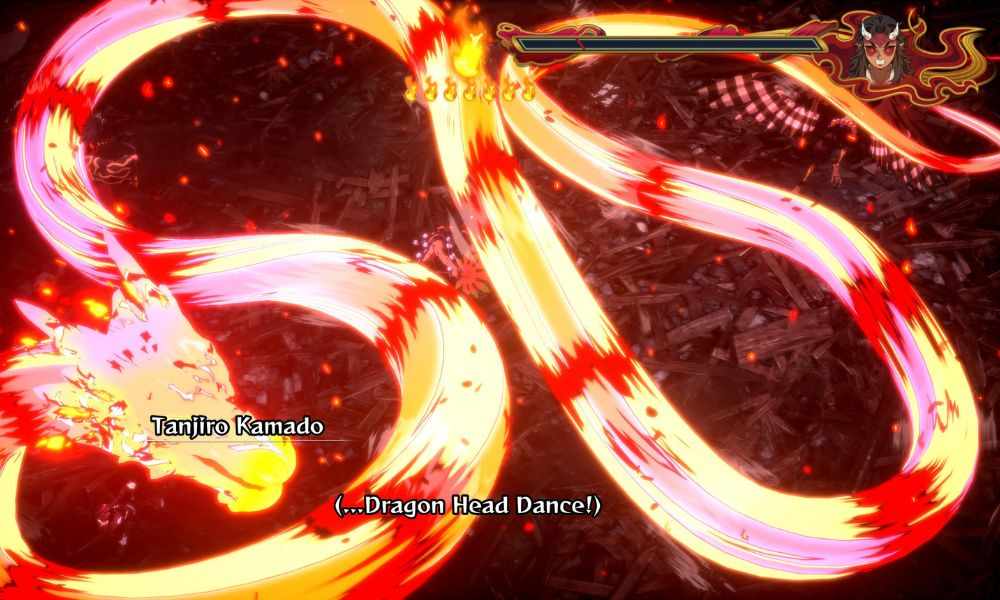
World-building has also improved, with explorable areas like the Swordsmith Village and Entertainment District offering collectibles and sidequests. While these additions are certainly welcome, the novelty can wear thin. Some NPCs remain non-interactive, and specific segments feel padded, such as guiding an injured Tanjiro in a linear sequence with almost zero gameplay.
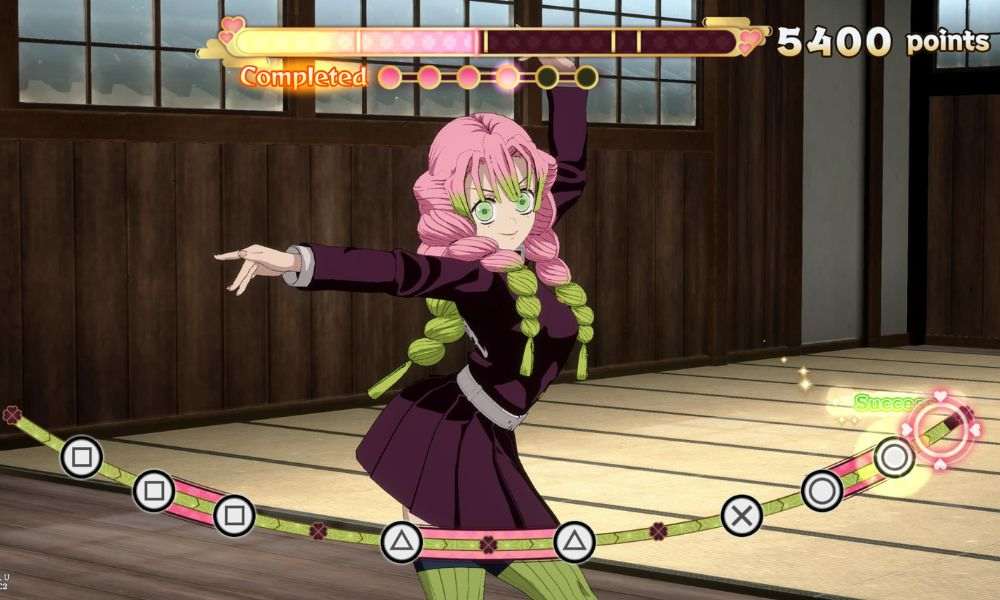
What’s lacking there, Demon Slayer The Hinokami Chronicles 2 makes up for in the form of mini games, offering a break from combat, such as Zenitsu’s shamisen performance or Kanroji’s training exercises. However, the variety is limited, and some missed opportunities, such as Obanai’s unique regimen or Gyomei’s multi-part training, could have been elaborated more.
Sadly, sidequests often boil down to simple fetch tasks or repetitive demon encounters, and occasional mechanics like Tanjiro’s scent tracking or Zenitsu’s hearing do not really do much to add variety or complexity.

Verdict: Buy it!

Demon Slayer The Hinokami Chronicles 2 may still stumble in some areas like quest design and gameplay depth, but it’s a clear step forward from its predecessor. While the Infinity Castle arc remains absent, the expanded character roster and broader story coverage offer fans plenty to enjoy, with the only caveat being the wait for a third installment to see more Upper Rank demons like Doma and Kokushibo in action.
The game is a solid pick for casual players looking for fast-paced fun, packed with content and accessible combat. Hardcore fighting game enthusiasts may find its mechanics too simple, but the experience remains enjoyable, especially for those who are familiar with the cast of characters and the anime. Whether you’re a longtime fan or a newcomer curious about the world of Demon Slayer, Hinokami Chronicles 2 serves as a fantastic entry point into the franchise.
*Demon Slayer The Hinokami Chronicles 2 was reviewed on a PS5 with a review code provided by the publisher.
Demon Slayer The Hinokami Chronicles 2 Review
Demon Slayer The Hinokami Chronicles 2 may still stumble in some areas like quest design and gameplay depth, but it’s a clear step forward from its predecessor.
PROS
- Amazing Visuals and Sound
- Fun and Easy to Pick Up
- Improved Character Roster and Unlockables
CONS
- Unnecessary Padded Segments
- Mini-games and Side-quests Could Use More Variety