With its release date finally revealed, RGG Studio’s ambitious new project, Stranger Than Heaven, suddenly feels both tantalizingly close and impossibly far. During Summer Game Fest 2026, we had the chance to dive into an extended preview, and it’s clear that RGG is stepping far outside its comfort zone in ways that longtime fans might not expect.
For those familiar with the studio’s portfolio, it’s easy to assume this is another Like a Dragon offshoot, complete with familiar beat‑’em‑up mechanics. But Stranger Than Heaven immediately subverts that expectation. This is a new style of action, a dramatic shift from anything RGG has done before.
Over a 45‑minute session, we tested three difficulty levels centered on combat encounters, each featuring its own set of enemies across different eras and cities, offering a glimpse into the sweeping, time‑spanning journey that defines Stranger Than Heaven.
Stranger Than Heaven – Hands-On Preview
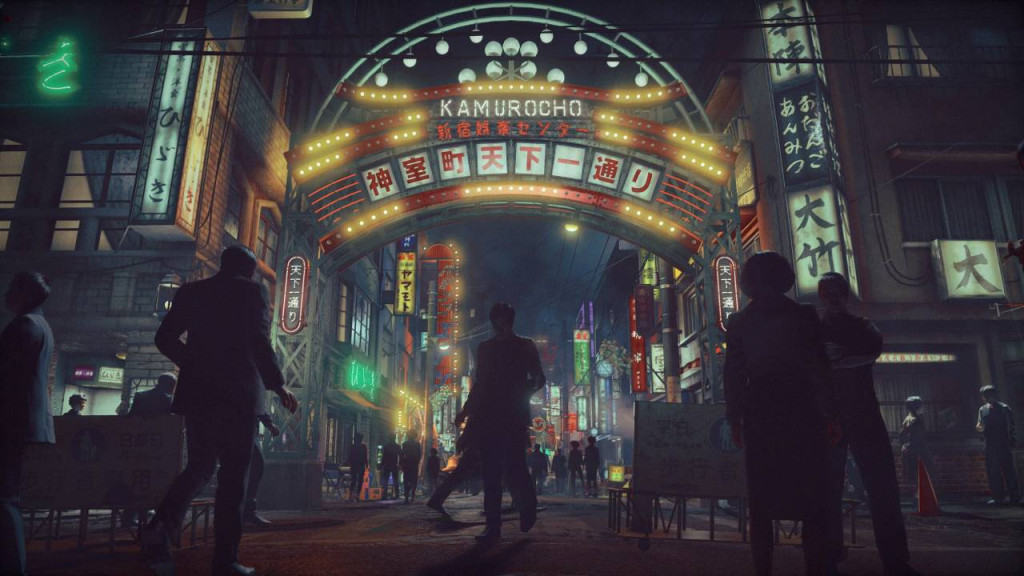
Stranger Than Heaven follows its protagonists across five decades, from the early Taisho era (1915) to the mid‑Showa era (1965). As with other RGG titles, we expect a sprawling melodrama of brotherhood, betrayal, and survival, but this time grounded in a more historical, brutal context.
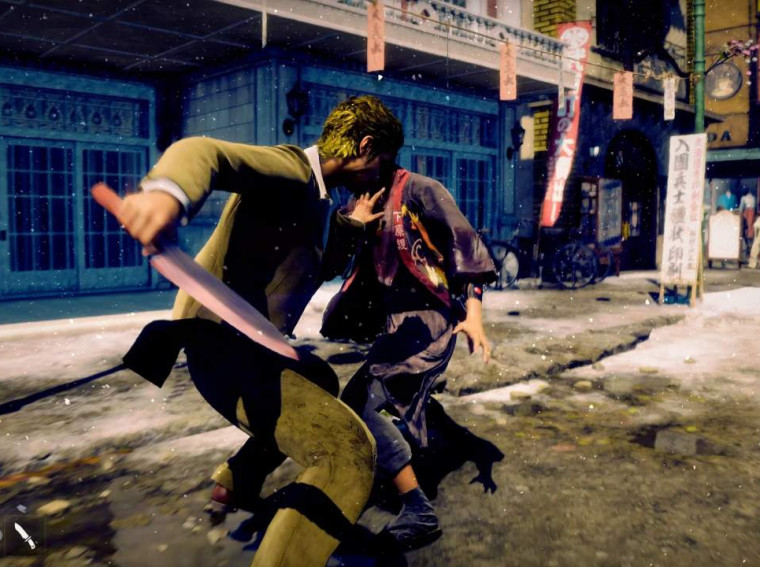
That brutality is front and center. The combat in this demo is visceral, raw, and unflinching, capturing the harshness of the eras it portrays. While Kiryu and Kasuga’s adventures have their share of violence, Stranger Than Heaven delivers a level of bone‑crunching impact that feels startlingly real.
A New Combat Philosophy
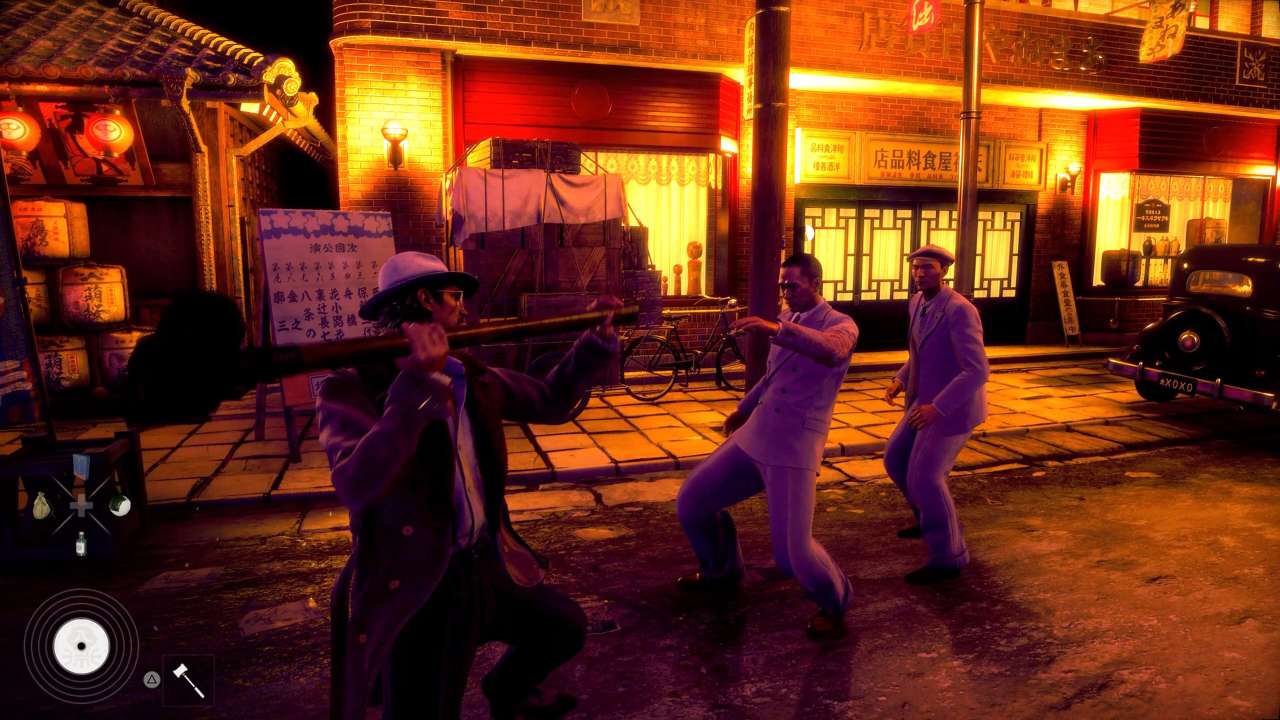
One of the biggest surprises is how dramatically the controls depart from both the Dragon Engine’s brawler style and Kasuga’s turn‑based JRPG combat. Instead, Stranger Than Heaven opts for a grounded, strike‑by‑strike system where every button corresponds to a specific limb.
Using an Xbox controller during the demo:
- Left Bumper / Left Trigger – Left‑arm light and heavy attacks
- Right Bumper / Right Trigger – Right‑arm light and heavy attacks
- A – Dodge
- B – Block
- Y – Change Weapons
- D‑pad – Use items
Weapons add another layer of depth. The demo offered bare fists, a knife, and a crowbar, each with distinct strengths:
- Barehanded – Fast but lower damage
- Crowbar – Heavy, slower, devastating
- Knife – Balanced speed and power
The full game will feature 13 weapon styles, suggesting a deep and varied combat system
Gangs of Japan
The build we played allowed access to three time periods and cities in Japan: Kokura in Fukuoka in 1915, Kure in Hiroshima in 1929, and Minami in Osaka in 1943. Each time period is a different difficulty level with an appropriately challenging boss, ranging from Beginner to Advanced. While it seems like a quick demo, as you progress through the levels, it does get pretty challenging.
As mentioned, there is a grittiness in the level of violence in the game. It is brutal and visceral, with each bone-crunching strike being felt. It makes it even more brutal once you use the weapons against your opponents, striking them when they’re down with the knife or smashing their heads with a crushing smash.
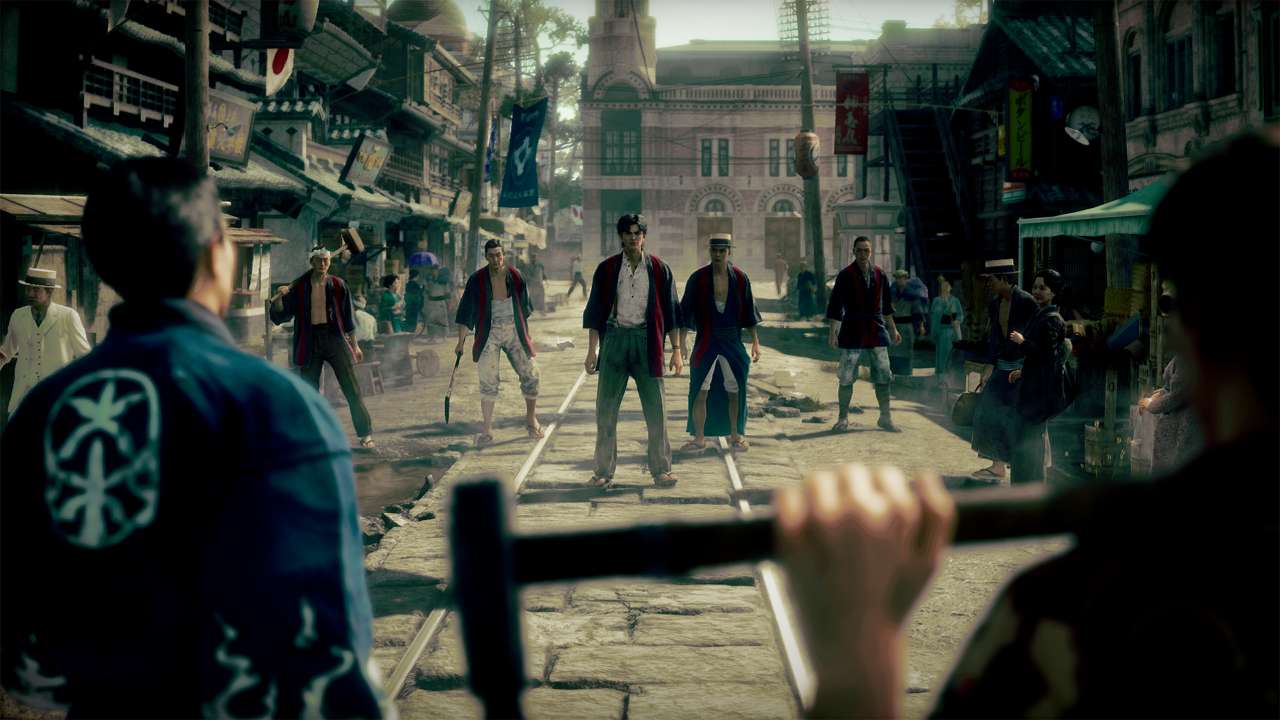
But the brutality goes both ways. Unlike previous Like a Dragon titles, Stranger Than Heaven introduces a stagger meter that dictates the flow of combat. Stagger an enemy, and you can deliver a powerful blow by pressing both triggers. However, when you’re staggered, you’ll find yourself on the ground where you’re put on defensive, either rolling away, soaking the damage, or using items in your way to escape your predicament.
The advanced-difficulty boss in Osaka was a standout because of his smart, aggressive, and capable nature, which made him adept at dismantling careless players. Perfect dodges open windows for counterattacks, but the real key is parrying.
Parrying is an advanced technique in Stranger Than Heaven requiring timing and awareness. While blocking, you must press the opposite bumper of the incoming attack, so if the enemy swings with their right hand, you parry with your left. Successful parries open them up to extra hits, which is key for the tougher enemies.
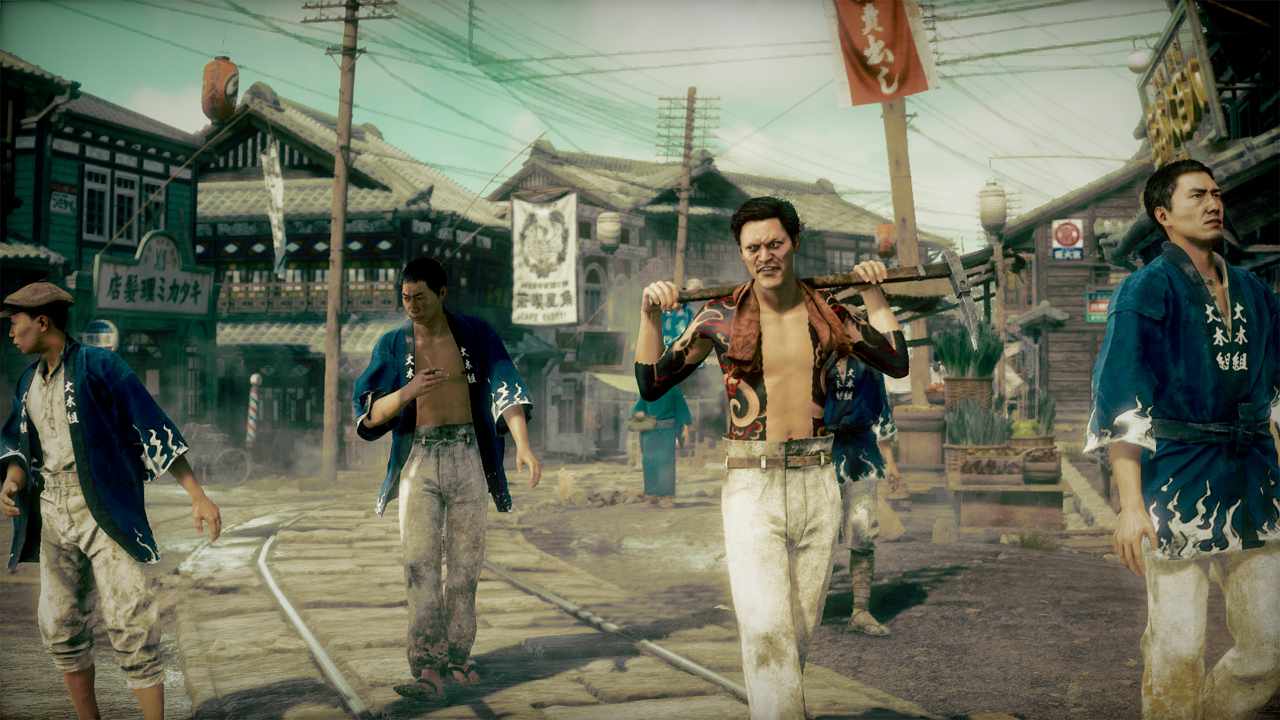
After several attempts, we finally defeated the Osaka boss by chaining perfect dodges, knife combos, and well‑timed parries. It was challenging, satisfying, and unlike anything we’ve played from RGG before.
In a franchise known for annual releases, remasters, and spin‑offs, Stranger Than Heaven is something genuinely fresh. It’s stylish, grounded, and surprisingly demanding, yet still unmistakably RGG in its storytelling ambition. If this demo is any indication, Stranger Than Heaven could be one of the studio’s most exciting departures yet.
Stranger Than Heaven launches on January 15, 2027 on the PS5, Xbox Series X|S, Switch 2, and PC.