

Silver Pines Review
Table of Contents
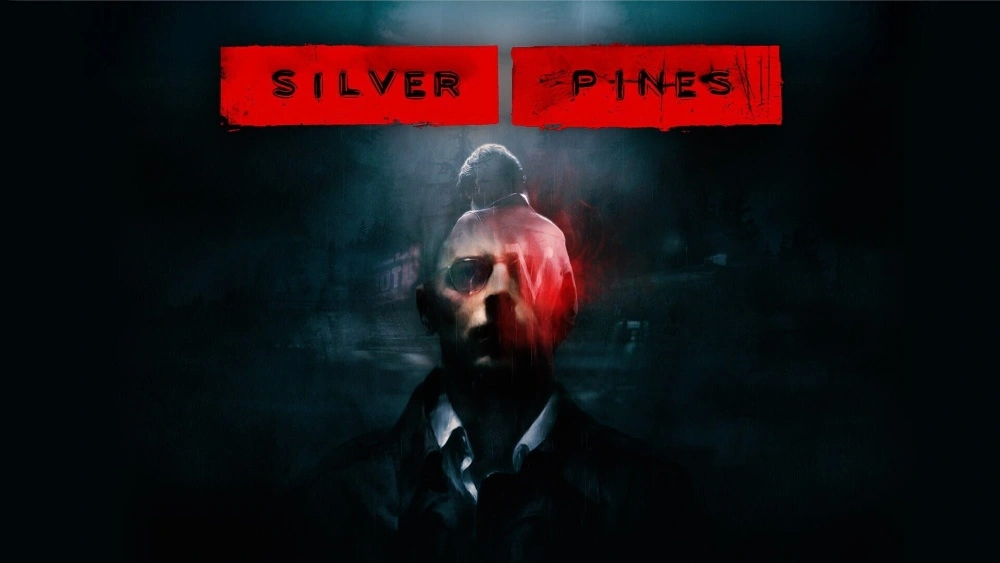
Silver Pines is a 2D side-scrolling survival horror title from Wych Elm and Team17, the publisher behind acclaimed indie hits such as Dredge and Blasphemous. Drawing heavily from genre-defining classics like Silent Hill and Resident Evil, while weaving in the surreal, dreamlike sensibilities of David Lynch’s works such as Twin Peaks and Lost Highway, Silver Pines embraces familiar horror conventions while carving out its own unsettling identity. The result is a haunting experience that doesn’t merely flirt with psychological horror, but fully commits to it, delivering a relentless descent into dread that lingers long after the credits roll.
Players step into the shoes of Red Walker, a private investigator who awakens in a diner in the town of Silver Pines with no memory of how he arrived there. His confusion is quickly interrupted by a cryptic phone call from a client demanding an update on the search for a missing musician named Eddie Velvet. As a catastrophic storm bears down on the isolated mining town and fragments of Walker’s troubled past begin to resurface, his investigation spirals into something far more sinister. With time running out and reality becoming increasingly distorted, Walker must uncover the truth behind Eddie Velvet’s disappearance before the approaching storm consumes everything in its path.
A Ride To The Stars
What makes Silver Pines particularly compelling is how it blends classic survival horror sensibilities with the exploration and progression mechanics of a 2D Metroidvania. Combined with its rotoscoped visual style, the result is a unique experience that balances psychological horror, crime thriller storytelling, and atmospheric world-building. As the narrative unfolds, what begins as a seemingly straightforward investigation gradually descends into a harrowing journey through paranoia, madness, and the unknown.
A large part of the game’s effectiveness comes from its presentation. The rotoscoped visuals are used to great effect, complemented by cinematic lighting that creates a constant sense of unease. Silver Pines itself feels hauntingly abandoned, with its decrepit buildings, dense forests, labyrinthine cave systems, and surreal visual motifs. Optical illusions hidden throughout the environment often resemble Rorschach inkblots, subtly reinforcing the unsettling feeling that someone, or something, is always watching.
Exploration naturally drives the story forward. Much of the town’s population has evacuated in anticipation of an approaching storm, leaving behind only a handful of residents, including a local police officer and several motel guests. The isolation adds to the mystery as Red Walker follows fragmented clues while seemingly chasing ghosts. However, that sense of uncertainty soon gives way to genuine terror when the investigation leads him to a garbage dump behind a butcher shop, where one of the shadows haunting his search suddenly becomes all too real. From that point onward, it becomes clear that something deeply disturbing lies beneath the surface of Silver Pines.
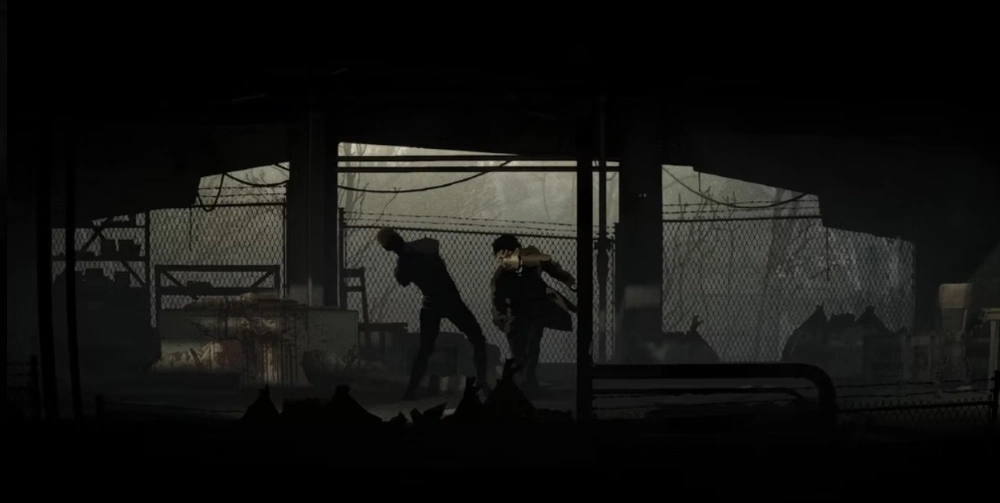
As a side-scrolling adventure, Silver Pines keeps its controls relatively straightforward while offering enough variety to support exploration and combat. Walker can move left and right, perform targeted jumps, and leap to elevated platforms to reach previously inaccessible areas. He can also dodge backward or dash forward, though these actions consume stamina and must be used strategically during tense encounters.
Once Walker acquires a melee weapon, it serves multiple purposes beyond combat. In addition to defending himself against hostile threats, he can use it to break wooden barricades, destroy crates, and access hidden pathways throughout the town. This utility-driven design encourages players to revisit older areas as new tools and abilities become available.
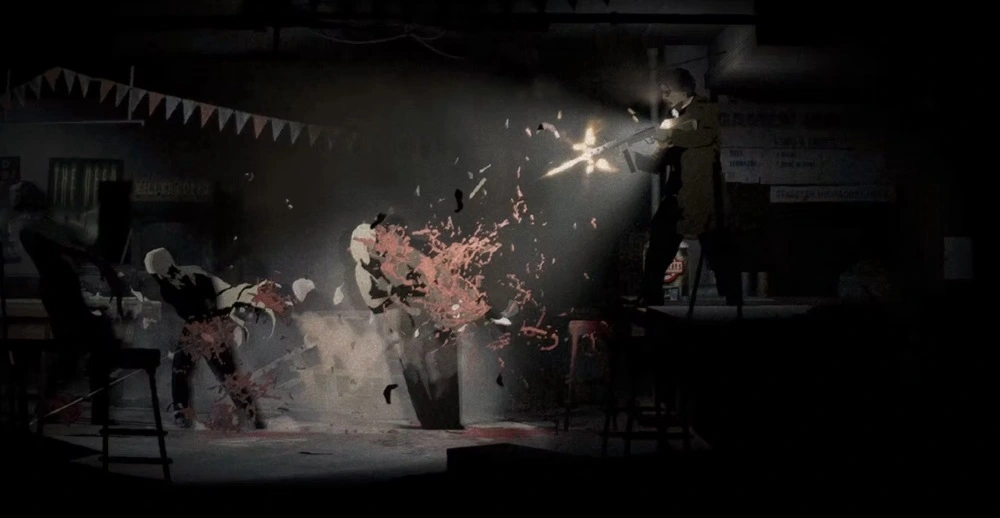
Firearms are scattered throughout Silver Pines, rewarding thorough exploration with pistols, nailguns, rifles, and shotguns, along with the ammunition needed to operate them. Each weapon handles differently and demands a degree of planning before engagement. Rifles and shotguns, for example, require manual cycling between shots, introducing deliberate timing that reinforces the game’s survival horror roots.
Additional actions such as charged attacks, running strikes, and swimming also consume stamina, forcing players to manage their resources carefully. Running out of breath while swimming can result in Walker being returned to shore, effectively punishing careless navigation. Curiously, standard sprinting does not consume stamina, nor does barging through doors at full speed, making these exceptions stand out somewhat against an otherwise consistent stamina management system.
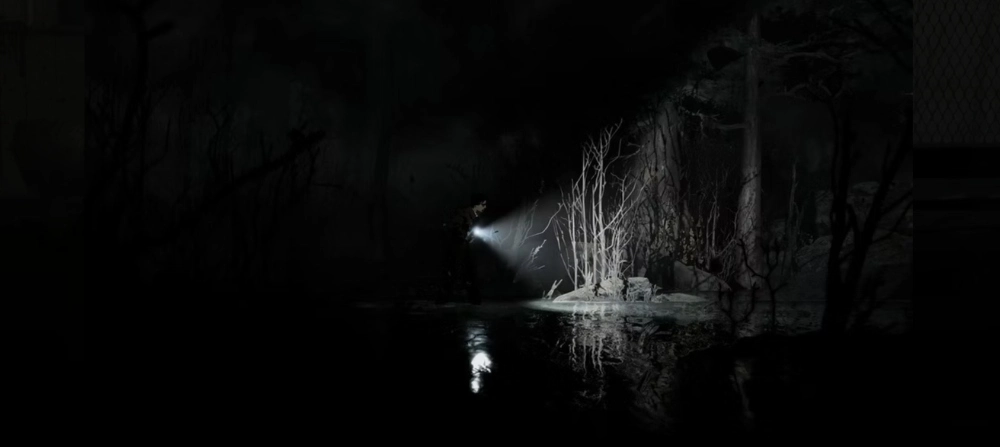
Like many classic survival horror titles, Silver Pines avoids a traditional health bar in favor of a condition-based health system. Walker’s physical state deteriorates through stages ranging from Minor Injury and Injured to Wounded, Critical, and ultimately Death. Recovery items such as first aid kits and medicinal herbs help restore his condition, while additional status ailments introduce further challenges during the adventure.
Poison can be neutralized through antidotes, but the game’s madness mechanic proves far more troublesome. As Walker’s grip on reality weakens, psychological effects begin to influence the experience, reinforcing the game’s central themes of mental deterioration and uncertainty.
The enemies that stalk Silver Pines are equally unsettling. While many can be avoided altogether, players can also choose to confront them using their growing arsenal of weapons. Early threats appear as vaguely humanoid distortions, but as the investigation progresses, the horrors evolve into increasingly grotesque and nightmarish forms. Some resemble malformed beasts, while others take on alien and almost incomprehensible appearances. By the latter portions of the game, survival often hinges less on eliminating threats and more on knowing when to avoid them entirely.
The Kind of Moment That Lasts Forever
Silver Pines continues to impress the deeper you venture into its unsettling world. While its side-scrolling presentation may initially suggest a more limited experience compared to traditional survival horror titles, it quickly proves otherwise. Beneath its 2D exterior lies one of the more compelling and thoughtfully designed survival horror experiences of the year, particularly for players seeking tension-driven gameplay and meaningful resource management.
The game’s systems truly shine on its higher difficulty settings, especially Survival Horror mode. Every bullet, healing item, and strategic decision matters, often forcing players to think several steps ahead before committing to a course of action. Success depends as much on planning and foresight as it does on mechanical skill, capturing the methodical pace that defines the genre’s classics.
Like the survival horror titles that inspired it, Silver Pines features a variety of environmental puzzles that challenge both observation and deduction. Some solutions are immediately apparent through careful exploration, while others require players to piece together clues hidden within documents and notes scattered throughout the world. The inclusion of a Polaroid camera, which allows Walker to photograph important information for later reference, is a particularly welcome addition. It enhances immersion while reducing the frustration of constantly backtracking to recheck clues, creating an engaging balance between storytelling and puzzle-solving that continually encourages deeper exploration.
The game’s inspirations are evident throughout its design. Inventory management, limited carrying capacity, item storage systems, and restricted save opportunities all feel reminiscent of genre staples such as Resident Evil and Silent Hill. Players can expand their inventory using hip pouches, carefully organize supplies through storage lockers in safe rooms, and preserve their progress at phone booths using collectible change found throughout the town. Exploration is further rewarded through weapon upgrades hidden inside lockboxes, abandoned businesses, and other tucked-away locations, providing a satisfying sense of progression that complements the investigation.
For all its strengths, however, Silver Pines also inherits some of the frustrations traditionally associated with classic survival horror. Certain weapons can feel awkward to use, particularly when their firing animations or timing windows fail to communicate clearly during tense encounters. While part of this learning curve may be intentional, some combat interactions occasionally feel more cumbersome than challenging.
Technical issues also prevent the experience from reaching its full potential. Although post-launch updates have addressed several early concerns, a number of glitches remain present on the PlayStation 5 version at the time of writing. Minor visual and gameplay bugs occasionally disrupt immersion, while aiming inconsistencies can sometimes result in wasted ammunition or awkward positioning during combat encounters. These issues rarely make the game unplayable, but they can be frustrating given the importance of resource conservation within the survival horror framework.
Fortunately, Silver Pines offers plenty of incentives for players willing to thoroughly explore its world. Throughout the adventure, Walker can discover Mementos, collectible items tied to the memories and histories of Silver Pines’ inhabitants. Beyond their narrative significance, these items provide meaningful gameplay modifiers, ranging from reduced stamina consumption and improved weapon handling to more specialized risk-reward effects. Some grant powerful bonuses at the expense of increased weapon degradation or greater damage taken, allowing players to tailor their playstyle while adding another layer of strategic decision-making.

Ultimately, one of Silver Pines’ greatest strengths lies in its central mystery. The game excels at cultivating curiosity, constantly encouraging players to uncover the truth behind the town, its inhabitants, and Walker’s connection to it all. Even when answers seem just out of reach, the atmosphere and narrative momentum are more than enough to keep players pushing forward.
That said, genre veterans may find some of the story’s major revelations easier to anticipate. The game explores themes and narrative concepts that will feel familiar to anyone well-versed in psychological horror, particularly those inspired by the works of Silent Hill, David Lynch, and other surrealist storytellers. While the overarching twist may not come as a complete surprise, the journey itself remains highly engaging thanks to the care and confidence with which the story is presented.
What elevates Silver Pines above many of its contemporaries is its execution. Its distinctive visual identity, atmospheric world-building, and commitment to genre conventions create an experience that feels both nostalgic and refreshingly modern. A first playthrough can take anywhere from eight to twelve hours, with multiple endings, hidden secrets, unlockable modes, and additional challenges providing strong incentives for repeat runs. Completing the game under specific conditions, such as limiting saves or finishing within certain time requirements, unlocks further content that rewards mastery of its systems.
Verdict: Buy It!

What we liked:
- Highly stylized atmosphere that brings this horror title to life.
- Surprising depth for a 2D sidescroller survival horror.
- Many secrets to uncover throughout its interconnected town.
What we didn't like:
- Performance glitches that can be immersion breaking.
- Inconsistent controls, targetting, and positioning that can be frustrating.
- Well-trodden story and themes that doesn't exactly cover new ground for this kind of story.
Silver Pines is one of the year’s most pleasant surprises. What initially appears to be a modest 2D survival horror experience gradually reveals itself as an ambitious and deeply engaging title that expertly combines psychological horror, exploration, and resource management. Its blend of mystery, tension, and survival mechanics creates an experience that consistently keeps players invested, rewarding both curiosity and careful planning.
While a handful of technical issues and gameplay quirks occasionally interrupt the experience, they do little to diminish the game’s overall strengths. Through its atmospheric world-building, compelling narrative, and faithful embrace of survival horror fundamentals, Silver Pines delivers a memorable adventure that stands out in an increasingly crowded indie landscape.
*Silver Pines was reviewed on a PS5 with a review code provided by the publisher.
