Ghost of Yotei’s Creative Director Talks Ainu Culture, Open Worlds, and Atsu’s Rise
Ghost of Yotei has launched to stellar reviews, cementing its place as a worthy successor to Ghost of Tsushima. Players are eagerly preparing to traverse the sweeping landscapes of Izo, stepping into the role of Atsu, a fierce new protagonist driven by vengeance and shaped by a haunting past.
We had the opportunity to speak with Jason Connell, Creative Director at Sucker Punch Productions, to delve into the studio’s approach to Ghost of Yotei. Connell shared insights on the delicate balance between the studio’s signature linear storytelling and the freedom of open-world exploration, as well as the thoughtful integration of Ainu cultural representation and the evolution of combat through a dynamic new weapon system, featuring standout choices like the Odachi broadsword and the Kusari-gama.
Ghost of Yotei Interview
A New Ghost
To get the obvious out of the way, Ghost of Yotei has a new protagonist, Atsu, who departs from the familiar protagonist, the iconic Jin Sakai of Ghost of Tsushima. When asked about how Atsu stands apart from its previous protagonist, Connell commented:
“The core idea of what a Ghost story has to do with bringing a legend to life in a way that it is a full character-driven human story video game. And so both characters, Jin Sakai and Atsu, have this underdog nature to them and we think that is important to tell an empowering Ghost story. Jin is kind of an underdog, and people don’t expect him to succeed, especially enemies who didn’t expect him to be as powerful. And he struggles with the decisions he makes, such as going against his family values and traditions.“
“Atsu, she’s also an underdog. In this society, she’s not bound by a code, and there were not a lot of women warriors. It puts her in a position where she’s an underdog, where people would be underestimating her, and she has a fiery vengeance inside of her because of what’s happened to her. And that really propels her story forward.”
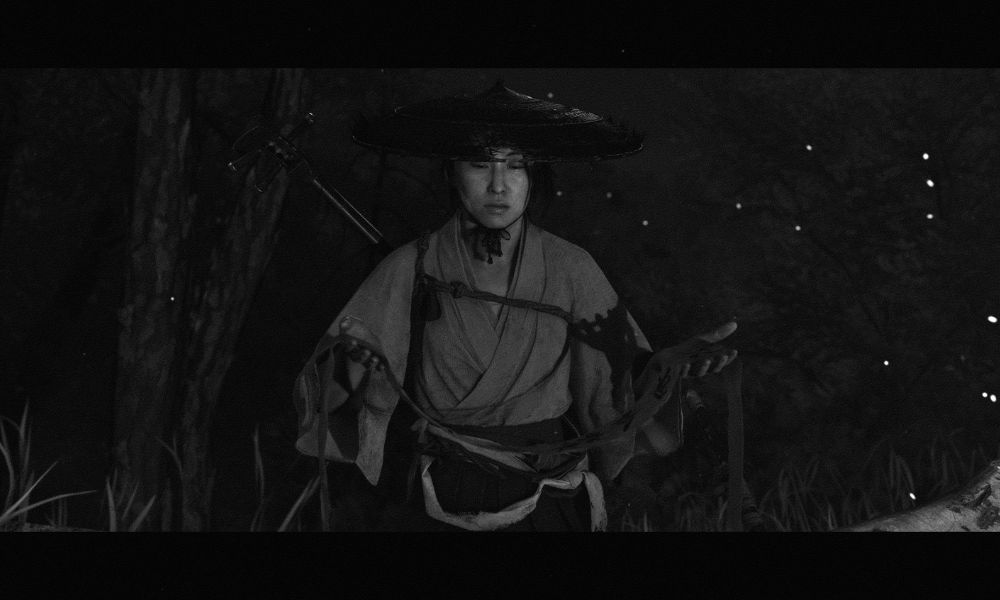
“Also, there’s the overlap of the ghost identity in general, which is quite different in this one. The folk legend of the Onryo is interesting because it’s this vengeful spirit that comes back and seeks vengeance. And this also aligns with both of these games having moments like these in the early part of the game, where the protagonist dies. Not literally, but metaphorically, and gets a second chance.“
“Jin dies on the beach and gets a second chance, and now he’s guided by these other elements like the wind. Similar things happen to Atsu. She’s a lone wolf, she also has this spirit animal, this wolf that’s always near her that you can get connected to over time, the wind again, and the spirit of Izo. There’s a lot of overlap in the way we represent these characters, but Atsu has her own unique story. Specifically, this vengeance tale inside of this vast landscape, it’s exciting for us to try to build the story around.”
Open World Freedom versus Linear Narrative
With some games returning to a more classic linear paradigm, Ghost of Yotei’s open-world gameplay is a curious one. Asked about the balance between the two trains of thought, Connell addresses how pacing differs from the perspective of its players.
“I feel that the studio took the hardest thing to do: Complex narrative, linear storytelling, and open world freedom, and combined them. Those things don’t naturally go together; they usually collide. The more freedom you give players, the more challenging the pacing gets. The more linear you make the story, the more opportunities you remove from freedom. It’s really complex to get it right. Part of it is working on it, for four years, just constantly testing it, evaluating it.”
“Maybe for those open world players, we have a nice mix of open world activities. They get a side mission, maybe they got something that reminds them of their mom. They got an onsen or a sumi-ya painting. We have to make sure that internally, it has its own experience, it has some nice pacing.”
“We developed systems like the clue system, which tries to give you hints that maybe we know that the game is more fun when you get a new weapon. So we try to let you know that there’s something for you to go get if you’re so curious to do so. But if we force you to do so, we’ve ruined the freedom. We make sure you know it’s there, and if you decide you’re having a good time just exploring, that’s fine. We’re kind of okay with it, and that’s the pace that you choose.
“If you decide to go do it and you get that weapon and you get excited with that specific weapon, and then suddenly you’re having a more fun time – the pacing experience for you may be better. So we try to find clever ways where we push you back on the story at the right time, without forcing you. We just accept the fact that some people will go for the story, and some people go on the open world, and they barely touch the story for a while. We just try to create interesting links where we can ensure that there are boundaries and space for everyone to play the way they want to play.”
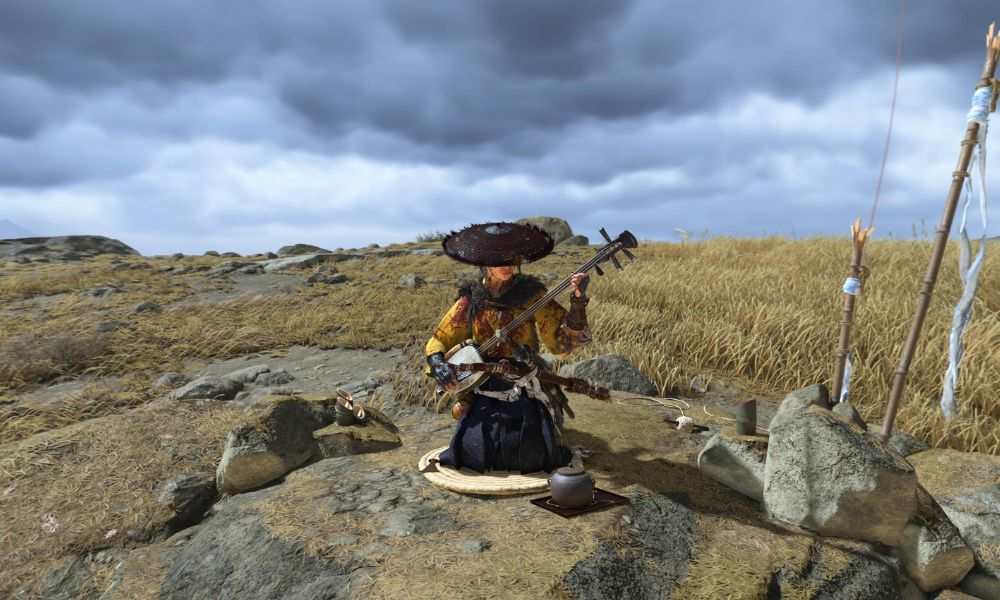
Ghost of Yotei’s setting, the land of Ezo, offers a vast landscape. Going hand-in-hand with its pacing, Connell speaks about how the navigation of this setting differs from your typical open-world title.
“This is something we are very passionate about since Tsushima. The game world of Tsushima became so beautiful at one point, and we used to have a compass in the very early days, a very traditional compass at the top, trying to tell you which way you were going. The game world became so beautiful that we asked Can we get away with not having this stuff to immerse you in the landscape?”
“The beauty that we found, the joy that we found, is using other elements in times like nature in a way to guide you through the game. We certainly did that in Tsushima, we really pushed hard on that in Ghost of Yotei. Whether it’s some of those elements coming through and we’ve improved them, like we’ve improved the wind and how it guides you through the world.”
“We’ve come up with new things, like when you find these wolf dens, these fun interactive things where you have to chase a wolf and lead you to an exciting piece of combat. Or riding through flowers, they’re not just a fun speed boost because they’re joyful for Atsu, but lead you to things. Oftentimes, if you follow through those flower trails, they’ll lead you to something in the woods or something you may not have seen. We spent a ton of time on the art side, building this vast landscape, making sure we have good points of interest along the horizon, driving you towards the location.”
“Because a big part of our goal is to capture your curiosity, and that means we have to have those elements throughout. We even have these sunbeams, we’ve created some technology where that punches holes through the clouds on cloudy days and creates sunbeams on important landmarks to try to make sure you really see it even on a cloudy day. All of these are to try in an interesting way, let you see the landscape of opportunity in a diegetic, non-UI type of way.

New Weapons System
Ghost of Yotei creates a new improvised weapon style for Atsu that’s fundamentally different from Jin Sakai’s katana-style. Connell addresses this change when asked about it:
“The stance system of Tsushima is specific to the katana. You have wind and water, as well as different stances; each of them is effective against a different type of enemy. If you think about it, the Ghost of Yotei system is almost exactly the same, with one big change. They’re not stances with one weapon, they’re just different weapons.”
“For example, you get the Odachi in this game, it’s effective at taking out the larger enemies. By switching to that weapon, just like the stance system in Tsushima, by switching to the right weapon, or the right stance effectively, your game responds, it’s easier. You can take out enemies faster and you’ll switch to the next person. Or maybe you want an area of effect and switch to the kusari-gama as an area of effect attack.”
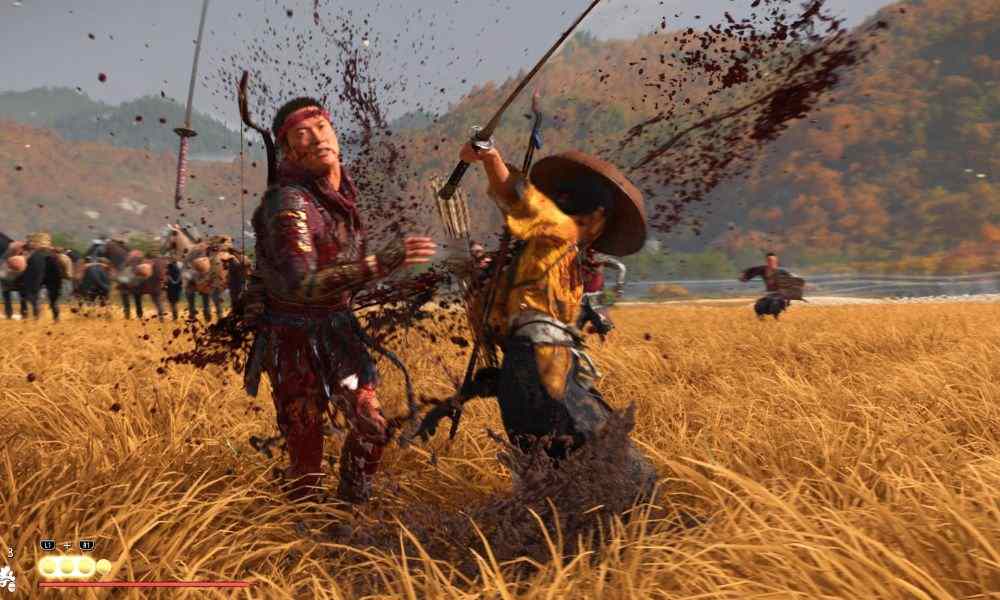
“Each one of them does serve the same purpose, it’s very similar to that stance system. It just happens to be through the lens of new weapons. Because it’s Feudal Japan and it has a whole host of exciting weapons, and it’s something that players have requested. We wanted to do it in Ghost of Tsushima, but we ran out of time. So we opted for this amazing katana experience; it felt more fitting for Jin, who fights by a set of rules. But for Atsu, maybe not so much.”
“Atsu is not afraid to pick up a whole host of weapons and get the job done whichever way she can. It’s very in character for her to pick up a weapon and throw it. She kills a guy, the weapon falls, she picks up the weapon, and throws it. She’s not afraid to get the upper hand. Also, you can be disarmed, and we thought it’s an interesting way to shake up the experience. What happens when you get your weapon taken away because you weren’t paying attention for a second? Suddenly, you’re in a bit of a panic mode, and that improvisational curveball to the combat keeps people on their toes.”
The Role of the Ainu
Ghost of Yotei is set in the new and underrepresented setting of Hokkaido. When asked about how it continues from Ghost of Tsushima, Connell addresses the creative process.
“There’s a term that we use, “fresh but familiar”. Because we know that we love Tsushima, we spent a lot of time with that game. You want the familiar, you want to bring forward all of the greatest aspects of Ghost of Tsushima, and that’s what we had to do. We had to deconstruct that game in the end and we have to think about what are the most important elements that we want to carry through when we go and make the next game.”
“If you look at Sucker Punch’s games, we like to tell origin stories. We like to tell new characters, because they’re really fun. Creating a character from scratch that fits within the new world that you’re creating and the new timezone that you’re creating, to us that’s the unique creative challenge. We got excited about being able to do that, especially to make the game inside of Hokkaido. We got excited with the folk legend of the Onryo, the vengeance tale, and all the rest of this sort of history.”
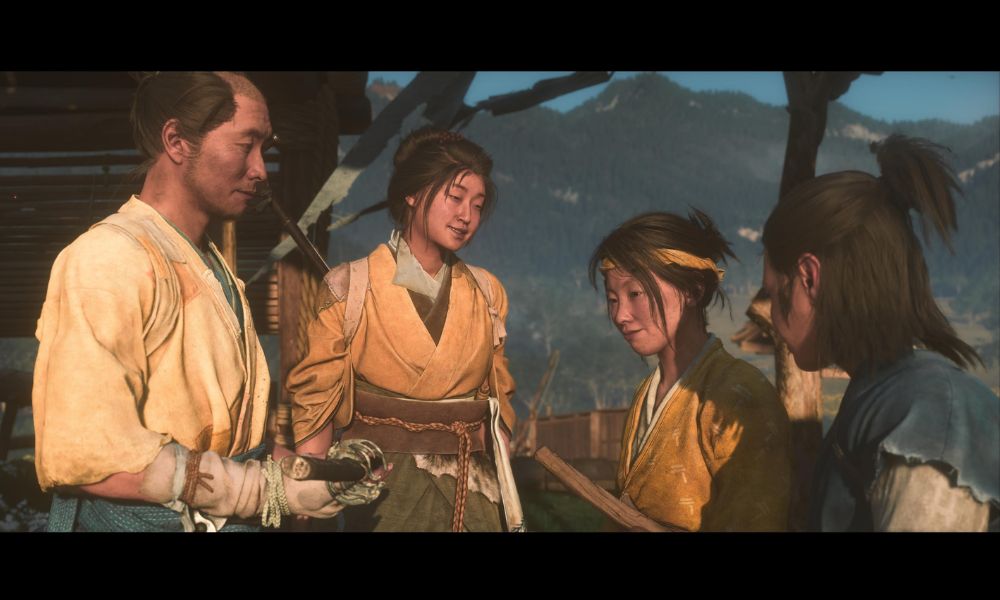
Connell also talks about the role of the indigenous stewards of Hokkaido, the Ainu, in Ghost of Yotei. He speaks about how they are fairly represented and how this cultural exchange has enriched his team.
“We worked extensively with the Ainu people. It was new to us, the Ainu culture. We’re completely naive and ignorant to the culture. For us, it was very important, the Ainu have a rich history in their role in Hokkaido. And to us, it was very important that we get their perspective. And their feelings about how they would like to be represented inside of our game. We have a great relationship with our Ainu advisors, and got to meet the Ainu in person, and their role that they play inside of Ghost of Yotei is heavily crafted and guided by their influence and direct feedback.”
“To me that was the most important thing. I’m very proud of being able to work with the Ainu people and getting them into our game in thoughtful and respectful ways. We actually worked with the Ainu advisor, and her mom actually drew the patterns in their clothing because I asked about them. It is something that’s very personal to them, so said offered, “How about I draw it.” And she drew the drawings on paper, and they’re incredible and we ultimately turned them into 2D and textures, and actual outfits.”
“There’s a level of authenticity that we always don’t get to do on every element of the game but there’s a handful of handcrafted touch in that particular way that I’m excited that people get to see.”
Tyranny of Choice
Ghost of Yotei was mentioned earlier as having a balance between open-world freedom and its strong linear narrative. Connell further clarifies Atsu’s character development in conjunction with this dichotomy.
“We could imagine a game world where we could go after them in any order. But that would impede our ability to tell a structured, good story. We’re a storytelling studio, and it is important to us. It means you have to have a beginning, middle, and end. You actually have to have structure. But if we didn’t even think about any opportunity to move it around, it removes some opportunity for freedom. In the end, we have the Yotei Six and the hunt for the Yotei Six, and it has some freedom, especially in that middle section.”
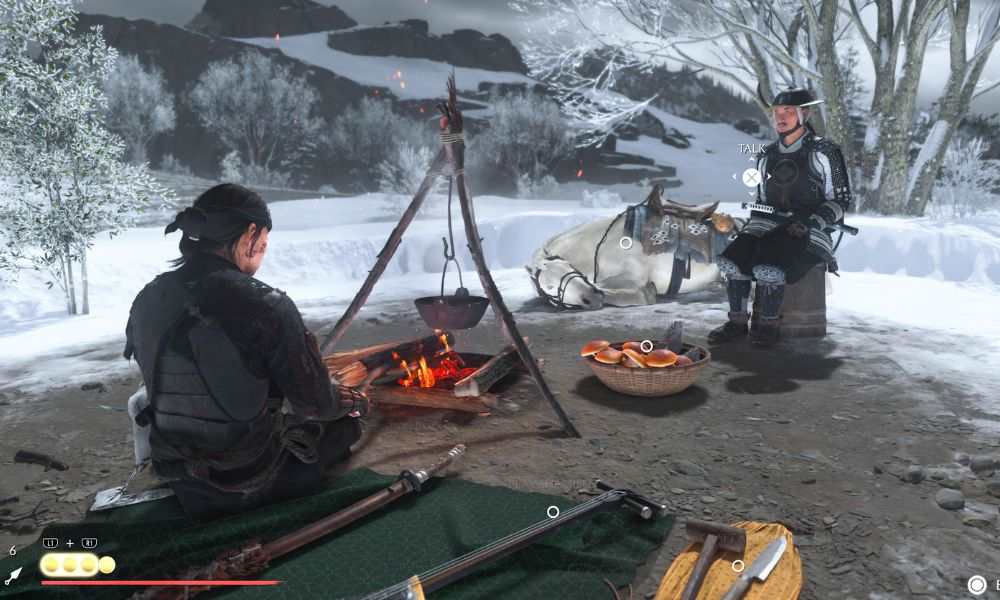
“There is a strong beginning, there is a strong middle, and there is a strong ending. So, it is not true that you can go after them in any order because we found that, in our exploration, we betray our ability to tell a strong story. There’s some freedom in the middle part of that experience that lets you feel that you’re hunting them down and have some agency and choice over which few that you might want to go after first.“
And hunt them we shall! A very special thank you to Ghost of Yotei‘s Jason Connell for sharing his experience and time with us.
Ghost of Yotei is now available on PS5.