

Final Fantasy Resonance Director and Producer on HD‑2D, Battle System, and Legacy Inspirations
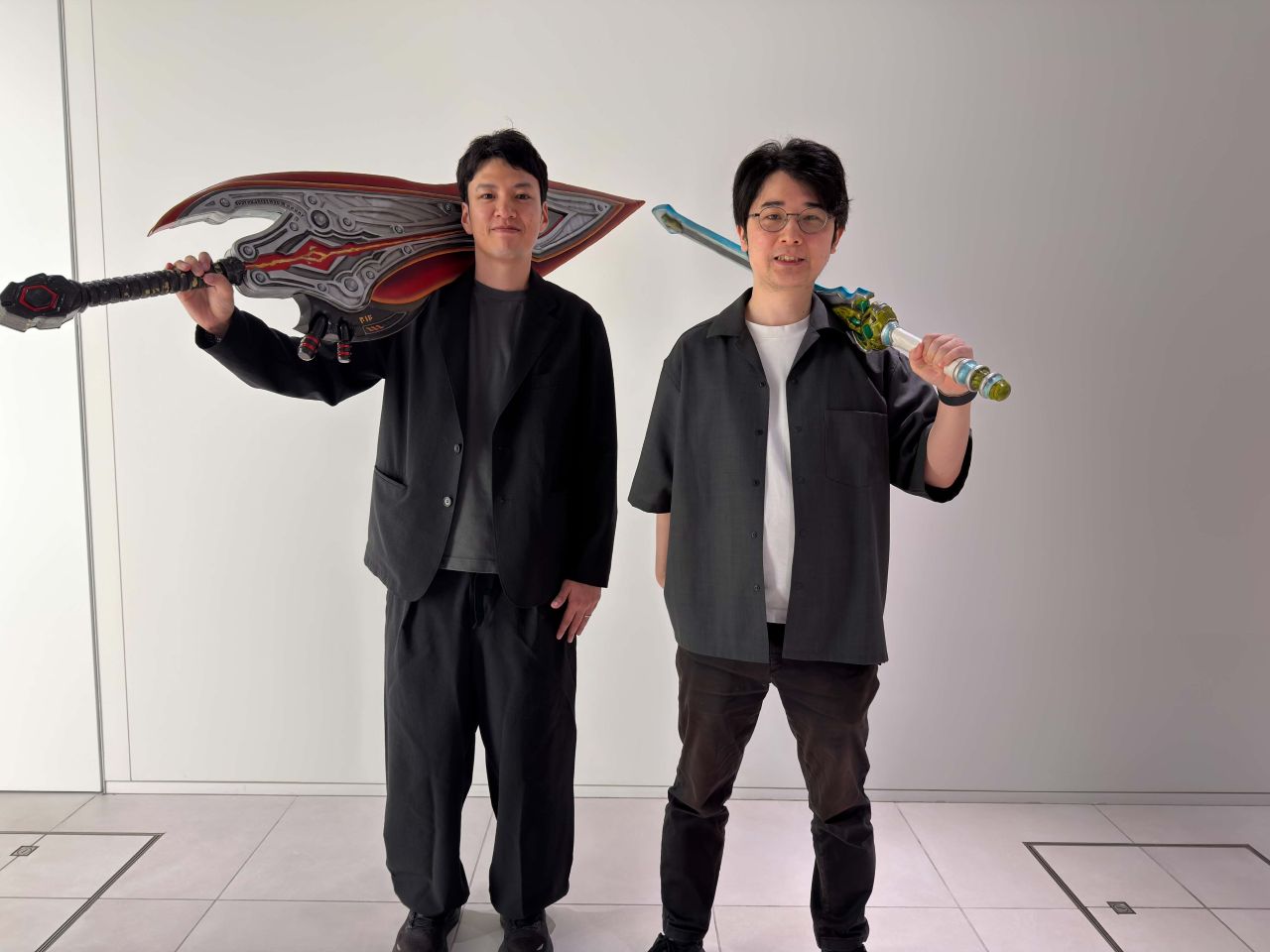
At a recent media preview, we played Final Fantasy Resonance and were even fortunate enough to discuss the game with producer Keisuke Nakashima and director Hiroto Furuya. The pair answered many questions from Southeast Asian media about Final Fantasy Resonance‘s visuals, battle system, and its role in carrying the torch of Final Fantasy’s legacy.
The First Final Fantasy HD-2D
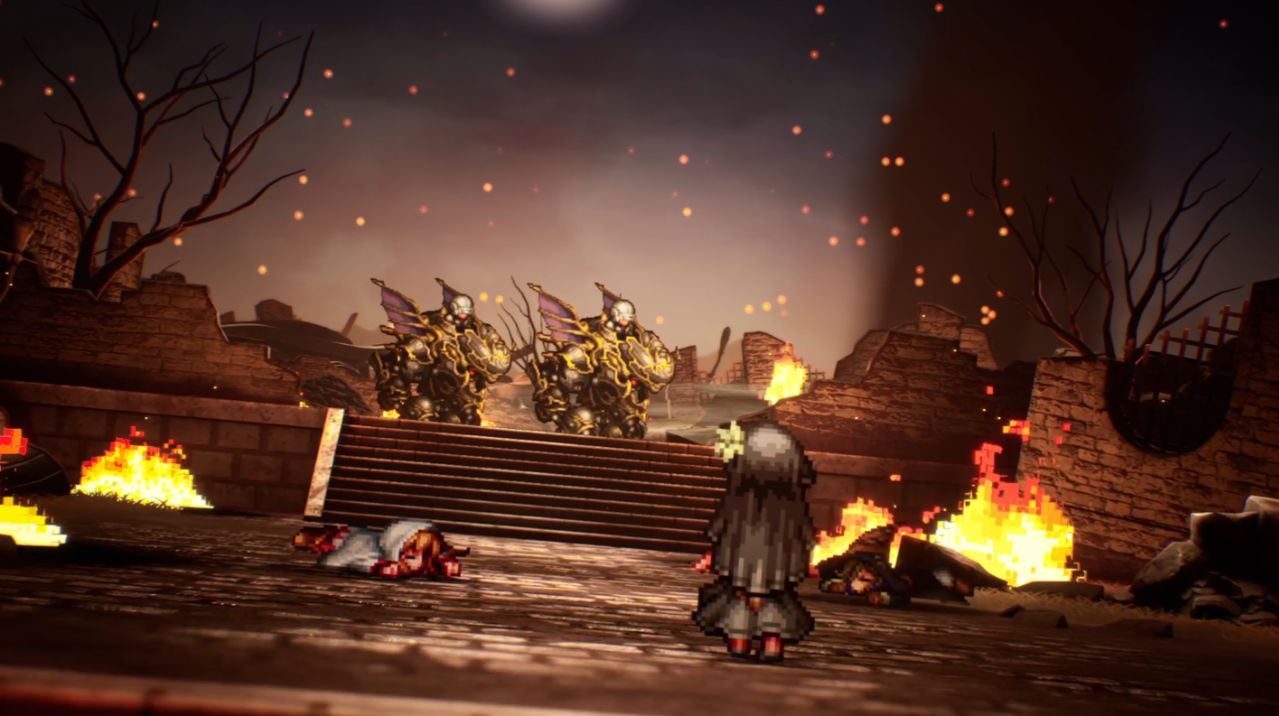
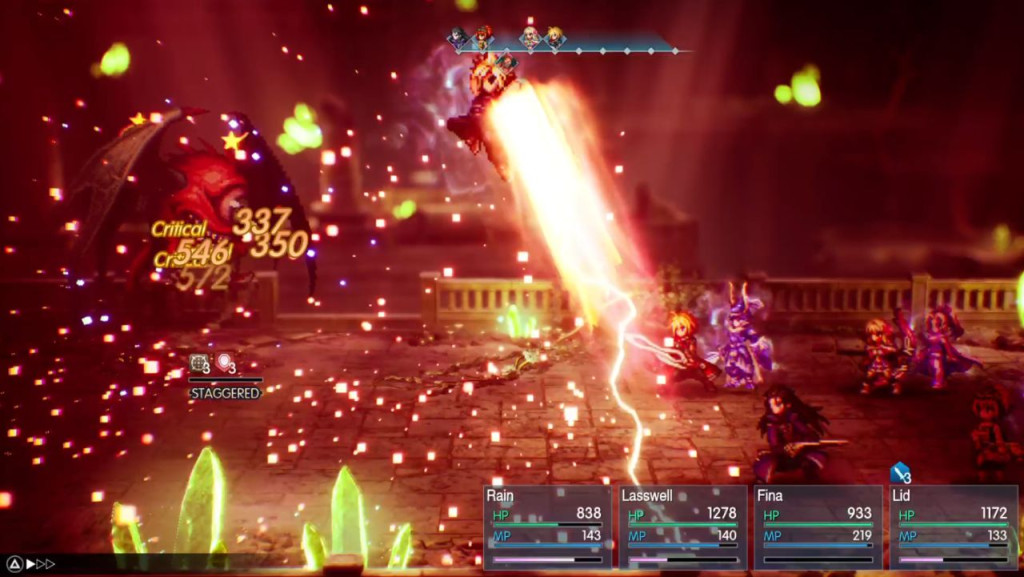
Final Fantasy Resonance is the first game in the Final Fantasy series that uses the HD-2D art style. When asked why the team chose to adapt Final Fantasy Brave Exvius instead of an older format game such as Final Fantasy V or Final Fantasy VI, they responded, “One reason why we chose HD-2D is because it has an element of nostalgia with new exciting elements.“
“I was the assistant producer of Final Fantasy Brave Exvius, so it obviously has a special place in my heart. I heard lots of feedback as I was playing, and a lot of people are saying that “I love Final Fantasy, but I don’t play mobile games.” That sat wrong with me, so I wanted to bring that experience to console gamers as much as possible. Also, the sprites of Brave Exvius are already so beautiful, and they’re quite beloved as well. We thought that was a good opportunity to bring to the console in this fashion.”
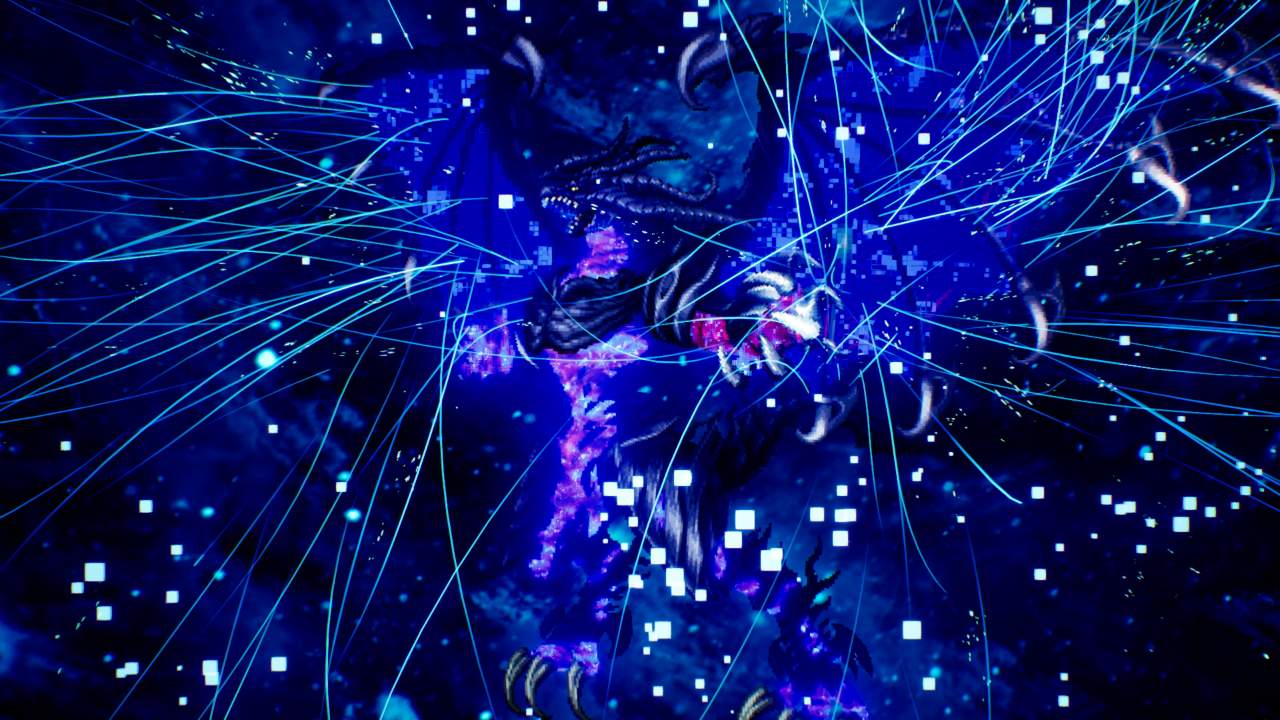
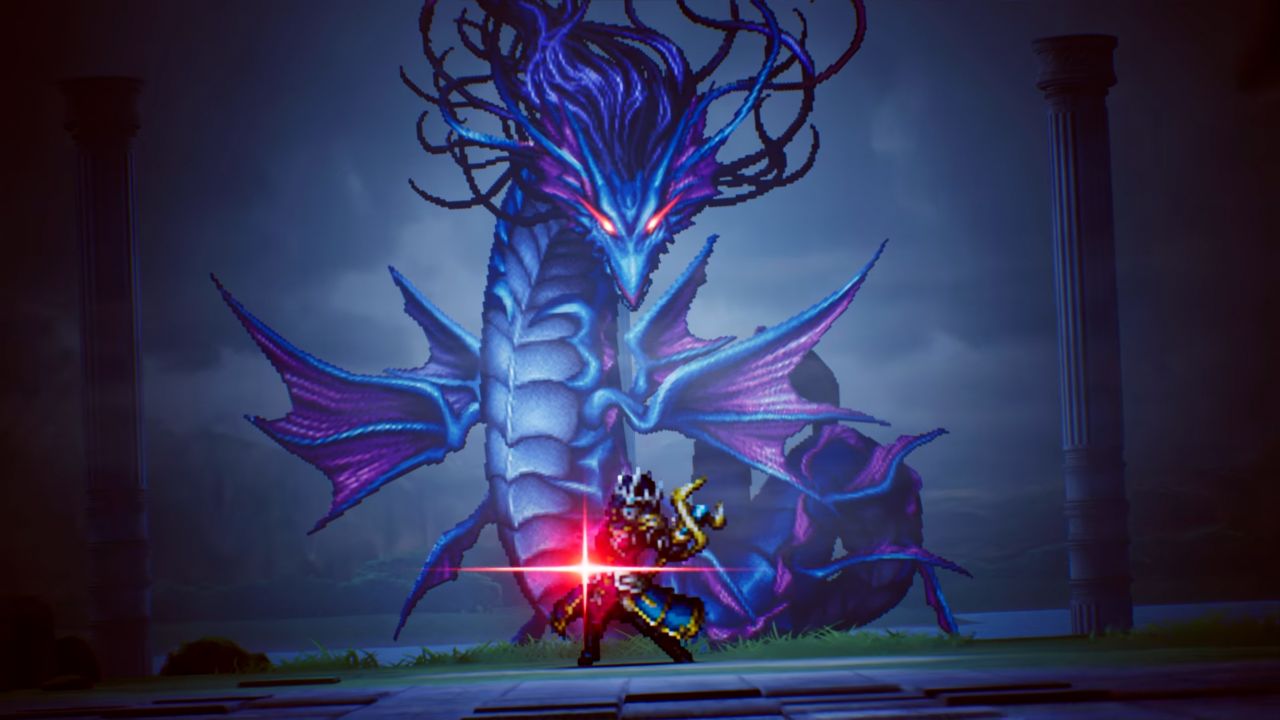
“We also wanted to show that HD-2D can evolve, it’s a different version of this art style as well. Some of the scenes that were in Brave Exvius that we could recreate, such as the event scenes, could be much more flashier. The Bahamut summon could be much more exciting to see in the HD-2D style.“
HD-2D is not Team Asano’s first foray into this style. In fact, it is their bread and butter, having spearheaded the phenomenal Octopath Traveler and Bravely Default series. Square Enix has also capitalized on this format, with Dragon Quest I, II, and III remade in it. Asked about how it has influenced Final Fantasy Resonance and what feedback they’ve gotten about this style, the pair had this to say.
“One of the more important things that we were looking at, rather than the negative feedback, was the positive feedback. So we would take that and really base everything on that to try to make it better. Team Asaon, who’s in charge of the HD-2D style, they really look for the worldbuilding of everything, and that’s one thing we definitely try to incorporate into Final Fantasy Resonance – how to make this world feel more alive in the HD-2D style.”
“To give a specific example, there are dwarves in this world, who are naturally smaller than the other characters, so we wanted to give that sense of scale as well. So HD-2D allowed us to bring that sense of scale to this world.“
When asked about Team Asano experimenting with other art styles during development of Final Fantasy Resonance, they admitted they did try other styles but ultimately decided to go with HD-2D. “At first we tried voxel, which is like 3D sprites, like the fire spells and how to make that pop as much as we could. But really, we just wanted to make a Final Fantasy with a new look and a new style. I think that we did so much research; I’m probably the foremost expert on this kind of sprite style at this point. I looked into everything.“
When asked about how Final Fantasy Resonance will stand apart from other HD-2D titles in the game market, the producers have compared it to their previous title, Octopath Traveler.
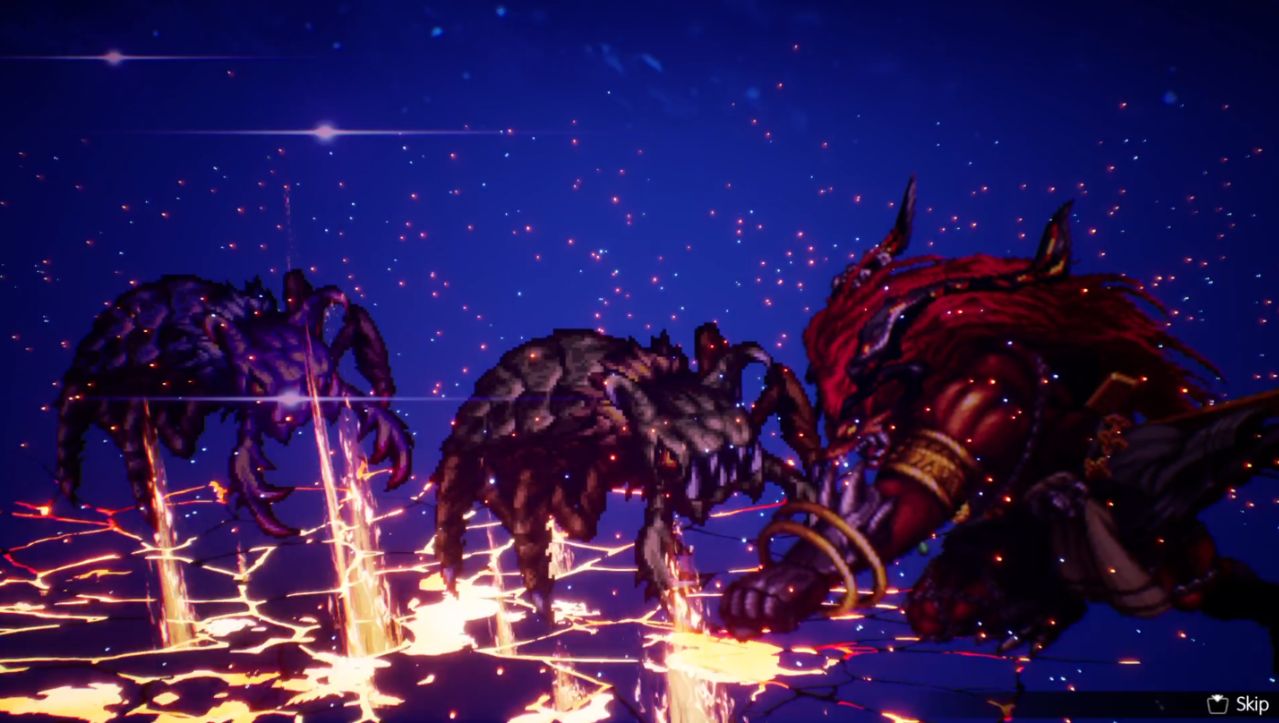
“One is the visual element, it is HD-2D, but this is Final Fantasy’s version of the HD-2D style. Unlike Octopath Traveller, which has a fixed camera view, this has a dynamic camera to show scale and depth. Also, there are airships, there’s Bahamut, and huge enemies as well that don’t appear in Octopath Traveler and other HD-2D titles.”
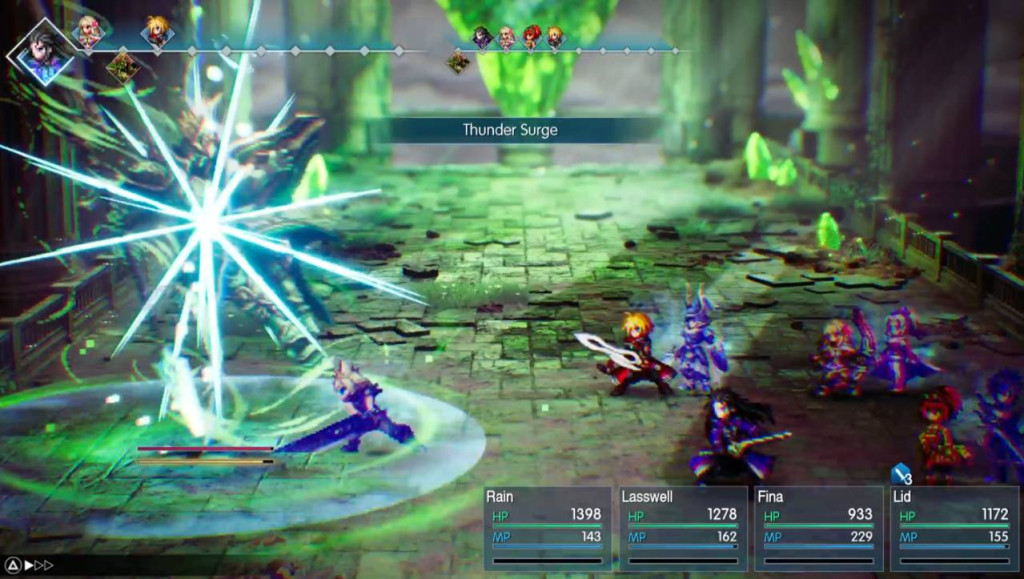
“In terms of the adventure and battle system, we looked at previous Final Fantasy battle systems, and we wanted to expand on the abilities and depth of the tactical elements of all of this, and we wanted to display that. In Final Fantasy V, you can hit multiple times, up to 20 times in a single attack, and so we wanted to see how much variation we could provide to this battle system.”
A Robust Battle System
As there are so many Final Fantasy titles out in the market, how does Final Fantasy Resonance reshape the approach to the traditional turn-based experience, especially now with the evolution and resurgence of turn-based RPGs? The pair had this to say.
“So we really didn’t take too much inspiration from currently released games. We mainly looked back at the Final Fantasy series. The development staff loves Final Fantasy I to VI, so we wanted to recapture everything that made those games special – the exploration, the story elements, the battles, everything – but with Final Fantasy Resonance.”
Modern games stress accessibility and ease of play, and when asked about how to onboard newcomers to Final Fantasy Resonance, the producers emphasized the level of engagement and the job system.
“There were things we thought of when we approached the battle system – does it feel good to play? does it feel snappy? is there a level of engagement there? And the job system, trying to expand on that, how can we provide depth to that system as well as in battles?
“The job system is a little bit tough to understand especially for people just picking this game up, but the battle system in general feels so good because of the stagger system, and king of draws new players in and allows them to settle into this battle system. One thing we definitely tried to ensure was that the players slowly grow accustomed to all the new features. You slowly learn in stages about all of the depth that’s available to the player. The flow of things, then how the timeline battle system works, then the visions, then you understand how weaknessess work… That was something we really paid attention to, the slow introduction of all these elements, rather than just throwing them at the player.”
“We added some quality of life features for modern players such as the ability to speed up the battles and also skip ahead of scenes at the player’s choosing.”
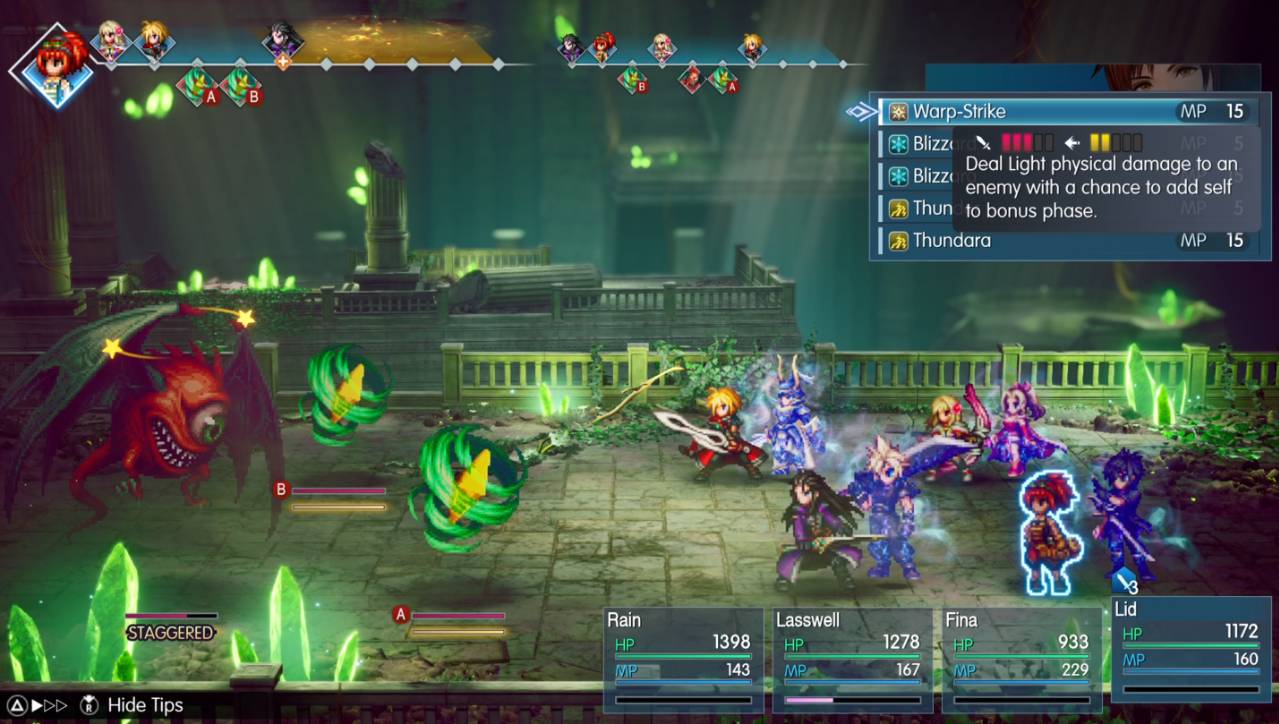
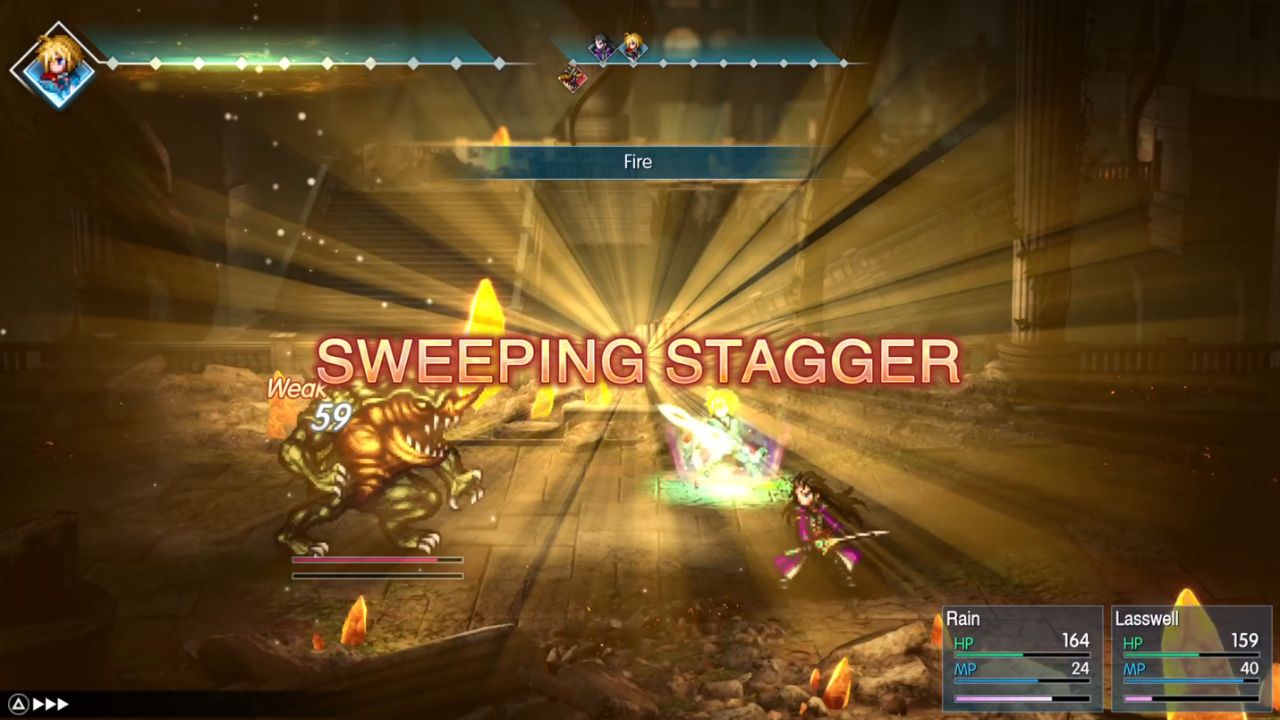
The Sweeping Stagger mechanic is also a pivotal moment in battles that turn the tide in Final Fantasy Resonance. The producers gave their insight on this feature.
“The stagger system is the base for the battle system. It appeared in Octopath Traveler as well, but for this game, how to break/stagger the enemy and when to stagger the enemy is really important. There are tactical elements to that. Once the full sweeping stagger occurs, there’s a really cool attack. One thing that we really tried to incorporate was how and when to stagger the opponent.”
The Final Fantasy Legacy
With Final Fantasy Resonance being based on Final Fantasy Brave Exvius, the involvement of so many legacy franchises can seem to muddle the waters. When asked about how the soundtrack plays a role in the series and whether if other composers from other titles worked with the team, the producers have this to say.
“The person in charge of the soundtrack was Agama-sensei (Noriyasu Agematsu) from Elements Garden. We didn’t consult with the previous composers in Final Fantasy, there are elements of previous soundtracks scattered throughout Final Fantasy Resonance, Agama-sensei is a huge fan of Final Fantasy and grew up with it as well. He was also the composer on Brave Exvius, so in a sense he’s carrying on a legacy with the soundtrack.”
“When we first listened to Final Fantasy Brave Exvius, it had the iconic prelude theme, as well as 30 new songs that correspond with the event scenes. What we really try to make sure is that the melody and rhythm are memorable, I think that’s kind of a core element of Final Fantasy songs in general.”
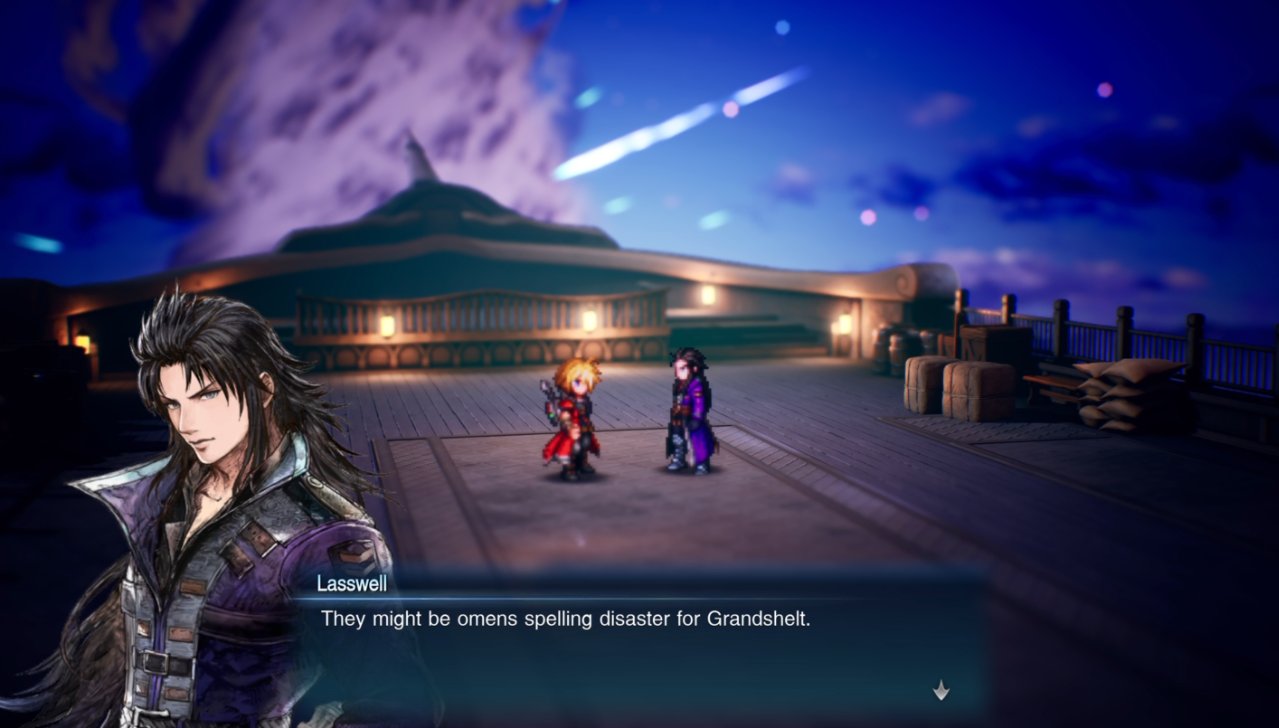
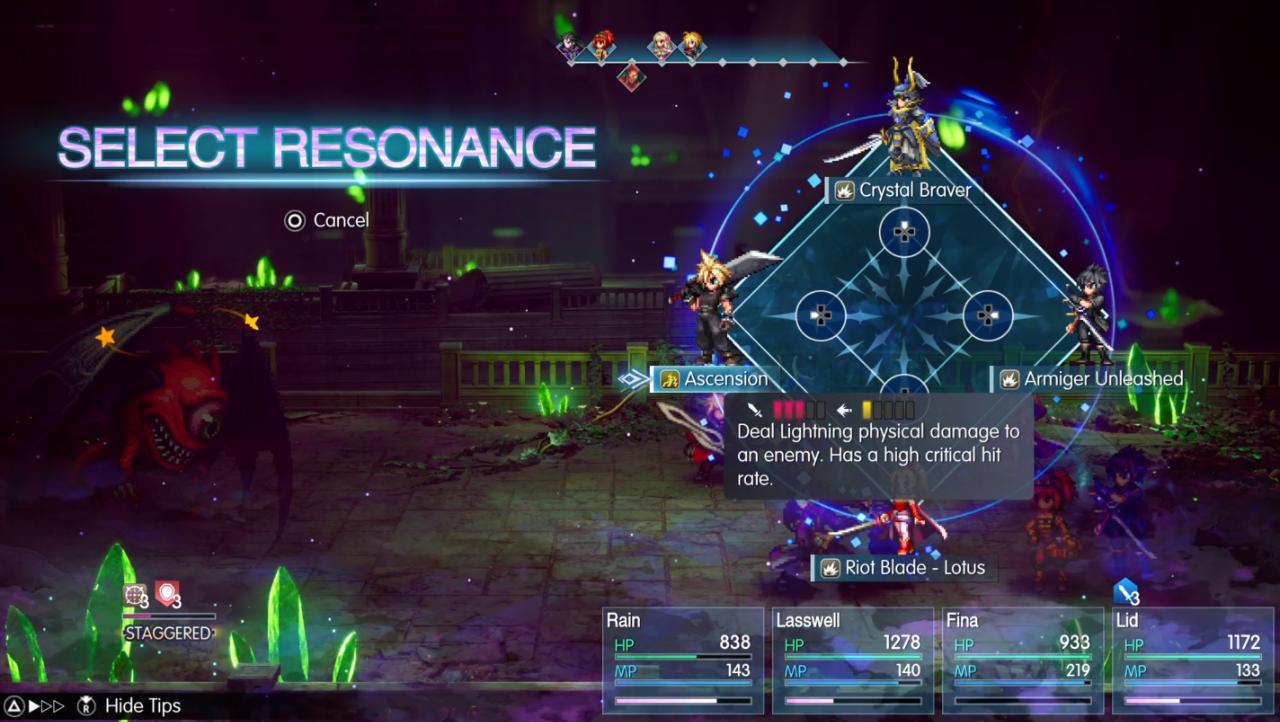
Visions are a big selling point of Final Fantasy Resonance, which takes into account legacy characters of the franchise. The pair had to ensure that they respected the roles of these characters.
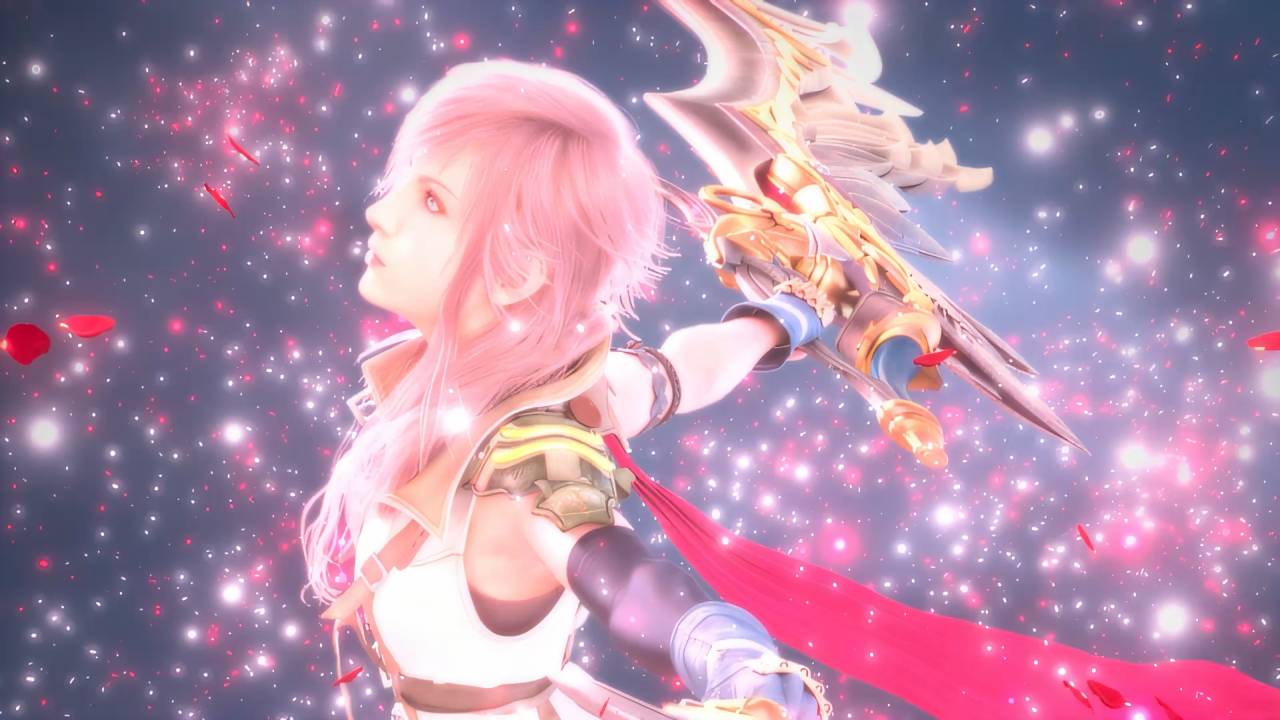
“So previous Final Fantasy characters appear as Visions: basically powers, memories, and feelings made manifest. They are part of the adventure in a very real way, for people who have played Final Fantasy previously, there’s nostalgic element to see these characters, but for first time players, they get to see interesting looking characters and learn a little bit more about them to get curious about their story and personalities.”
“These characters appear in battle but they’re more than just flashy fan service. We wanted to make sure that their original personalities and what makes them unique comes across in fights as well. Bartz has elements from FFV, FFXIV characters have elements from their game, we just wanted to make sure that it wasn’t just fan service, they are properly represented in Final Fantasy Resonance as well.”
Final Fantasy Brave Exvius was originally a mobile app, and there are definitely some challenges in porting over to Final Fantasy Resonance, a console game. The pair had this to share with us.
“The mobile app and the console game are two very different things. What the core design element was originally, we want a new Final Fantasy adventure with these sprite elements, that’s where we based everything from.“
“One of the challenges in translating the app version to the console version, as much as we try to include elements of the app version, there are things that just couldn’t happen. The battle system is completely different, for example. One thing for the Visions, we wanted to make sure that all thirty of them felt useful, they felt powerful, one wasn’t more useful than the rest, that’s the one thing we definitely try to balance out.”
“The Final Fantasy characters that appear as Visions have passionate fans, and we wanted to ensure that everyone who played this game felt satisfied with the appearance of these characters.”
“The challenge with the scenario is like translating a 4-panel comic into a full series. How you break all of this apart and rearrange things, and where do you put which event, which city, that was definitely a difficult part of all of this. For RPGs on a console game, you expect exploration, you expect to walk the world map. That was the difficult part of this.”
“The quality that consumers expect from mobile apps and console games are two totally different things. In order to meet that quality level for console titles, we took the app and decided which elements we can keep and which ones we can redo based on that quality baseline. For example, the HD-2D elements, we couldn’t just translate the app’s look and port straight into a console game, we felt it wouldn’t match the expectations of players, so HD-2D became the art style.“
“On Brave Exvius, we found that the characters are the core of everything; it’s really important to preserve the characters as they were.”
With Square Enix porting over other gacha titles that include last year’s Octopath Traveller 0 and Final Fantasy Brave Exvius, will they be pushing for more of these going forward? They had this to say.
“I don’t know exactly what the future holds for mobile app to console pipeline, but one thing we would like to reiterate is that if it seems that we took the base app and then made a console version of it, that’s really not the case. It’s creating a brand new game from the ground up. We didn’t make it from a cost-saving perspective, that really didn’t happen.”
In closing, both Furuya-san and Nakashima-san had this to say to fans of Final Fantasy and those looking forward to Final Fantasy Resonance.
“I’m a huge fan of all things Final Fantasy, I played Final Fantasy 1 to 6, and it’s really heartening to see all these other people who love turn-based combat appear in the world over, from these recent titles. We’re really looking forward to people experiencing the turn-based battle system with all of these new elements that are fresh to see, with all nostalgic portions as well. We’re really excited for people to experience this battle system,” says Nakashima.
“With the current iteration of Final Fantasy, the sprawling 3D games and heavily rooted in action, that’s an awesome experience. The combat is very dynamic, and it’s an awesome experience. I own these games, play them, and love them. But I think that the classic Final Fantasy titles also have their own inherent appeal, so we really wanted to build upon that original style, and personally, I hope this can be a Final Fantasy for newcomers and also will bring back old players who have drifted away from the franchise for a little bit. That would make me happy.
“And players in Southeast Asia really love old games and continue to support the advances in the games industry going forward, so more than anything I want as many players as possible to see these games for themselves and enjoy it.”
Final Fantasy Resonance launches on October 22, 2026, on PS5, Switch 2, Xbox Series X|S, and PC.
