
In a nutshell
- Nintendo of America sues U.S. government over Trump-era tariffs.
- Company seeks refunds and interest on duties paid since 2025.
- Tariffs disrupted Nintendo Switch 2 launch, causing delays and accessory price hikes.
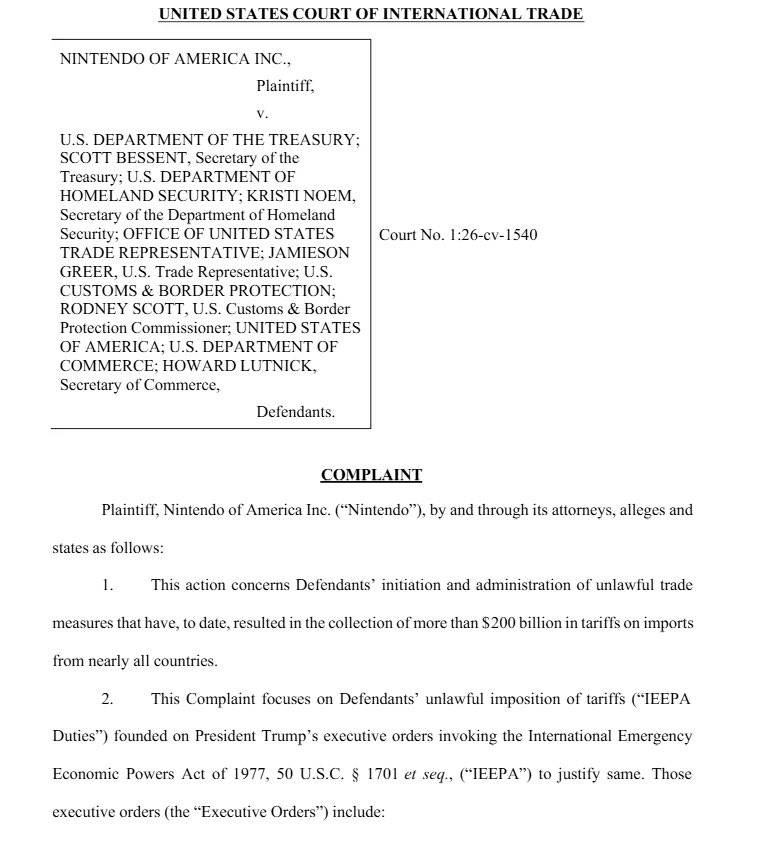
Nintendo of America has officially filed a lawsuit against the United States government, challenging the sweeping tariffs imposed under President Donald Trump’s trade measures, according to a report from Aftermath.
The complaint, lodged in the U.S. Court of International Trade, alleges that the tariffs were unlawfully imposed and seeks refunds, with interest, of duties paid on imported goods.
Nintendo Case Against the Government and Tariffs
The Supreme Court previously struck down the tariffs in February, ruling that Trump could not invoke the International Emergency Economic Powers Act of 1977 to justify them. Despite this, Trump vowed to reimpose new tariffs of up to 15% on global imports, sparking a wave of legal challenges. More than 1,000 companies, including Costco and FedEx, have joined the fight, alongside two dozen states.
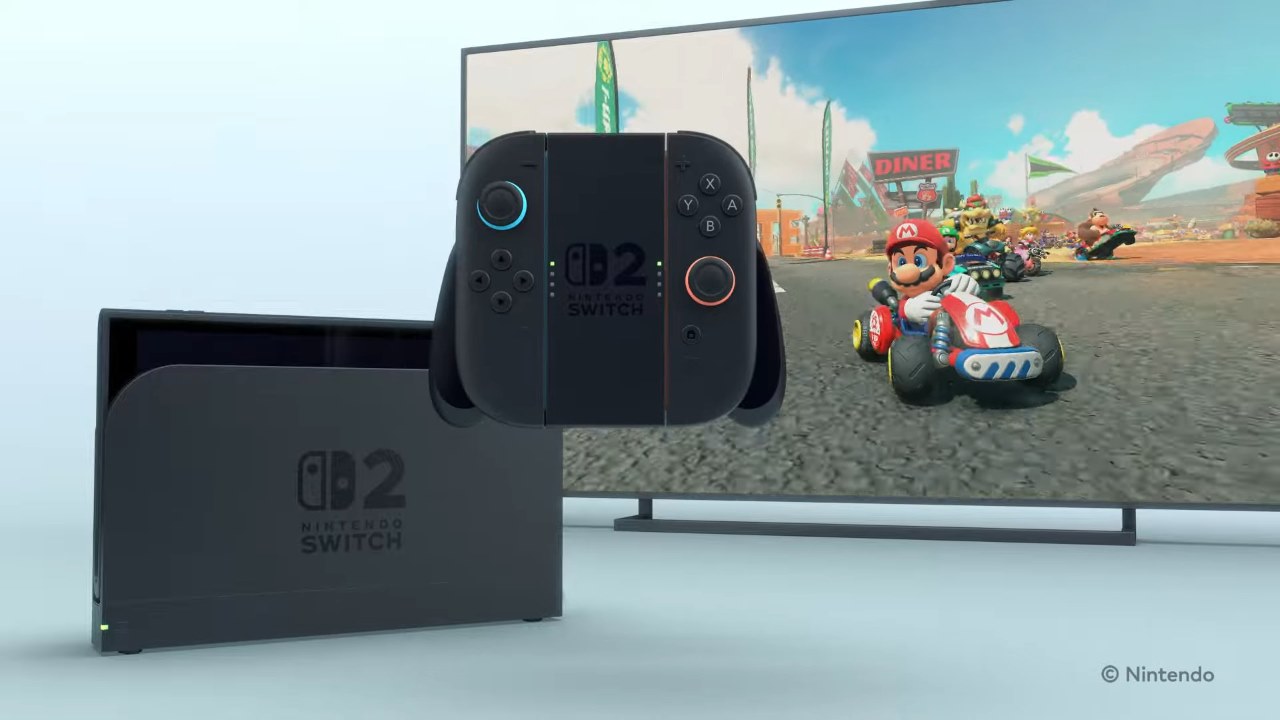
Nintendo’s case highlights the impact of these tariffs on its business operations. The company manufactures consoles and accessories overseas, primarily in Vietnam and China. The timing was particularly disruptive, coinciding with the lead-up to the launch of the Switch 2 in 2025. Preorders were delayed, accessories saw price hikes, and production had to be shifted to Vietnam to mitigate costs.

According to filings, Nintendo’s lawyers argue that “all tariffs collected under the IEEPA Duties must be refunded with interest,” pointing out that Customs and Border Protection has already collected billions in duties. Judge Richard Eaton recently ruled that companies are entitled to refunds, though Customs has stated it cannot yet comply with the order.
Nintendo confirmed the lawsuit but declined to provide further comment. The case underscores the broader uncertainty facing global manufacturers as trade policies continue to shift, with billions of dollars at stake for companies importing goods into the U.S.