Monster Hunter Stories 3: Twisted Reflection Review
Monster Hunter Stories 3: Twisted Reflection Review
Table of Contents
If you had told me years ago that Monster Hunter would make for a great turn-based RPG, I wouldn’t have believed you, given the fact that the Monster Hunter series works so well as a grindy action RPG where the feeling of hunting larger-than-life monsters is second to none. Enter Monster Hunter Stories, with Capcom somehow spinning off the franchise into a successful series that has now spawned a third installment.
Monster Hunter Stories 3: Twisted Reflection is the latest and undoubtedly the most confident entry in the series, tackling more mature themes while bringing back its surprisingly dense combat system, which is a blast. It might be easy to look the other way, but Capcom has been on a hot streak, and this game is another feather in their cap that provides exciting monster-hunting fun in an egg-hatching package.
Politics and Combat
In Monster Hunter Stories 3: Twisted Reflection, players step into the boots of a new voiced protagonist, the Prince or Princess of Azuria, a respected Rider and Captain of the Ranger Corps. Azuria and the neighboring Kingdom of Vermeil are suffering from a phenomenon known as “Crystal Encroachment,” in which habitats turn into crystalline wastelands, driving monsters into a “Feral” state. With Vermeil ravaged by the Encroachment and on the brink of invasion, it’s up to you to be the savior.
What makes the whole situation more interesting is that when twin Rathalos hatch from a single egg, it is seen as a “Skyscale” omen of destruction. Rathalos are thought to be extinct in the region, but one twin remains with you while the mystery of the other brings you to adventures beyond the Kingdom. It’s a great premise that offers intrigue and personal stakes with a monster-hunting twist. The game is mature, steeped in Monster Hunter references and lore, and so much fun.

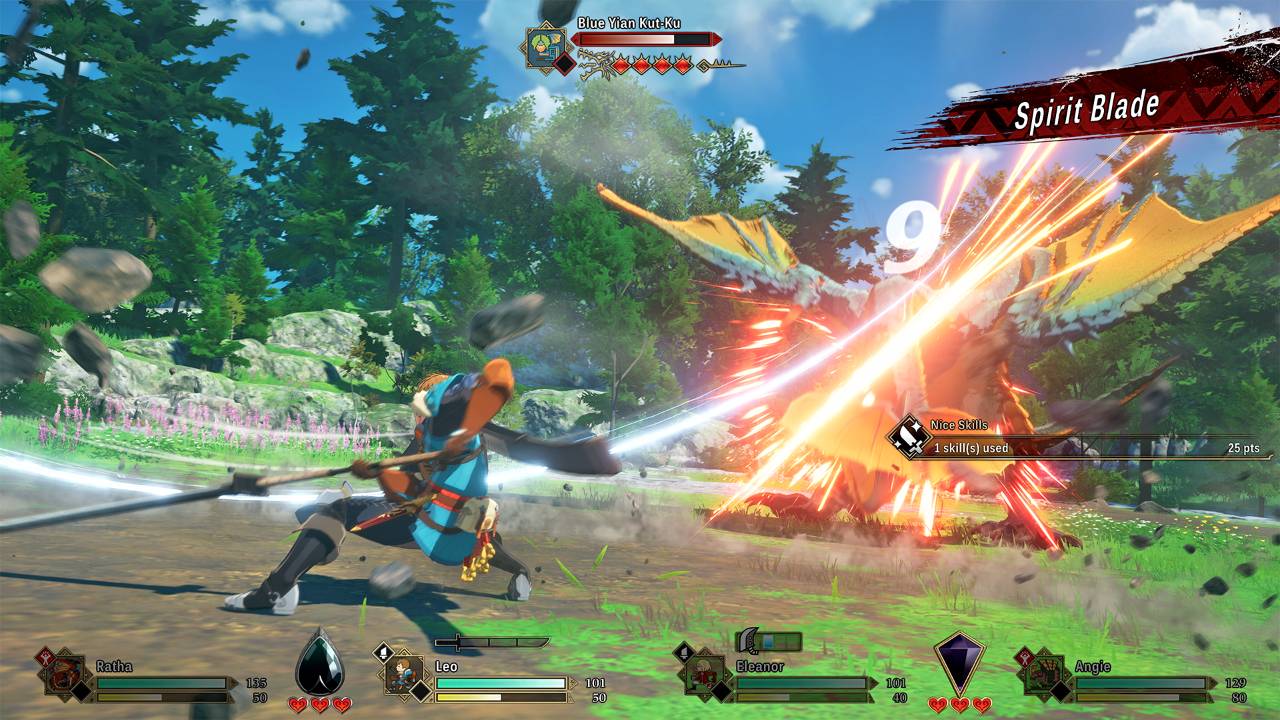
One of the best aspects of Monster Hunter Stories 3: Twisted Reflection is its turn-based combat system, which has added layer upon layer of mechanics, making combat strategic and satisfying. The core Rock-Paper-Scissors foundation that combat is based on, in this case, Power-Technical-Speed, is back and better than ever, across a 4-person party. You have 2 characters paired with a monster, working your way strategically through combat and exploration.
Familiar elements like head-to-head attacks make a return, but a new addition called the Wyvernsoul Gauge elevates the combat. This gauge represents the monster’s fighting spirit, so depleting it through consistent elemental attacks or part-breaking will lead to a staggered state, and if you manage to fully deplete their “Wyvernsoul Stock,” the monster becomes Toppled, rendering them vulnerable to a “Synchro Rush,” which is basically a cinematic, all-out party attack that deals massive damage.
Do enough, and you can build up your Kinship Gauge, resulting in a Kinship Attack when full. Think of Kinship Attack as an ultimate attack that looks extremely cool with satisfying effects that bring the hype.
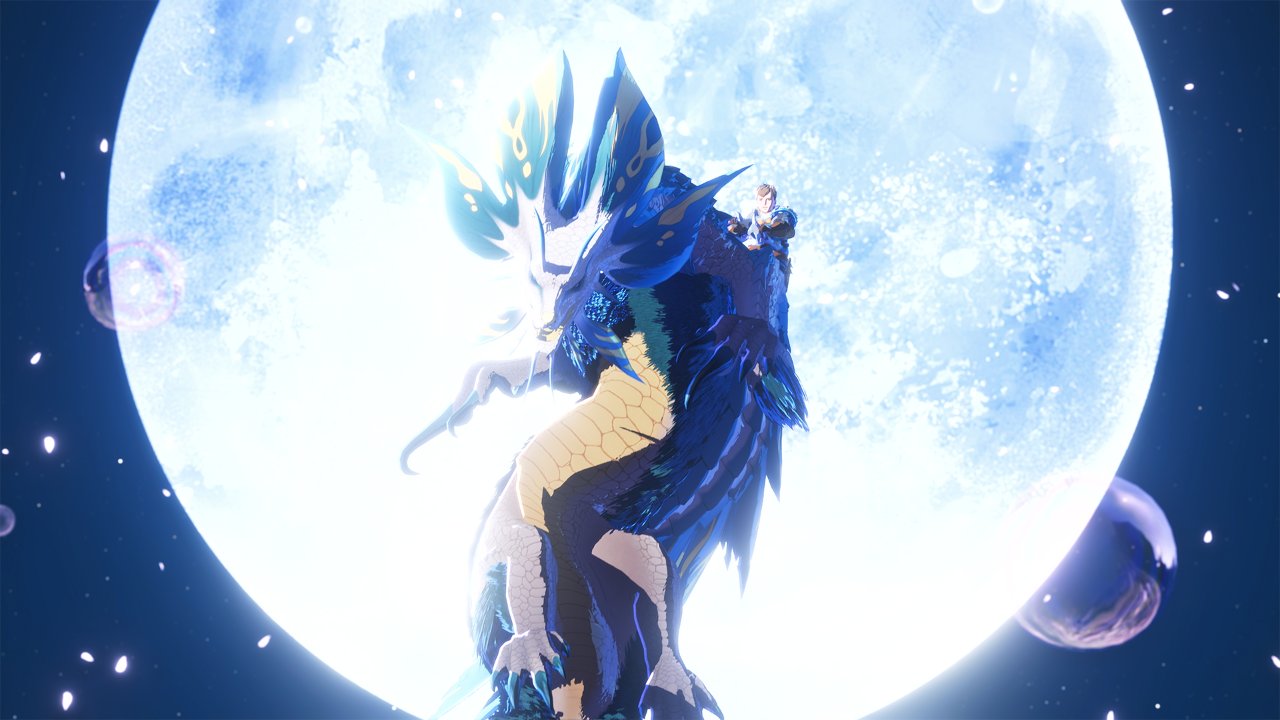
You can’t have a Monster Hunter game without weapons, and Monster Hunter Stories 3: Twisted Reflection has players carry around three different types—Slashing, Blunt, and Piercing—and swap between them to exploit monster weaknesses. Each of these weapons is rather faithful to their Monster Hunter counterparts, where a Hunting Horn will allow for buffs, and a Long Sword brings counters. It’s pretty impressive, and when you consider weapon and armor sets to be crafted, there’s so much to do, and we haven’t even discussed the ecosystem.
Restore This, Restore That
While that’s all fun and good, one of the standout additions to Monster Hunter Stories 3: Twisted Reflection is the Habitat Restoration system. This feature moves the series away from being a simple “monster collector” and into the realm of actual ecological management, hatching monsters for your own use while also repopulating the region to stabilize the environment.
While exploring, players will come across nests that they can get monster eggs from, with varying levels of rarity. These eggs can be hatched, and when you do that, you have the option to release them back into the wild. You are not “discarding” this monster, but you are raising the Ecosystem rank of the region you are in, changing it in tangible ways such as the appearance of once endangered monsters, an increase in the quality of eggs, and more.
What this does is minimize the RNG grind and offers a more specific outcome depending on how you cultivate the region. In fact, this eventually leads to a twisting of the gene pool, if you may, allowing for some crazy combinations.

Monster Hunter Stories 3: Twisted Reflection doubles down on the customization of Monsties with the introduction of Dual-Element Monsties. Yes, dual-element. You don’t change their element, but add to it instead, leaving you with a Zinogre that has both Thunder and Water, or a Thunder-Fire Tobi-Kadachi that actually changes its color and design to show this combination.
If you have not thought about the possibilities of this, it is staggering and really opens up a whole new world of combinations you need to take on the tougher challenges the game has, such as powerful Invasive Monsters, which are basically high-level threats like feral variants or actual end-game monsters that can indeed end your game if you are not prepared.
Exploration in Monster Hunter Stories 3: Twisted Reflection has been refined to emphasize stealth and environmental interaction. You can now use your Monstie’s abilities to interact with the world in more ways, such as Rathalos spitting fire or sweeping its tail to harvest materials. Traversal also shows massive improvements in verticality, with the likes of Tobi-Kadachi climbing walls, opening up more exploration possibilities.
The Better Performing Monster Hunter
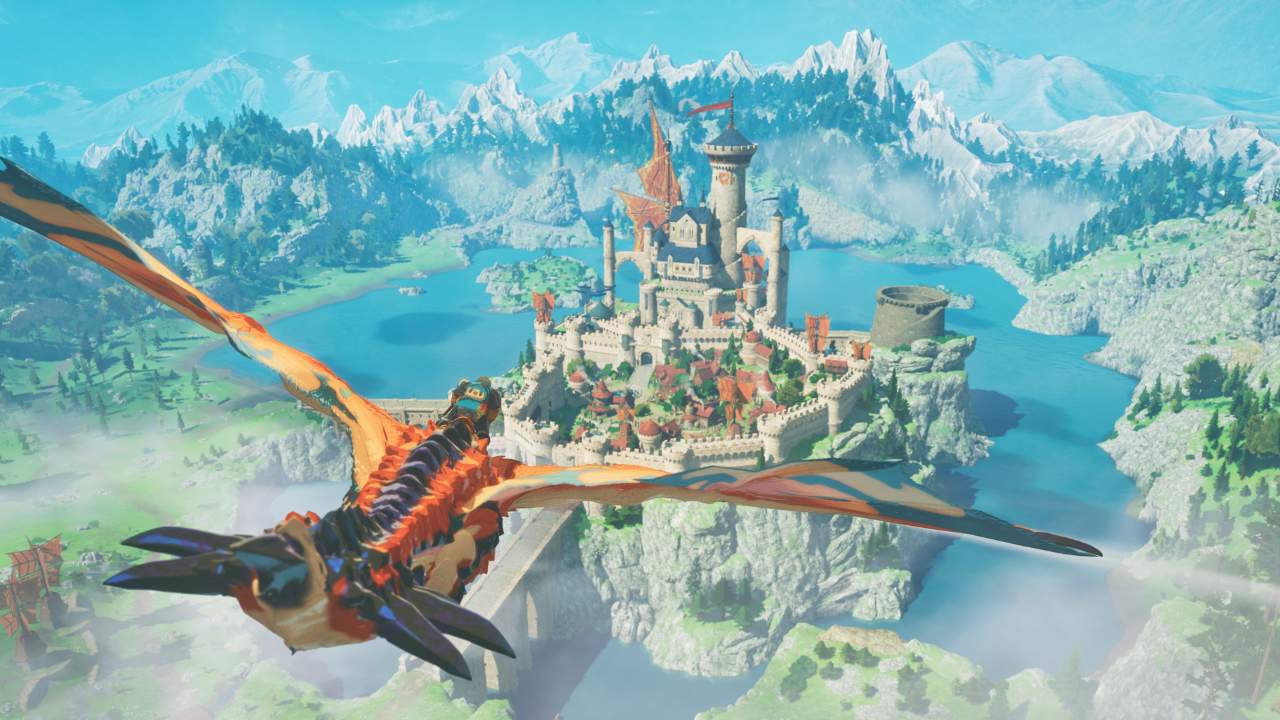
Monster Hunter Stories 3: Twisted Reflection looks absolutely fantastic, with its anime-inspired art style that really helps convey the exhilarating action and impressive attacks the game offers. Character and monster animations are fluid, the overall look and feel of combat is superb, and the world is vast with impressive draw distances.
Playing on the PS5, Monster Hunter Stories 3: Twisted Reflection is highly performant, and while there are some modes (Performance, Balanced) to choose from, Balanced seems like the best compromise, offering good visuals at 60fps. While it can be argued that 60fps is not necessarily required for a turn-based combat title, the overall experience at 60fps is a much more satisfying choice over better shadows and objects in the distance.
It also has to be said that Monster Hunter Stories 3: Twisted Reflection has hardly any loading times in the game, and in the case of frame drops, they are very negligible and should not distract from the enjoyment of the game.

Verdict: Buy it!

Monster Hunter Stories 3: Twisted Reflection is another standout title from Capcom, which has been on a tear with a string of outstanding releases. This is not an exception and shows how a spin-off can proceed to evolve and become successful in its own right. The habitat restoration system is superb, encouraging players to interact with the world in many ways and get rewarded for it.
The game performs splendidly, looking and playing well at the same time, making for an enjoyable experience that even newcomers to the Monster Hunter series will appreciate. Monster Hunter Stories 3: Twisted Reflection is an essential experience and the best installment in the series.
*Monster Hunter Stories 3: Twisted Reflection was reviewed on a PS5 with a review code provided by the publisher.
Monster Hunter Stories 3: Twisted Reflection Review
Monster Hunter Stories 3: Twisted Reflection is an essential experience and the best installment in the series.
PROS
- Visually stunning art direction
- Overall mechanics - Combat, Crafting, Habitat Restoration - are deeply satisfying
- Great narrative that's darker and more mature but still easily understandable
CONS
- No multiplayer aspect